

Two tests, different signals
OpenAI built the benchmarks to measure model progress. MultiLangBench asks models to create a SQLite-compatible database engine from scratch across 20 programming languages.
At the highest reasoning level, GPT-6 Astra passes an average of 87.4% of the tests. GPT-5.6 Terra scores about 38%.
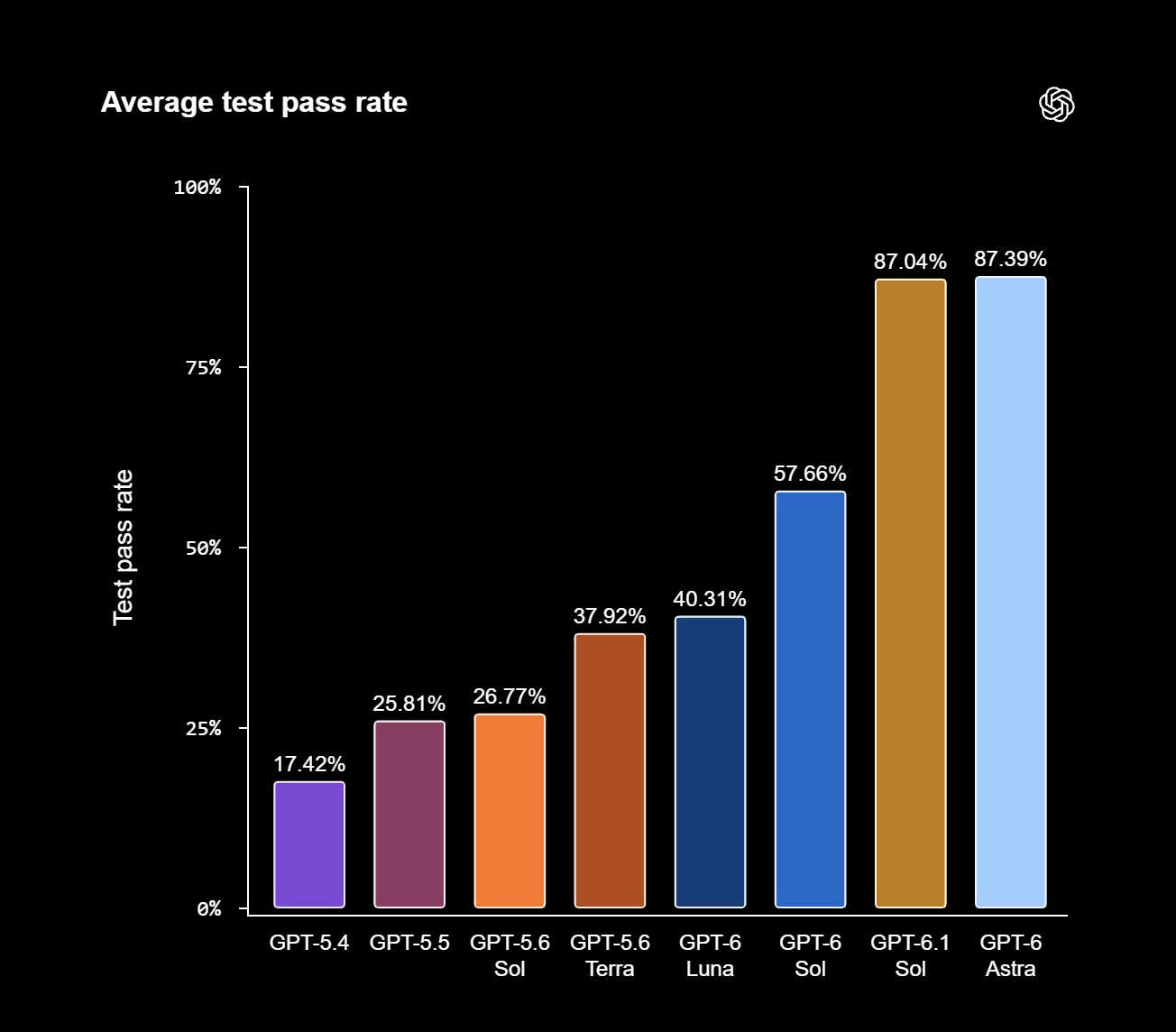
Average test pass rate on MultiLangBench across 20 programming languages. GPT-6 Astra and GPT-6.1 Sol both reach about 87 percent, while older models like GPT-5.6 Terra top out at around 38 percent. | Image: OpenAI
Source: the-decoder.com
GPT-6 Luna scores 40.3%, slightly above GPT-5.6 Terra’s 37.9%, at significantly lower cost. That comparison makes the benchmark more than a raw capability result: for this task, the newer model’s small score gain comes with a price advantage.
COBOL migration is the sharper result
The COBOL migration benchmark asks models to translate COBOL into C++, Java, Kotlin, Python or Rust. GPT-6.1 Sol reaches 86.6% accuracy at low reasoning; GPT-5.6 Sol scores 5.4%. Raising the reasoning level lifts GPT-6.1 Sol to 97.9%.
I think the gap is more compelling than the headline’s broad claim about older languages. It shows a dramatic improvement on one migration task, but the announcement gives no detail on how the benchmark handles code that compiles yet behaves differently, or how representative its examples are of real legacy systems. That is the harder test: high benchmark accuracy matters only if it carries over to software that organizations still depend on.
Daily AI news
Every day we pick what actually matters in AI and explain it plainly — no hype, no filler. Subscribe if you want to follow where the industry is going.
Only what matters — every day
Follow on X