i
News
News · 2026-09-29

Peak XV raises Surge’s seed investment cap to $5 million

@neuronium_ai @neuronium_ai

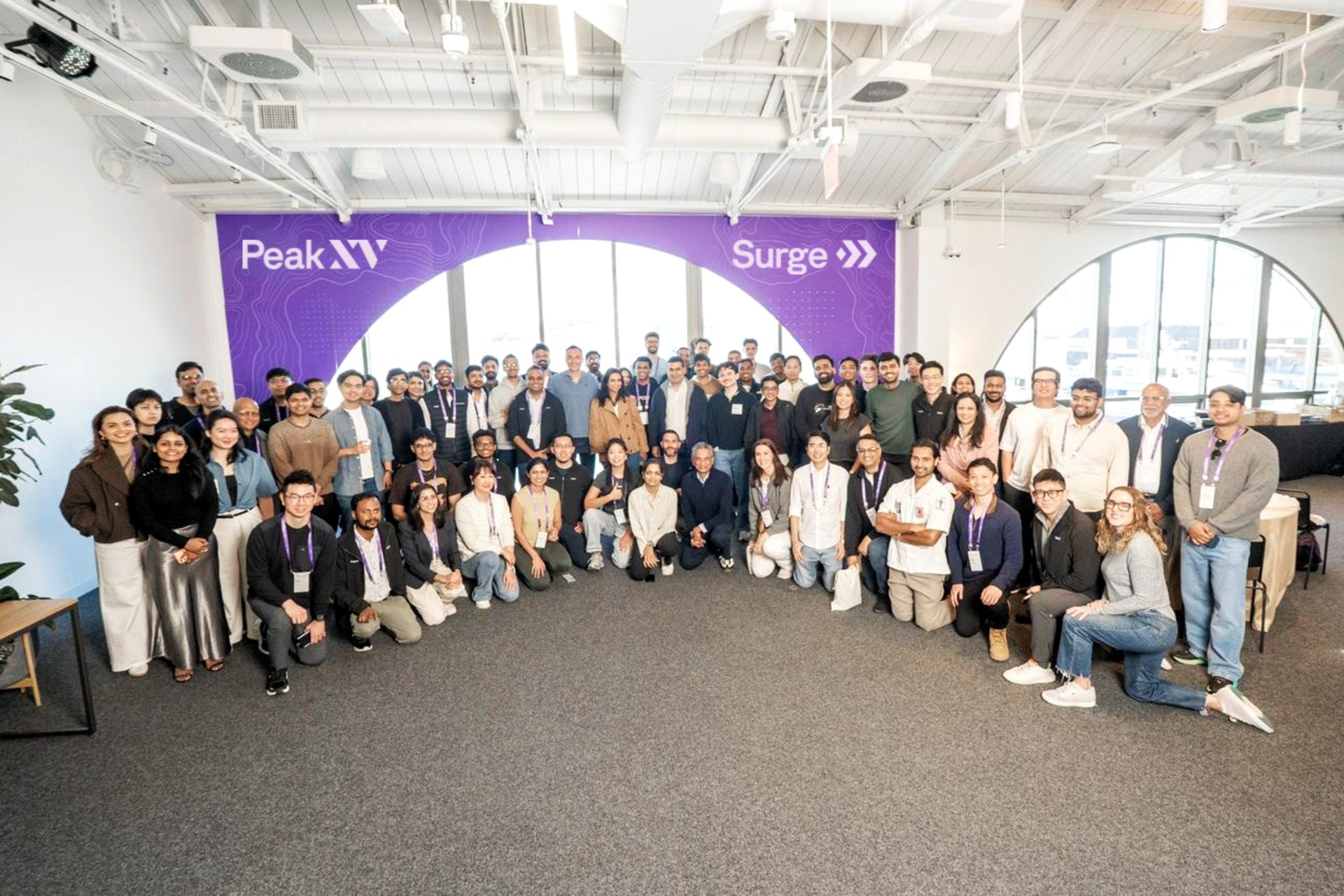
Peak XV Partners has raised the maximum investment through its Surge seed program from $3 million to $5 million per company and introduced 18 startups in its latest cohort. The firm, which manages more than $10 billion in assets and invests in India and Southeast Asia, said the average investment per startup has also increased but did not disclose the figure. Surge 12 includes companies aimed at markets around the world, even though more than half of the startups are based in India.

Cover: Peak XV raises Surge’s seed investment cap to $5 million

A larger seed cheque

Peak XV managing director Rajan Anandan told TechCrunch that raising a Series A has become harder, while more capital-intensive startups—particularly in deep tech—need larger seed rounds.

The new cap is one part of Peak XV’s seed investing, not a replacement for later-stage funding. Anandan said the firm also makes conventional seed investments and continues to back companies as they grow. Surge founders often include repeat entrepreneurs, experienced executives and technical specialists. In a typical cohort, around 50–60% have previously held operating roles at large technology companies.

$5 millionnew cap
$3 millionprevious cap
$50 millionPeak XV investment
$90 millionseed funding

Since Surge launched in 2019, Peak XV—then operating as Sequoia Capital India and Southeast Asia—has backed more than 180 startups. Their founders represent more than 18 nationalities. Peak XV says the ten largest companies to emerge from the cohorts now generate more than $1 billion in annual revenue combined.

A global cohort, with three undisclosed names

Only five of the 18 Surge 12 startups are focused on India. The other 13 are targeting global customers. Anandan said the cohort includes founders and companies from cities ranging from San Francisco to Sydney, underlining a distinction that matters for the program: where a startup is built does not necessarily determine where it expects to sell.

The disclosed startups span AI, robotics, space, consumer products, health care, music and financial technology:

Alma — Nishith Shadagopan M N and Vinod Ganesan are building a personal computing platform intended to make working with computers faster and more accessible. The founders previously worked at Microsoft Research and were early engineers at Bengaluru-based Sarvam AI, which develops AI models for Indian languages.
August AI — IIT-BHU graduate Anuruddh Mishra founded the company in 2022 after receiving an incorrect diagnosis himself. Its platform combines AI with doctor-led medical care and serves more than 9 million users in 160 countries.
Ditto — University of California, Berkeley graduates Allen Wang and Eric Liu built an AI matchmaker for dating in iMessage, designed to help students turn online introductions into in-person meetings. Earlier this year, Ditto raised $9.2 million in a seed round led by Peak XV.
GameStock — Antoine Mystiko, Easton Dana and Vivek Indlbelle Narasimha Prasad are adding competitive mechanics to financial markets, turning investing and trading into contests. Mystiko is a two-time founder and former professional baseball player.
HiLoop — Jad Ghalayini, Karan Brar and Thomas Bossier help companies adapt general-purpose open models for specific tasks through a fine-tuning platform. The founders include former Reducto engineers and a Cambridge computer scientist who earned a PhD at 24.
Hoola Health — Diksha Senguttuva is building a platform for children and families that offers consultations, vaccinations, medication, diagnostics, developmental specialists and dental services. Senguttuva grew up in a family that built and ran a hospital network.
Kello — Mona Gandhi and Subramanya Jingade are developing an AI talent platform that assesses candidates’ potential and career prospects rather than relying mainly on conventional documents and credentials. Gandhi says she was Airbnb’s first female engineer and previously founded Upraised; Jingade previously co-founded AmbitionBox.
Kindling — Adam Miller and Sachin Shah describe their product as a “storytelling operating system” for technology startups. The platform uses AI to help companies develop and publish communications materials and content.
Puralink — Harrison Crow-Maxwell, Shon Delnavaz and Tien “Long” Chan are developing autonomous robots that travel through underground pipes. Crow-Maxwell has built robots since childhood, and university research led to the startup’s patented locomotion technology.
Reinforce Labs — Anish Das Sarma is building tools to evaluate enterprise AI systems, test them for vulnerabilities and fix problems. He previously founded a company acquired by Airbnb, then worked as a director at Google leading AI and machine-learning teams.
Riffle — Anurag Choudhary and deo are building a browser-based platform where musicians can compose, collaborate and share their work, with fewer switches between separate creative tools.
Rosella — Chris Dwyer and Sean Stewart are building an AI commercial insurance brokerage platform for US companies. It automates parts of the traditionally manual process of finding and arranging business insurance. Earlier this year, Rosella raised about $2.5 million in a pre-seed round led by Peak XV and Intact Private Capital.
Tribe Money — Himanshu Arora and Nikhil Shanker are developing an AI personal finance platform to help users track spending, learn about investing and make investment decisions.
ULOOK — Adhish Borthegar and Siddhesh Ravindra Naik are building autonomous satellite systems for radio-frequency sensing and spectrum analysis, aimed at global markets. The founders have participated in more than 12 satellite missions. Before joining Surge, the company raised about $2.3 million in seed funding from growX Ventures and InfoEdge Ventures.
Wingit — Nikunj Kothari and Saksham Khandelwal are building a beauty platform for India’s growing premium consumer market, focused on how shoppers discover and choose high-end beauty products.

Three other startups have not disclosed their names or products. Peak XV said they are working in education, applied AI and medical products.

The bigger bet is on what seed now has to cover

The increase from $3 million to $5 million reflects a tougher path to Series A and the capital demands of some deep-tech companies. But the headline cap is not the same as the amount Surge typically puts into each startup: Peak XV has not shared the cohort’s average investment, and the announced figures do not show how much of the new ceiling companies will actually receive.

I think that missing average is the more revealing number. A higher cap tells founders what may be available; it does not tell them how widely Peak XV is distributing the larger cheques, or how much of the cohort’s funding is intended to carry companies to their next round. Surge is expanding its reach across markets, but the undisclosed investment size leaves the scale of that expansion difficult to judge.

Daily AI news

Every day we pick what actually matters in AI and explain it plainly — no hype, no filler. Subscribe if you want to follow where the industry is going.

Only what matters — every day

Follow on X