
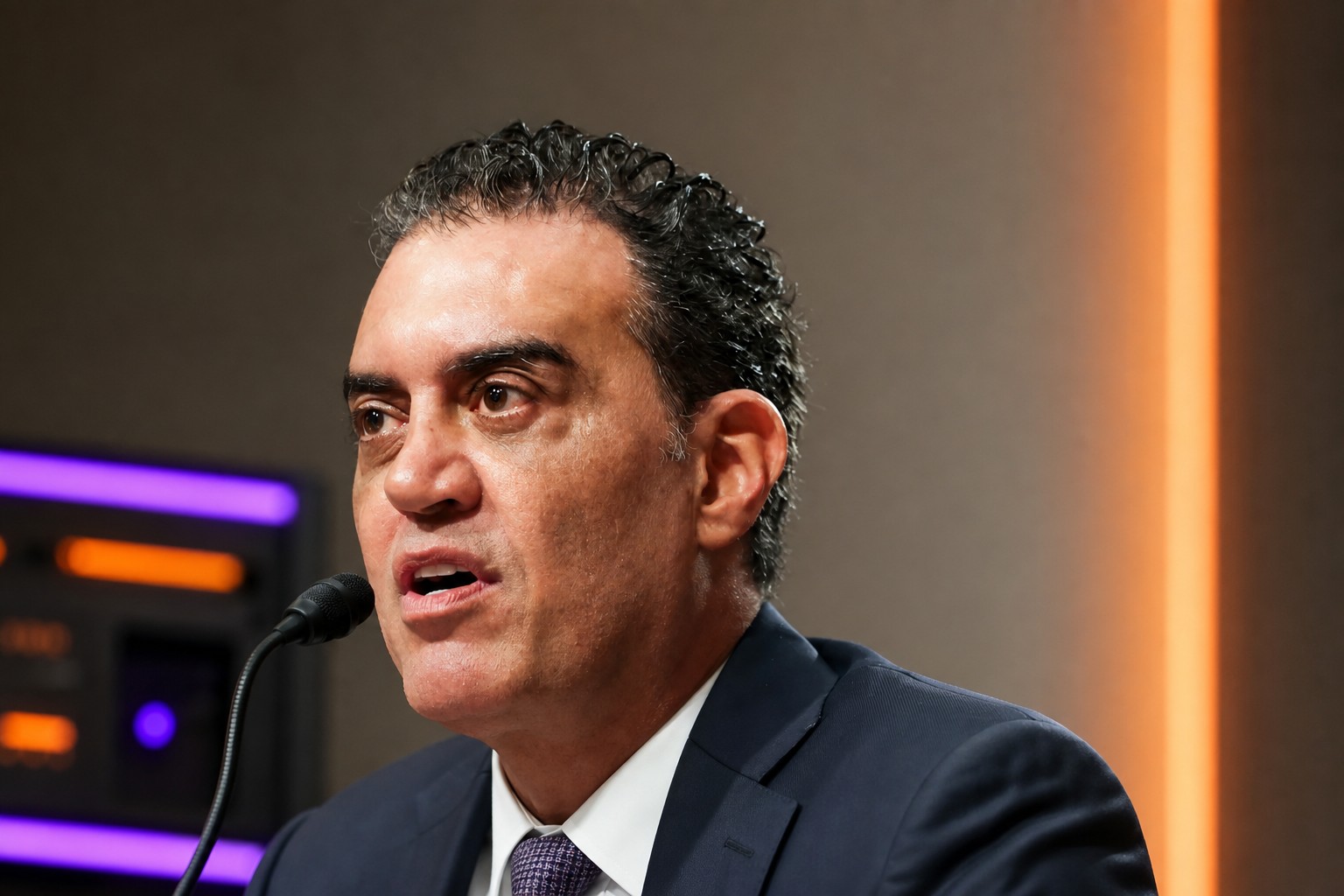
Emil Michael, the Pentagon official who oversees military AI, sold his stake in Perplexity in June, according to his latest financial disclosure. The filing puts the sale somewhere between $5 million and $25 million and does not say whether he made money on it: the value bands are too wide to tell. The Lever reported in March that he held the shares. It was the second private position he exited while in office. In April he sold his stake in Brex for at least $5 million, a gain the same filing records at no less than 473%.
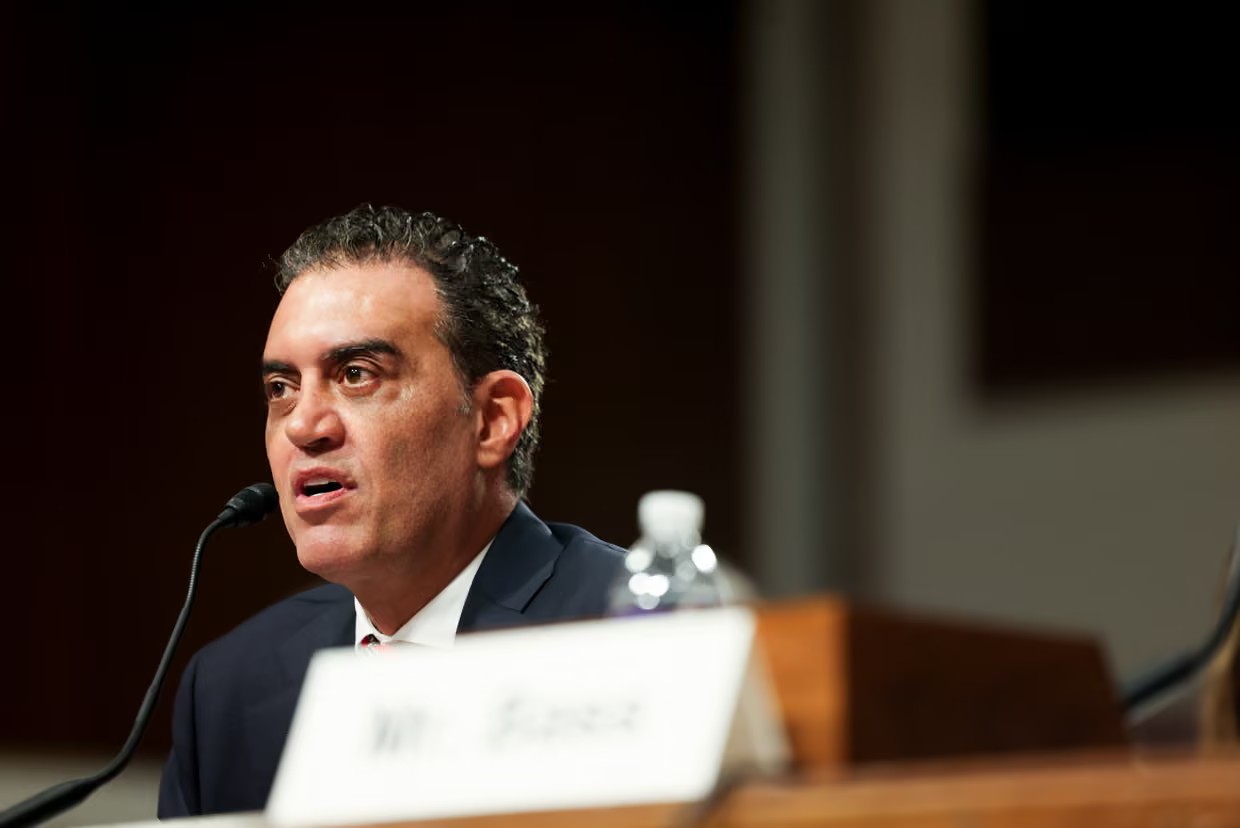
Emil Michael during his confirmation hearing before the Senate Armed Services Committee in Washington, D.C., March 27, 2025
Source: theguardian.com
Michael's relationship with Perplexity went further than equity. A year before the sale, the company extended him a personal loan of between $250,000 and $500,000 at 4.57% annual interest. He also sat on its advisory board, and stated in his disclosures that he left the board when he moved to federal service. Perplexity's claimed valuation is $30 billion.
Part of his Perplexity stock had vested and part had not. Under his ethics agreement he committed not to profit from the sale of unvested shares. The documents do not say which shares he sold.
Perplexity announced a contract with the US General Services Administration last November. The documents do not establish any specific tie between the company and the Pentagon.
The Brex trade is the one where the arithmetic is partly legible. In March 2025 Michael valued his stake at no more than $750,000. In April he sold it for at least $5 million, the same month Capital One acquired the company. Brex builds financial software and counts Peter Thiel among its investors; Michael consulted for it before entering government. Because Brex was private, there are no market quotes to check the sale against, and depending on the prices actually realized his gain falls somewhere between $4.25 million and $24 million. Brex, on the available evidence, performs no stated work for the US government. Elon Musk's xAI does, and Michael's filings record $24 million in profit from it.
Richard Painter, the ethics specialist who served as a White House lawyer under George W. Bush, said Michael should have sold every holding before starting work in government, and that this is how it would have been handled during his own service under the president. Owning shares in an AI company breaks no law by itself, Painter said, but it raises questions about how the arrangement looks, and most administrations would have required an official to divest before taking office. A Pentagon spokesperson said Michael and other defense officials are in full compliance with ethics laws and regulations, that claims to the contrary are untrue, and that the department maintains a rigorous, multi-layered system for monitoring ethics compliance.
Both of those positions can be correct at once, and that is what makes the filings unsatisfying rather than damning. Nothing in the record is an allegation of illegality. What the record shows is a disclosure regime that reports a sale as "between $5 million and $25 million," a band wide enough to swallow the question anyone actually wants answered. The ethics agreement is the sharpest illustration. Michael promised not to profit from unvested shares, and the documents meant to substantiate that promise do not identify which shares were sold. A commitment that cannot be checked against the record is a commitment in name.
Michael was the public face of the Pentagon's campaign against the AI company Anthropic. He appears regularly on podcasts, including the technology show Sourcery. The December episode featuring him was sponsored by Brex, whose shares he still held at the time; it was titled "Misunderstood Power: Emil Michael on the Truth About DOW and Defense Technology." From 2014 to 2017 he was Uber's business development chief. In 2014, BuzzFeedNews reported that he had privately floated the idea of collecting damaging material on journalists critical of the company. Michael said the remarks were made at a closed dinner and did not reflect his views.
The loan is the part of this that the share sale does not resolve. Selling stock ends a position; a loan is a live relationship until it is repaid, and the disclosures do not record that it was. Between $250,000 and $500,000 at 4.57% is small money for a company valued at a claimed $30 billion, which is exactly why it is easy to leave out of a story about a multimillion-dollar exit, and exactly why it can outlast one.
Michael's positions are closed now, which settles them for him. It does not settle them for the job. The next person to run AI policy at the Pentagon will file into the same system of ranges, and the public will be able to establish about them precisely as much as it can establish here: that a sale happened, and nothing about what it was worth.