Perceptron, a company founded in November 2024 by two former Meta scientists, released Isaac 0.5 this week — a vision model its creators say gives machines the ability to "perceive, reason and act" in industrial settings. The software is aimed at robots with computer vision moving through warehouses and shop floors, and at companies that want to extract visual data from the video those robots record. Isaac 0.5 is distributed as an open model: anyone can inspect its parameters and the materials used in training. Perceptron raised $16 million in 2024 from Bessemer Venture Partners, The Explorer Fund and SmartGateVC, according to PitchBook, and is now closing an additional round, according to TechCrunch.
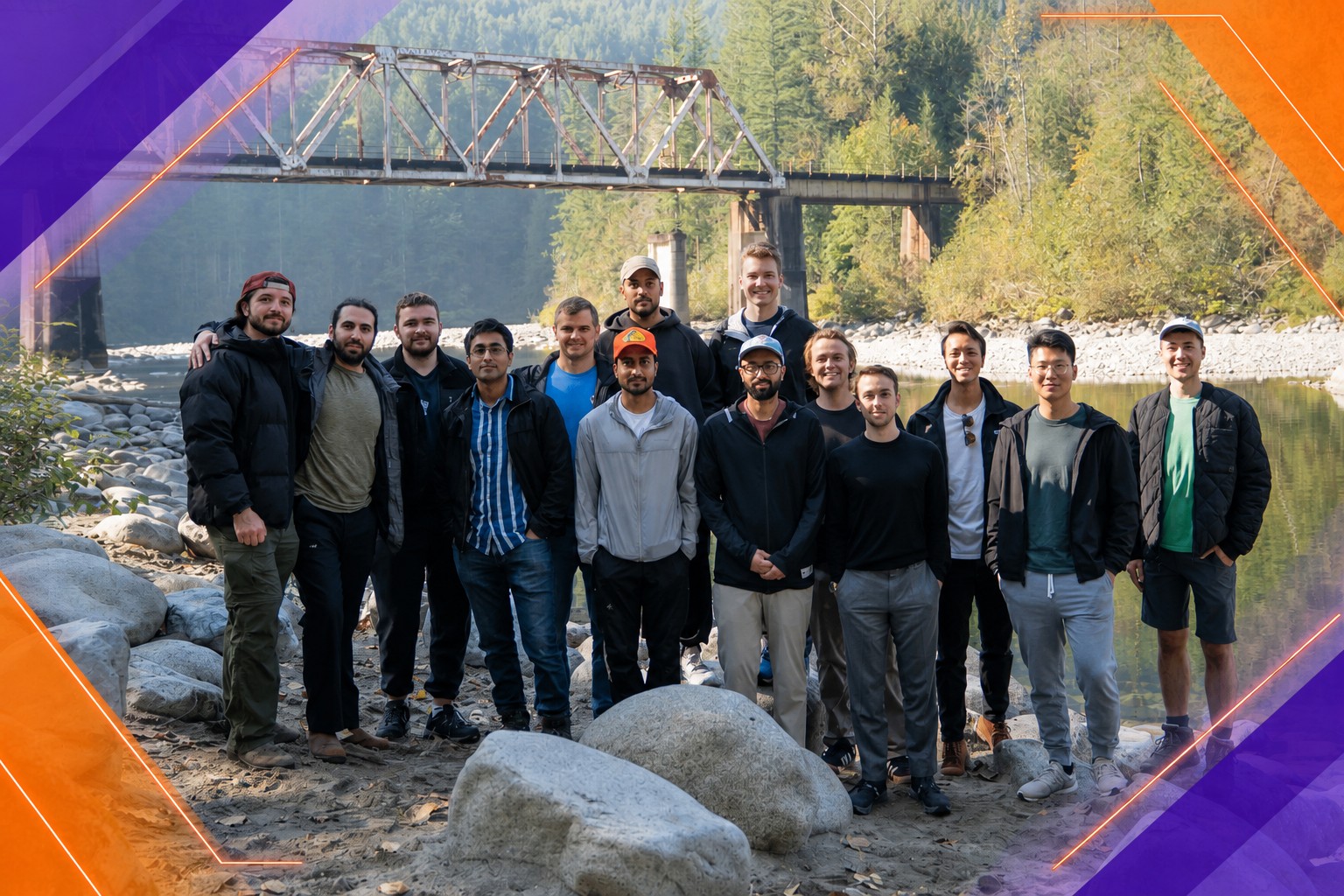
The founders are Armen Aghajanyan and Akshat Shrivastava, both previously at Fundamental AI Research (FAIR), Meta's research division. They expect their software to become the foundation for industrial deployment of automated systems — a large claim from a company still on its first numbered release, and one that rests entirely on the argument they make about the shape of the market.
That argument is the most interesting thing in the announcement. Physical AI today, the company says, forces a choice between two bad options: general-purpose foundation models that need several dedicated cloud GPUs per instance, and narrow models that handle either perception or control but not both at once. Isaac 0.5, Aghajanyan and Shrivastava say, differs by being general-purpose — not built for one specific repeating operation, but meant to adapt to the environment and to whatever is happening in it.
Shrivastava's illustration is box sorting. A robot distributing parcels first has to read the label, then work out where the boxes are, then choose which one to pick up. With several boxes, it also has to plan the order. Perceptron's software is meant to carry the robot through every step of that sequence. Separate solutions already exist for most of those individual operations; what is scarce, the company argues, is flexible software that joins them together and adapts across conditions.
The training story is video at scale. Perceptron says it used a million hours of general-purpose video, meant to teach the model to recognise a range of places, visual objects and situations. It also made heavy use of egocentric footage — recordings shot from the point of view of a person performing a physical task, typically with a GoPro or a wearable camera — and UMI video, recorded specifically to teach AI systems movement by capturing repeated human actions. Shrivastava says the company built petabyte-scale datasets itself, spanning images, text, video and robot trajectories.
It does not say where any of it came from. Perceptron declines to disclose the sources of its training data, which sits awkwardly beside the claim that Isaac 0.5 is open enough for anyone to examine its parameters and training materials. Those two positions are not strictly contradictory — weights and documentation can be published while provenance stays vague — but for a buyer weighing a model that will direct machinery near people, provenance is the part that carries risk. Egocentric video of humans performing physical work is exactly the category where who recorded it, and under what terms, is hardest to establish after the fact. A million hours is a number that invites the question rather than settling it.
The gap between the ambition and the resources behind it is the other thing worth sitting with. $16 million raised in 2024 is a seed-stage figure in a field where the general-purpose foundation models Perceptron positions itself against are funded in the billions. The version number is consistent with that: this is 0.5, not 1.0. And the announcement names no customer, no robot platform, no benchmark and no deployment. The sectors listed — manufacturing, logistics and warehouses, security, mobility, media and entertainment — describe a market map rather than a pipeline, and the plan, selling the model to various vendors so that Perceptron's intelligence layer ends up embedded across industries, is a distribution strategy that depends on those vendors agreeing that a general model beats the narrow one they already ship.
Which is where the real test lies. Describing a box-sorting sequence correctly and running it unattended on a shop floor are separated by the entire problem physical AI has not yet solved, and an open release with undisclosed data gives outsiders no way to measure the distance. Perceptron is closing a round on the first of those; the industrial deployment its founders describe requires the second.