

Phota Labs, a startup, has released a free iOS app that uses AI to improve ordinary photos while preserving people’s appearance and the moment captured. A user can, for example, turn a group photo taken with a wide-angle camera into a tighter portrait, or a selfie into a regular photo. The app offers different editing styles, from light adjustments to fisheye effects, changes in angle and perspective. The company raised $5.6 million in a seed round led by a16z and plans to release an Android version.
Phota Labs turns ordinary shots into professional photographs
How the photo assistant works
Phota Labs is designing its app not as another editor where users manually fix their photos. It is meant to choose edits automatically and salvage shots that did not turn out well in the first place, while keeping people looking natural.
The company’s founders, Cecilia Zhang and Zach Xia, met at Adobe, where they worked on computational photography products including Project Indigo, Lightroom and Photoshop. They believed existing editors could improve photos but struggled with shots that had not been taken well to begin with.
The app can, for example, turn a group photo taken with a wide-angle camera into a tighter portrait, or transform a selfie into a regular photo. Users choose an editing style, from subtle changes that preserve the original lens and composition to more pronounced effects: fisheye, a different angle or an entirely different perspective.
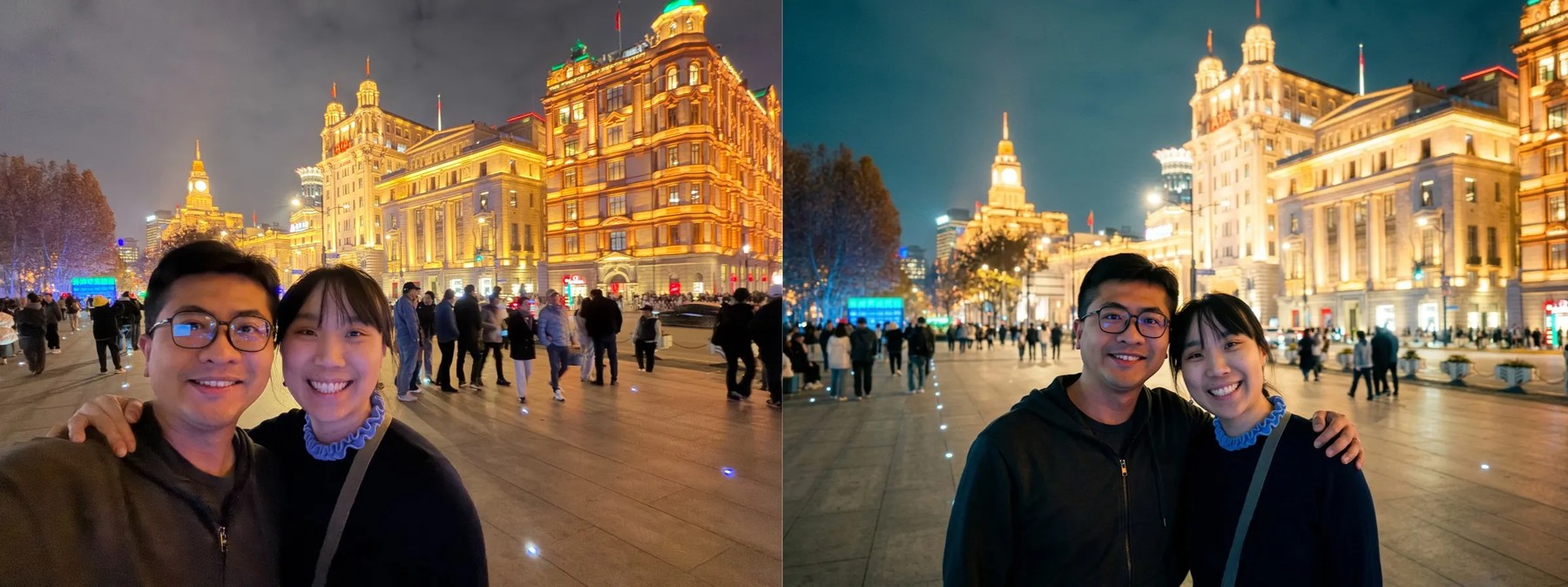
Zhang described Phota as a personal photo assistant that can find moments in a user’s gallery that are worth capturing and choose suitable edits for them. In her vision, the app acts like a photographer reviewing photos on a phone, trying to understand what is happening and imagine how the scene could have been shot on location.
How the app preserves people’s appearance
When editing images, generative tools such as ChatGPT can change a person’s appearance. This is especially noticeable in blurry photos: the system does not know what the person really looks like and may fill in details as it sees fit.
Zhang said the team had built its own personalization technology. It learns to recognize a person’s identity and helps preserve it when editing photos. When edited images are posted on social media, invisible watermarks indicate that they were created with AI.
Co-founder Zach Xia explained that the company pays close attention to personal context and identity modeling so edited photos remain images of real moments rather than looking like entirely generated pictures. He said beta testers liked getting improved versions of events they had actually experienced. The founders also noticed that users started taking photos more often, knowing the images could be improved later.
Zhang added that the app could help people who enjoy photography but are not used to editing get professional-quality shots. Sometimes, she said, editing turns a photo that would otherwise have been considered unusable into one worth printing.
Who the app is for
Phota Labs is initially targeting people who take a lot of photos, post them on social media and do not want to spend time editing by hand. The founders eventually hope to reach a broader audience too, including retirees who want to make beautiful photos for their grandchildren and parents who want to share neatly arranged family albums with friends and relatives.
Last year, the company raised $5.6 million in a seed round led by a16z. The app is launching for free to build an initial user base; the startup plans to consider a freemium model later. An Android version is also planned.
Dataist's take: Phota Labs is trying to combine automatic editing with preserving a person’s real features and the context of a photo. Invisible watermarks help identify images altered by AI, but the available information is not enough to assess how reliably the app preserves people’s appearance in difficult cases.
Daily AI news
Every day we pick what actually matters in AI and explain it plainly — no hype, no filler. Subscribe if you want to follow where the industry is going.
Only what matters — every day
Follow on X