

The app is the distribution problem
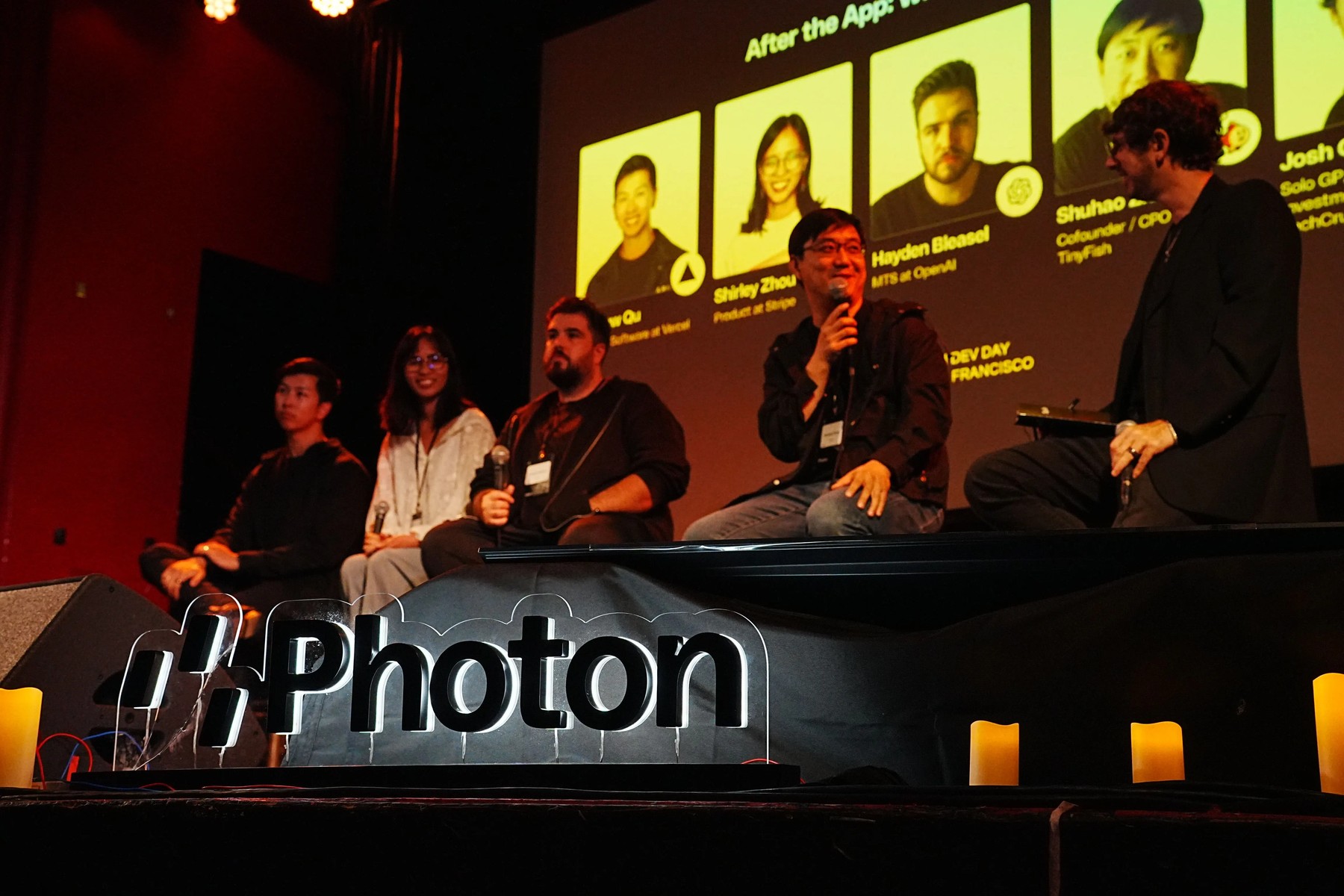
Photon co-founder and CEO Daniel Tyan staged an “app funeral” on September 17, alongside the company’s developer day. The event included panels with Vercel, Stripe and OpenAI, plus a real coffin decorated with app icons. The joke carries a serious thesis: Tyan thinks the app era is ending, though the transition will take time.
The problem that led Tyan and CTO Ryan Zhu to build Photon was familiar from their student projects and hackathon apps: people struggled to discover new products. An agent running inside iMessage could reach users through Apple’s Messages app instead. Tyan built a bot that replied to his friends in iMessage on his behalf. After the founders published the technology on GitHub, thousands of developers began using it.
Tyan left the M&T program at the University of Pennsylvania, and Zhu left school; Zhu later became a visiting student at the MIT Media Lab. Today, the open-source version still accounts for 98% of Photon’s usage.

From open source to hosted infrastructure
In April, the founders began offering a managed platform by subscription. Photon says the hosted service provides 99.95% availability and meets SOC 2 Type II and HIPAA requirements, making it suitable for medical AI agents.
The platform has attracted more than 40,000 registered developers, including paying customers. Customers using the service with more than 10 users must move from the free plan to one of three paid tiers. Photon does not disclose revenue, but says revenue has grown tenfold, customer churn is below 3%, and message volume increased fivefold over the last month.
Its toolkit includes a unified API, an extensible framework for channels, a command-line interface and observability tools. Developers can use it to build and operate agents across:
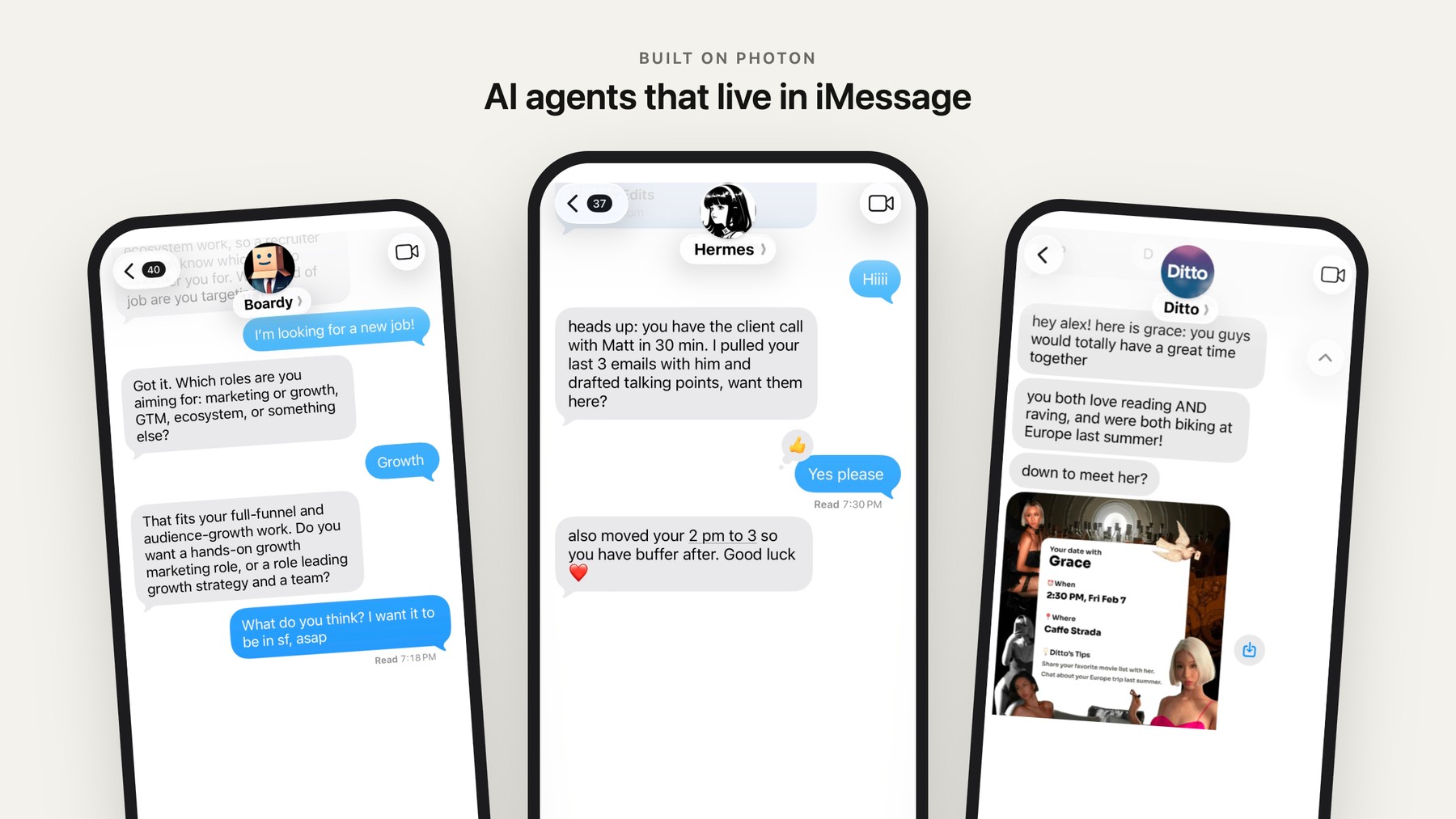
Customers include Corgi Insurance, dating services Boardy and Ditto, business banking platform Rho, financial AI assistant Fliptexts and AI email client Slashy. Photon also works with Vercel, whose Eve and ChatSDK products integrate with the platform, and Nous Research, whose Hermes agent uses Photon as its main iMessage layer. Photon technology also underpins Tencent’s QClaw and NanoClaw. Framework and infrastructure integrations include LangChain, Mastra, Convex, Render, Railway and Telnyx.
The harder bet is what comes after messaging
The seed round was co-led by Gradient and A*, with Vercel, HongShan, Z Fellows, Llama Ventures, Karman and other private investors participating. Tyan estimates that Photon’s open-source and hosted products together reach millions of end users.
Meta’s Muse has climbed to the top of app stores, offering a test of the idea that people may want AI through a new consumer app. Tyan argues that even if Muse leads the consumer AI market, developers will still need tools to launch products through messaging services.
I think Photon’s more consequential bet is not that apps disappear, but that distribution shifts toward agents embedded in existing services. The company’s current product is infrastructure for agents that interact with people; its longer-range idea is a layer that lets agents find and work with other agents. Tyan’s example is a travel assistant bringing in an agent to book flights or a hotel. That vision depends on a question the announcement leaves open: how will agents decide which other agents to trust? Until that is answered, Photon’s business is less about replacing apps than making agents easier to reach.
Daily AI news
Every day we pick what actually matters in AI and explain it plainly — no hype, no filler. Subscribe if you want to follow where the industry is going.
Only what matters — every day
Follow on X