
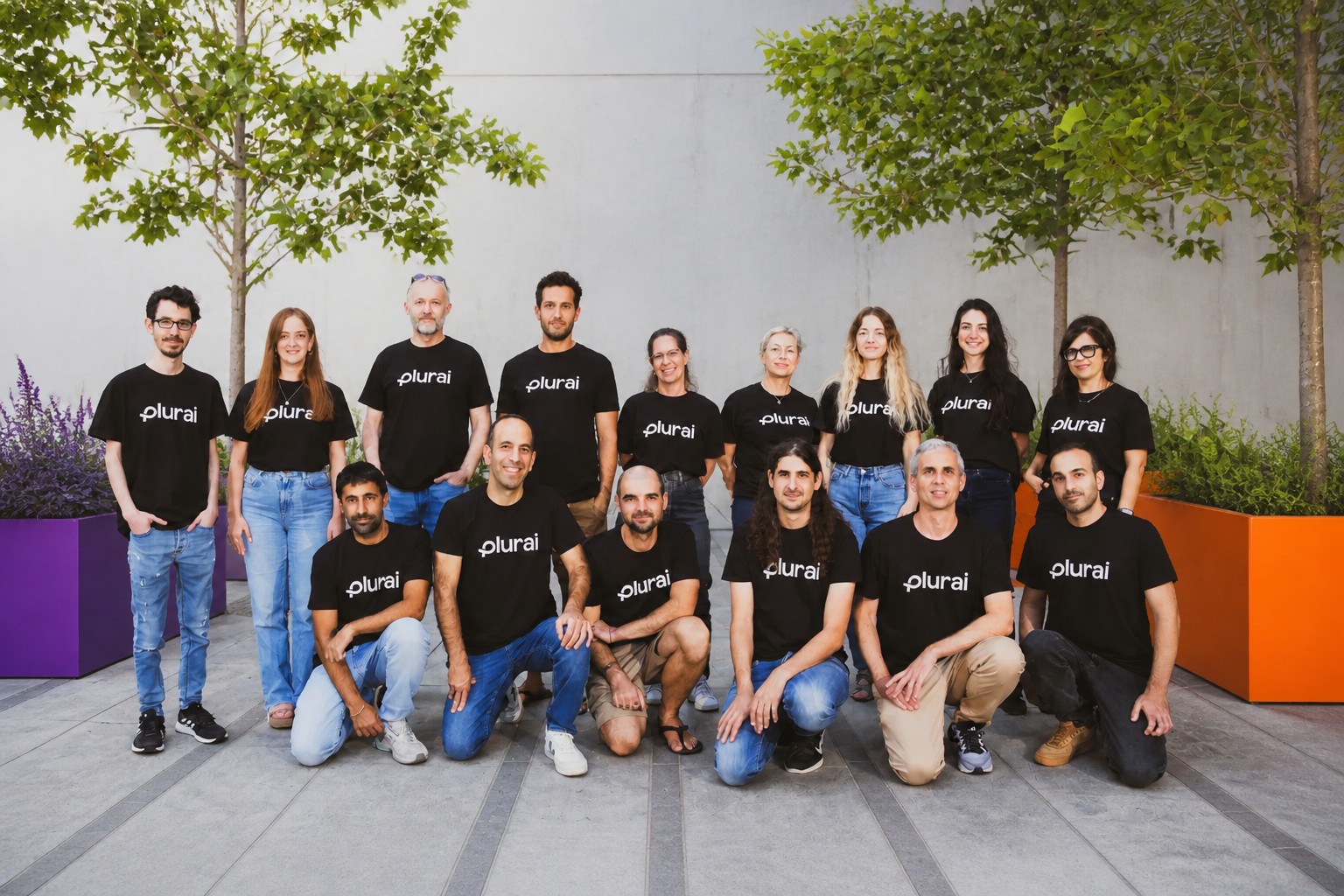
Startup Plurai is developing simulations to prepare AI agents for complex situations in companies’ work systems. The approach resembles preparation for self-driving cars: a digital twin of the infrastructure and synthetic data make it possible to test rare scenarios before putting a model to work. On Wednesday, Plurai announced that it had raised $13 million in seed funding. The company also wants to use the data it collects to fine-tune small open-weight models for specific customer needs.
Plurai raises $13 million to make AI agents more reliable
Why agents need testing
Test results show that current agents are not yet reliable enough for complex work without constant supervision. In LiveBench 2.0, Claude Fable 5.2 completed 82.9 tasks out of 100, while ChatGPT-6 Astra completed 75.6. In testing by EON, which evaluated agents in a simulated corporate environment, Claude Opus 4.8 scored highest, completing tasks with 76.8% accuracy.
Even when an agent handles an individual assignment, a chain of actions can fail. An agent booking a trip might ignore expense policies. A query to one database may produce the right answer, but combining information from several datasets makes the task more difficult. And a long conversation with a customer support bot can overload an agent’s context and lead it to the wrong decision.
Simulations built from a company’s systems
Plurai co-founders Ilan Kadar and Elad Levi previously worked at Nexar, which develops autonomous driving technology. Kadar worked with Waymo, helping model and evaluate the company’s end-to-end deep learning software for driving.
Kadar said the team saw a familiar problem with AI agents: building a demo is easy, but making it reliable and cost-effective is harder. Plurai is therefore building a simulation layer for agents.
The platform creates a digital twin of a company’s electronic systems, including its knowledge base and the tools an agent will be able to access once deployed. Plurai then maps possible agent actions as a graph and uses it to test the model and prepare fixes for rare situations. The platform works with existing AI agent tools: Claude Code, Codex, Copilot and Cursor.
From large models to small ones
Plurai also plans to use the data it gathers to fine-tune small open-weight models for individual customers. In joint tests with Nvidia and Nebius, the company says its models outperformed mid-tier models among frontier models at lower cost.
Kadar described the approach this way: simulation breaks a large language model’s work into narrower tasks; an open-weight model is trained on those tasks, then tested in the same simulation to see whether its performance is comparable to that of a frontier model. The company says this approach could reduce costs by one or two orders of magnitude.
Plurai’s business has the backing of angel investor Rea Miyara, a Google DeepMind researcher. She sees the company’s understanding of how models fail in real work, and its ability to generate synthetic data for tuning them, as an advantage. She said IT leaders are finding that frontier models perform poorly on specific business data, while their cost is difficult to sustain over the long term.
Plurai compares the use of AI in digital environments with robotics. General-purpose models are already giving robots new capabilities, but they do not yet make it possible to deploy them widely with the required reliability. Meanwhile, robots with models built for specific tasks are already working with customers and collecting real-world data.
Kadar believes that even more capable models from OpenAI and Anthropic will not know the internal rules of a particular company.
Plurai’s $13 million seed round was led by Team8. U&I, Velocity and Mercer also participated.
Dataist’s take: Plurai is betting that an agent’s reliability depends not only on the capabilities of its base model, but also on training with a specific company’s data and rules. For now, the claimed advantage of cheaper models is based on joint tests with Nvidia and Nebius; the source provides no information about the scale of those tests.
Daily AI news
Every day we pick what actually matters in AI and explain it plainly — no hype, no filler. Subscribe if you want to follow where the industry is going.
Only what matters — every day
Follow on X