
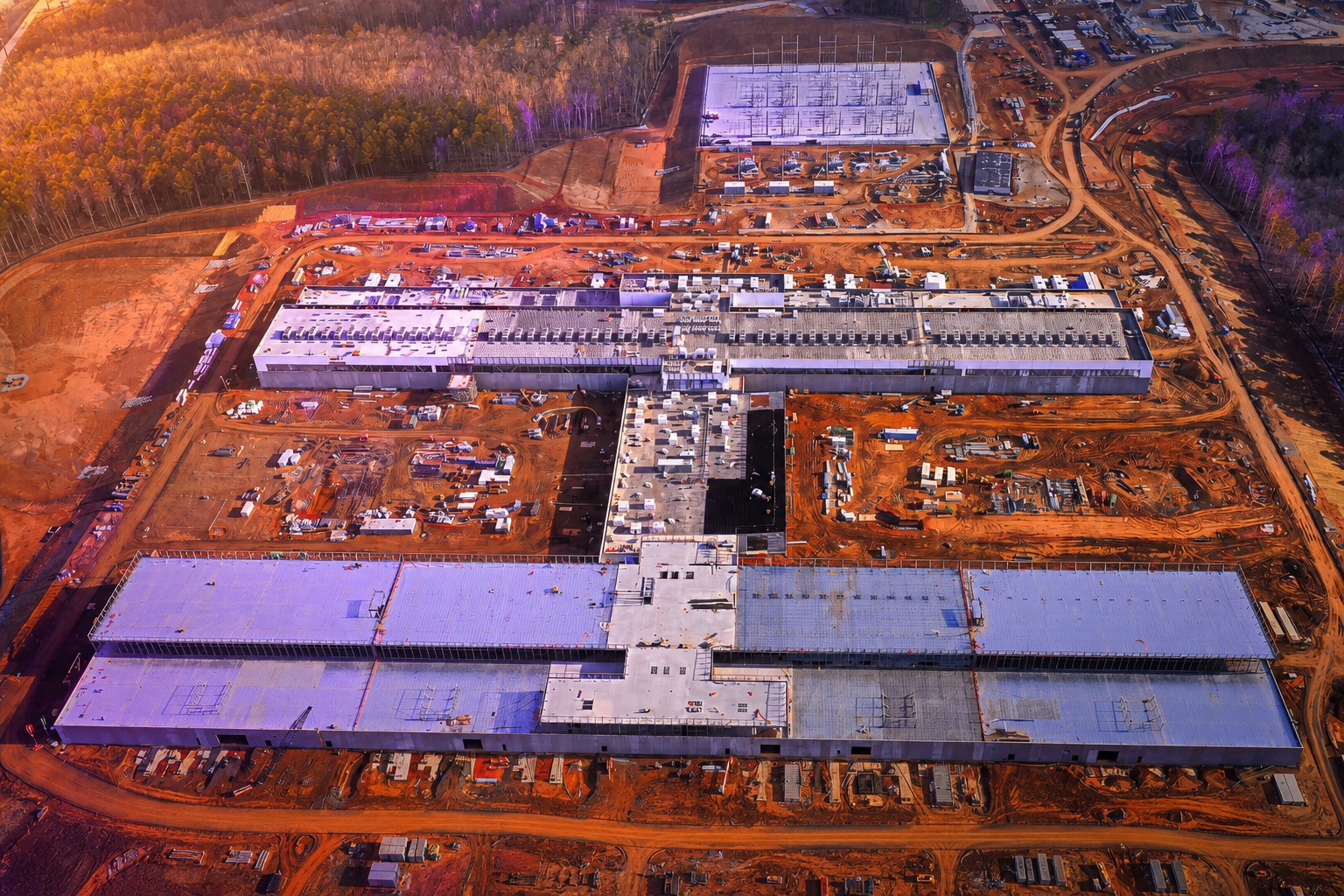
PwC's central estimate for global data center spending is $31.6 trillion by 2050, with more than $15 trillion of that in the United States. If AI adoption runs hotter than the moderate pace that scenario assumes, the firm puts the figure at $50 trillion over the next 25 years. The forecast carries a caveat from PwC itself: the compute needs of a widening user base will require an enormous amount of financing, and capital is expected to be sufficient. That last clause is the assumption everything else rests on.
Set the numbers against each other and the spread becomes the story. $31.6 trillion across 25 years averages about $1.26 trillion a year; the accelerated case averages $2 trillion. A band that wide between "moderate" and "faster" adoption, stretched over a quarter century, is not a forecast that can be wrong. And better than $15 trillion of $31.6 trillion puts close to half of the world's data center construction in a single country.
The more telling chart is not PwC's. A Wall Street Journal chart shows two lines moving in opposite directions: capital going into US construction that is not data centers has collapsed, while capital going into data center construction has climbed to a level with no precedent.
That belongs next to PwC's assurance that capital will suffice, because on the evidence of that chart, capital is sufficing by coming out of everything else that gets built. The money arriving in data centers does not look like additional money. It looks like redirected money, which turns "will there be enough" into "enough for what, and at the expense of what."
The returns, meanwhile, have not shown up. The argument's own concession is that the AI build-out has not yet delivered even a small fraction of the economic productivity institutional investors were underwriting. They placed the bet regardless, using nearly every asset available to them, including the country's pension savings — the largest financial wager of the century, in the framing of the piece.
Even its optimistic reading is backhanded. Hold the pace, stay on the tiger, and from this year you can look back and marvel at how good things used to be. The projections for the decades after that require still more money.
What I take from all of this is that the tiger is doing work the numbers cannot. The case for continuing is not that the returns are coming. It is that stopping would send the rest of the economy into free fall — an argument about the cost of dismounting, not about the animal. Investors are described as holding on in the hope that a chaotic process eventually tames the technology. That is not a thesis. That is a position too large to exit.
And the financing is getting harder as the requirement gets steeper. Borrowing costs are rising with inflation at the same time the capital need is described as close to exponential. Those two curves point against each other, and they do it on a one-year horizon, which makes 2050 close to a rounding error in the argument. What decides this is not whether $31.6 trillion gets spent by mid-century. It is whether the next syndicate of lenders turns up at a price the build-out can carry.