
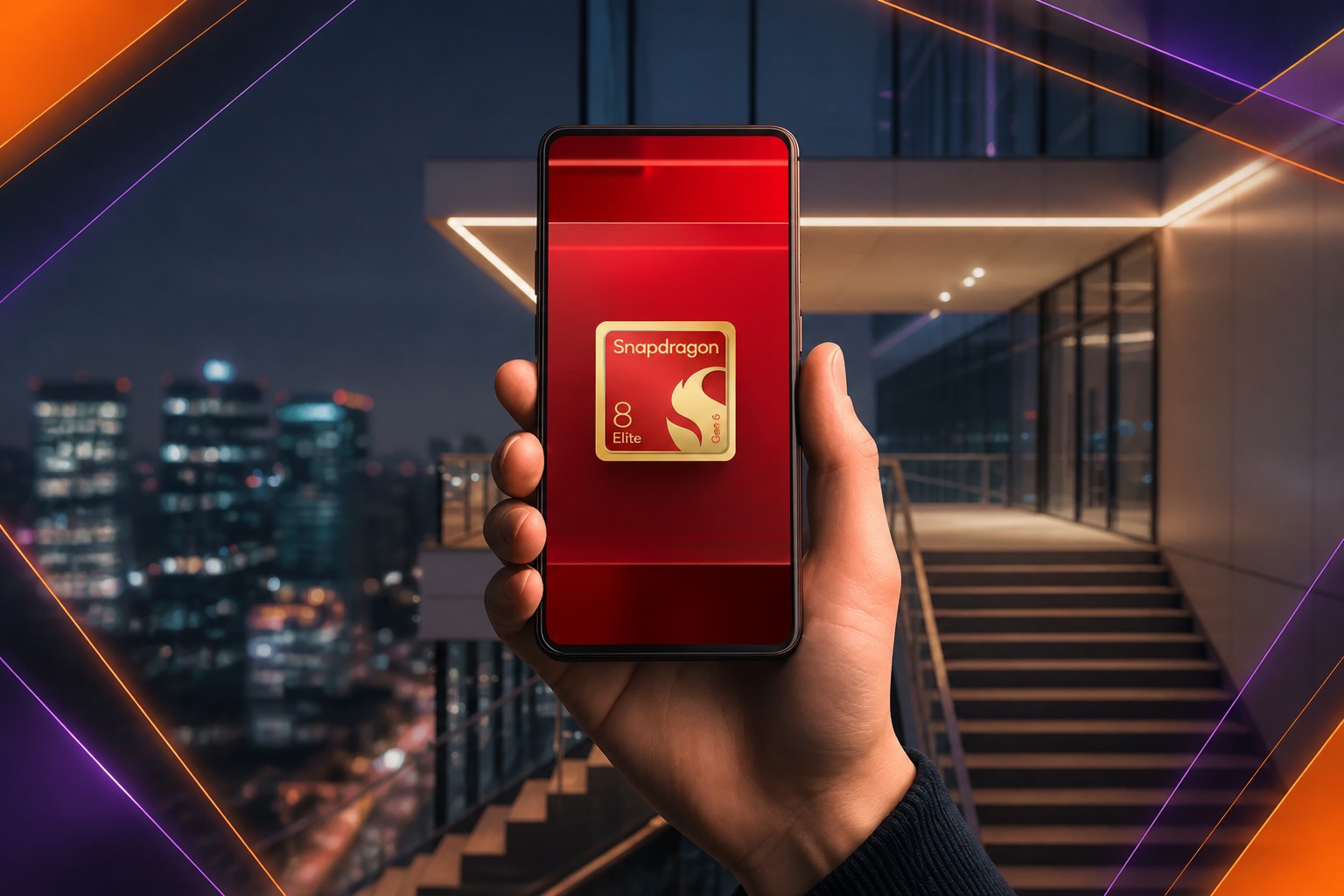
Smaller models, more personal agents
Qualcomm says the chips will improve AI-agent personalization through sensing hubs that can run models of up to 200 million parameters on the phone.
They are designed to support:
The Extreme version extends that local capability to a mixture-of-experts model with 30 billion parameters. The full model has 30 billion parameters, but only part of it is activated for any given task.
That is a larger local model than the 20 billion-parameter mixture-of-experts model Apple presented at its Worldwide Developers Conference in June. Apple described that model as the most advanced in the third generation of its base models.
Cameras, calls and the first phone
The processors also target the parts of a phone that users already interact with. Qualcomm says the new design gives cameras per-pixel control for more professional use, improves stabilization and strengthens motion understanding.
The Snapdragon 8 Elite Extreme Gen 6 supports:
Both chips use AI to enhance voices and reduce noise. They also introduce Qualcomm Voice Bubble, a technology that isolates a user’s noise during calls.
Motorola has already shown the first smartphone using the Extreme chip: the Motorola Signature 27. It is expected to enter broad sales during this year.
Qualcomm’s handset bet
Qualcomm says it is working on more than 40 devices with AI. The company is betting that users will apply AI through smartphones rather than buying separate specialized devices.
That thesis has support from recent industry messaging. Nothing co-founder Carl Pei pointed toward the same direction earlier this month, and Apple’s new CEO John Ternus reinforced it during the presentation of the iPhone Duo.
My read is that Qualcomm is making a defensive argument as much as a technical one: if AI belongs in the phone, the chip supplier remains central even when the most visible product is an agent rather than a new camera or display. But the announcement is quiet about the costs of that choice. It does not establish how these models affect battery life, how quickly developers will adopt the capabilities or which phone experiences will make local inference matter enough to notice.
That leaves Qualcomm with a strong silicon demonstration but a still-unproven product story. The phone may be the default AI device, yet the value of putting a 30 billion-parameter model inside it will depend on what manufacturers and software makers do with the capacity.
Daily AI news
Every day we pick what actually matters in AI and explain it plainly — no hype, no filler. Subscribe if you want to follow where the industry is going.
Only what matters — every day
Follow on X