
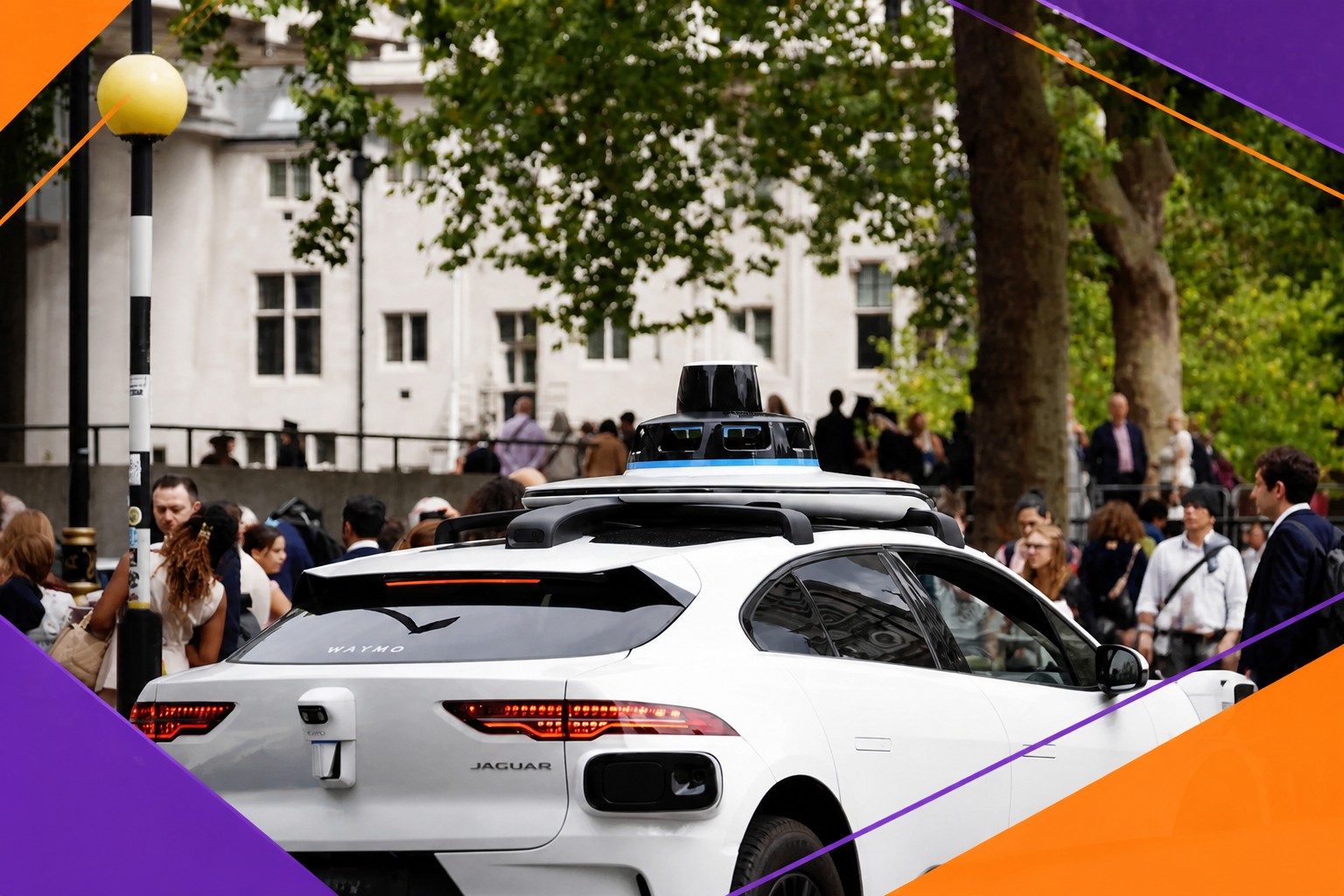
Three readers wrote in to answer a question Adrian Chiles asked in his article "Driverless cars are taking us nowhere": who actually wants one of these things? Two of the answers came from people for whom the question is not rhetorical. Lars Janssen, of Haywards Heath, has nystagmus, an eye condition that means he will never drive. Richard Connell's 18-year-old daughter will never live independently and depends entirely on the help of others. Both told Chiles, in their different ways, that filing autonomous vehicles under tech-bro vanity is a position you can hold comfortably only if your own mobility is not in question.
Janssen put it most sharply. He will never be able to drive, he wrote, unless some "tech bro measuring his achievements," or somebody else, finds a cure. He conceded Chiles's premise in part: not every driver is as reckless as the ones whose behaviour the column objected to. But the most careful driver on a given road, he argued, may turn out not to be a person.
He had a number for it. Waymo, Google's sister company, says its vehicles are involved in injury crashes far less often than human-driven cars. In July 2025 the Insurance Institute for Highway Safety found that, per mile driven, Waymo cars were involved in 68% fewer crashes than cars with people behind the wheel.
If you want to criticise tech-bro culture, Janssen suggested, pick a better target than a technology that can save lives and hand independence to people like him. Chiles had written that the two of them could not be friends if driverless cars made Janssen's top ten wishes. Janssen said he cannot wait to get into one.
Connell's letter was blunter about who gets to be dismissive. Calling the development of driverless cars a tech-bro achievement contest is, he wrote, perhaps a position available to a person without a disability. Driverless cars would widen his daughter's world and strip out the risks that come with her vulnerability. He set it alongside other machines that have already done this quietly: augmented-reality glasses are changing lives for disabled people, and a tablet taught his daughter to hold her hand still so that she could point.
The third letter, from Michael Fuller in Ampthill, Bedfordshire, is about rural pubs. There are plenty of good ones near his house, but you either drive — in which case you have one pint and the trip stops feeling worth it — or you pay for an expensive taxi and deal with the hassle. "Driverless cars? Bring them on."
The striking thing about this set is that the Waymo statistic is the weakest plank in it, not the strongest. Per-mile crash comparisons against human drivers answer the objection Chiles was making — that these cars are a menace — and they answer it well. But for Janssen, and for Connell's daughter, the comparison is not with a human driver who is slightly worse. There is no human driver. The relevant alternative is not a riskier trip; it is no trip. That is an argument about access, and it does not need a safety league table to stand up. Fuller's pub argument is doing something different again, and it is worth being honest about the difference: convenience and independence both point at the same vehicle, but only one of them is a reason to build it at public expense or public risk.
What nobody in the exchange addresses is where any of this is supposed to happen. The only operator named is Waymo. The only safety data cited is American. The three people making the case are in West Sussex, London and Bedfordshire. Nothing on the page says when a car of this kind will be available to a man in Haywards Heath who cannot drive, at a price he can pay, or whether the rural lanes around Ampthill are anywhere near the top of anyone's deployment list. The disability argument is the most persuasive one in the correspondence and the least likely to determine where the cars actually go first.
That is the tension the letters expose without quite naming it. The people with the strongest claim on this technology are the ones with the least influence over whether, and where, it gets built.