
Built for workflows that do not follow a script
Restate was founded in 2022 by Stefan Ewen and colleagues, before AI agents became a major source of demand for this kind of infrastructure. The company had set out to build a runtime for multi-step processes that could withstand crashes and network interruptions. Ewen says it was not designed specifically for agents; its capabilities simply matched problems that surfaced as agents began running more complex tasks.
Those tasks can last longer than ordinary software operations and take paths that are difficult to predict in advance. For a workflow to recover and reach a consistent result, Ewen said, the system must record its actions precisely enough to replay them.
Restate has signed several contracts worth hundreds of thousands and millions of dollars over the past few months, Ewen said. That growth helped the company secure its $20 million Series A.
A smaller rival to Temporal
The funding gives Restate more room to compete with Temporal, a much larger company in the reliable workflow infrastructure market. Founded in 2019, Temporal announced a $550 million Series E round at a $12.55 billion valuation earlier this month.
Restate is smaller, but already counts Replit, a prompt-based software development platform, among its customers. It also serves Fortune 500 companies, including financial institutions, Ewen said. Their use cases vary, but the underlying need is similar: when a failure interrupts a process, the system should be able to recover it.
Rather than build its runtime on top of an external database, Restate developed its own storage, replication and redundancy layers. Ewen said that architecture helps it run quickly while using fewer resources. The company wants to make reliable execution practical not only for heavyweight workflows, but also for lighter ones where cost and efficiency matter.
The open question is how far the need spreads
Ewen previously helped create Apache Flink, a popular framework for stream processing, and later served as CTO of Data Artisans, which built a business around the project. Alibaba acquired Data Artisans in 2019 and renamed it Ververica; Ewen remained CTO for another three years.
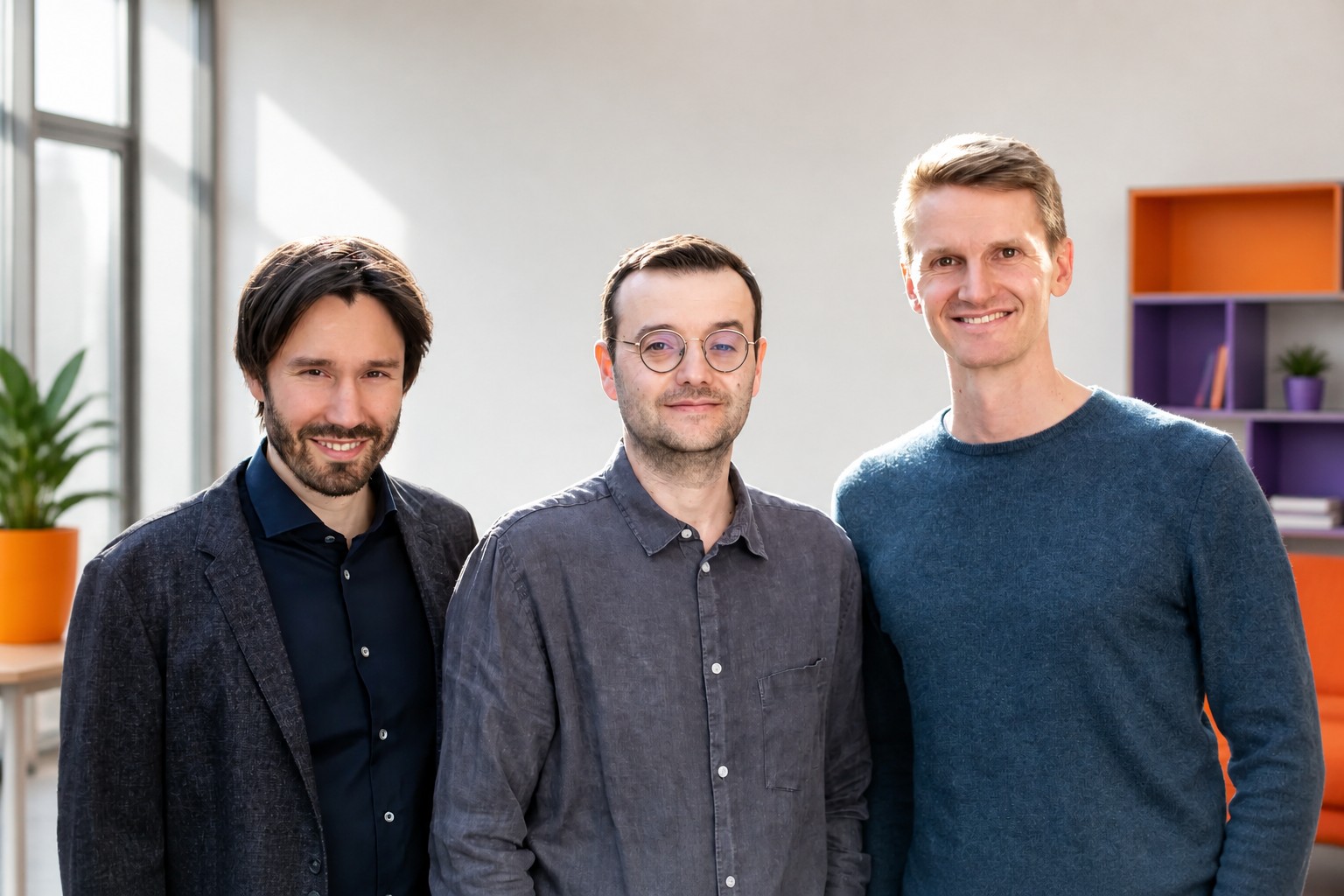
He founded Restate with former colleagues from Data Artisans and Ververica, Igal Shilman and Till Rohrmann. Ahmed Fargal, previously an engineer at Stripe and Meta, joined as the fourth co-founder during the Series A.
The new capital will fund sales and business development hires, a larger engineering team and expansion of the company’s San Francisco Bay Area office, bringing it closer to current and potential customers.
I think the central bet is not that every company will adopt agents, but that more software will consist of long-running work that must survive interruptions. Ewen expects the system to become useful beyond technology companies, eventually serving organizations of different sizes and types much like a database. Restate’s challenge is to show that reliability can be affordable enough for routine workflows, not just the most demanding ones.
Daily AI news
Every day we pick what actually matters in AI and explain it plainly — no hype, no filler. Subscribe if you want to follow where the industry is going.
Only what matters — every day
Follow on X