
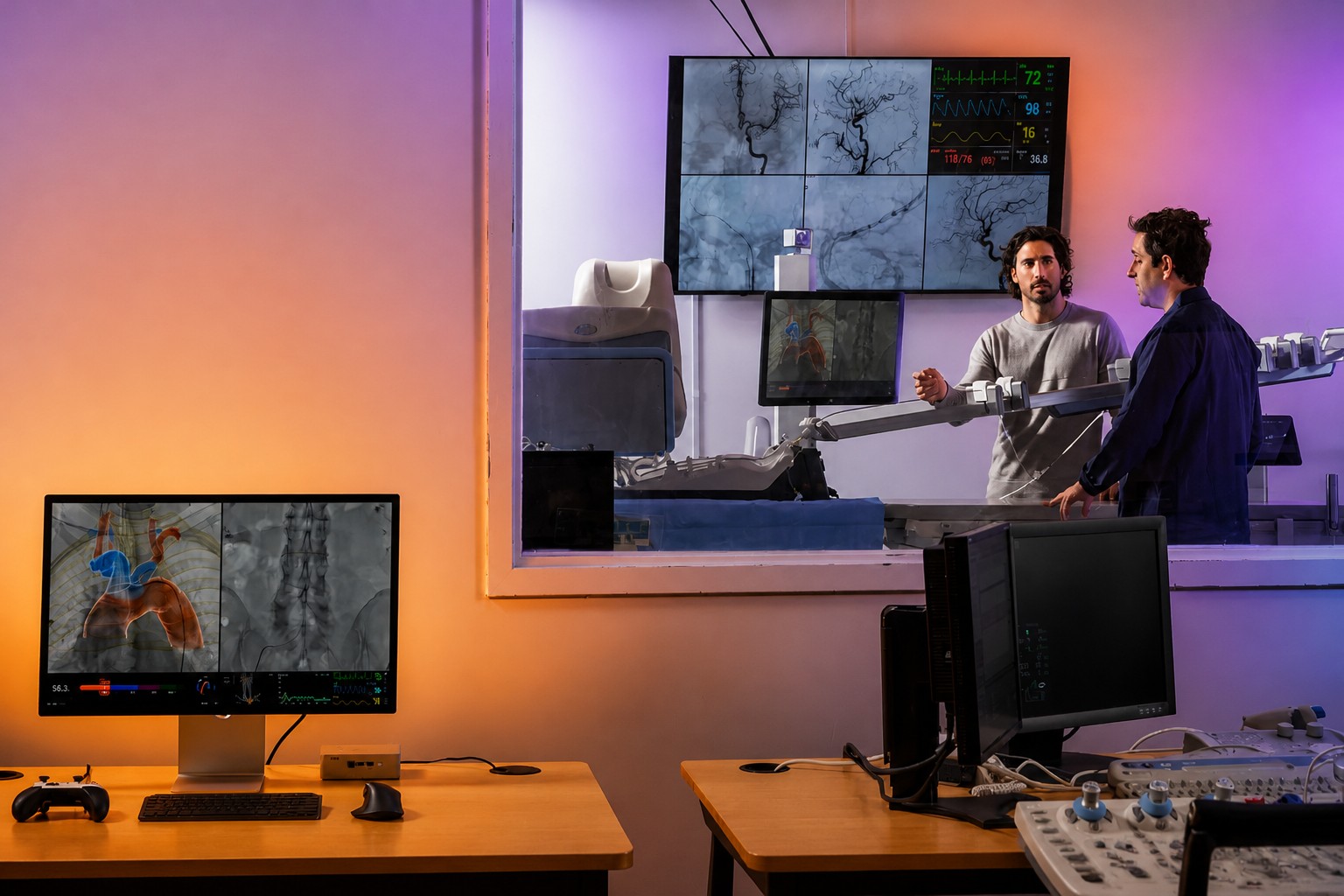
Remedy Robotics is developing the N1 robotic system, which lets a surgeon remove blood clots remotely. It is designed to help patients with ischemic stroke at hospitals that lack specialists for the procedure: currently, about 1 in 10 eligible patients receive a thrombectomy. In 2025, the company tested the system on ten patients in Toronto, then announced it had raised $62 million to prepare for clinical trials. Remote stroke surgery still faces questions around connectivity, hospital equipment and safety.
Robots could bring stroke care to remote hospitals
How the N1 system works
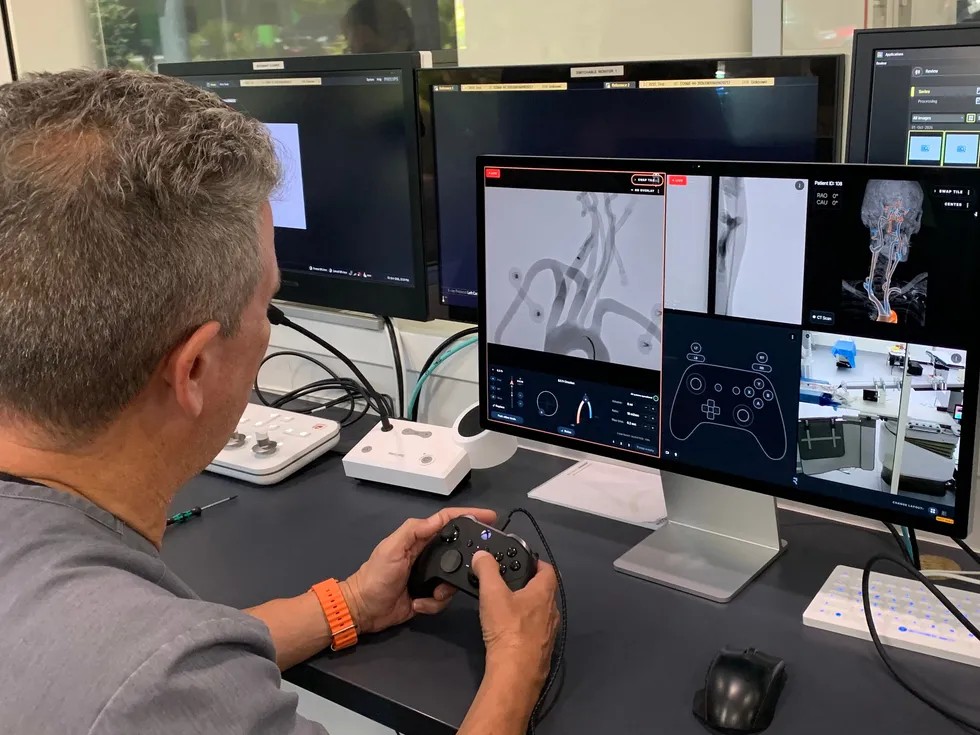
A journalist tested the system on a plastic vascular model. The patient was six meters away, out of sight and out of reach. Using an X-ray image, the journalist guided a catheter with an Xbox controller. Surgeon David Bell explained that smooth movements and convenience for the doctor do not, by themselves, show whether treatment has improved. The key question is whether the robot can help patients who might otherwise not get a thrombectomy in time.
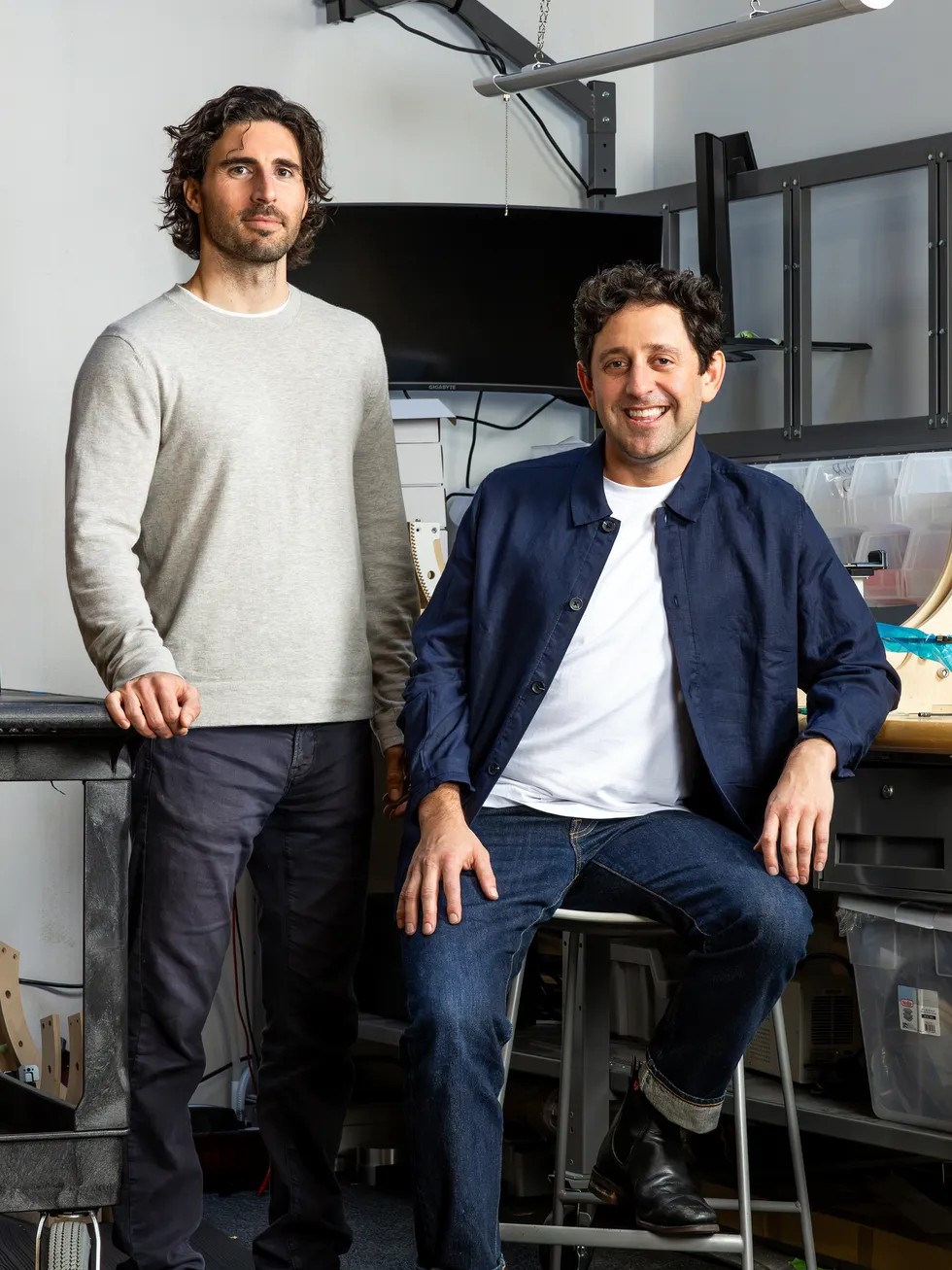
Bell is a physician from Australia and a former cardiothoracic surgery trainee. He founded Remedy Robotics in San Francisco with engineer Jake Sganga, who leads the technical side of the project. The team is developing a robotic catheter and software to treat ischemic stroke in remote and rural areas. According to 2025 figures, ischemic stroke affects at least 5 million people worldwide each year. In the US, stroke is the fourth leading cause of death.
An ischemic stroke disrupts blood flow, usually because of a clot. To perform a thrombectomy, a surgeon inserts a flexible guidewire through a small incision in the groin, then threads a thin, hollow catheter over it. Instruments pass through the catheter to the brain and remove the clot. Only about one in ten patients who are eligible for the procedure receive it.
The surgeon works beside the patient, manually advancing the guidewire while watching an X-ray. The image shows a flat silhouette, but not soft tissue or the blood vessels themselves. To see the route, the doctor injects contrast dye through the catheter. The guidewire can also rotate inside the body: a movement to the left on the screen does not always mean a turn to the left inside the vessel.
Source: spectrum.ieee.org
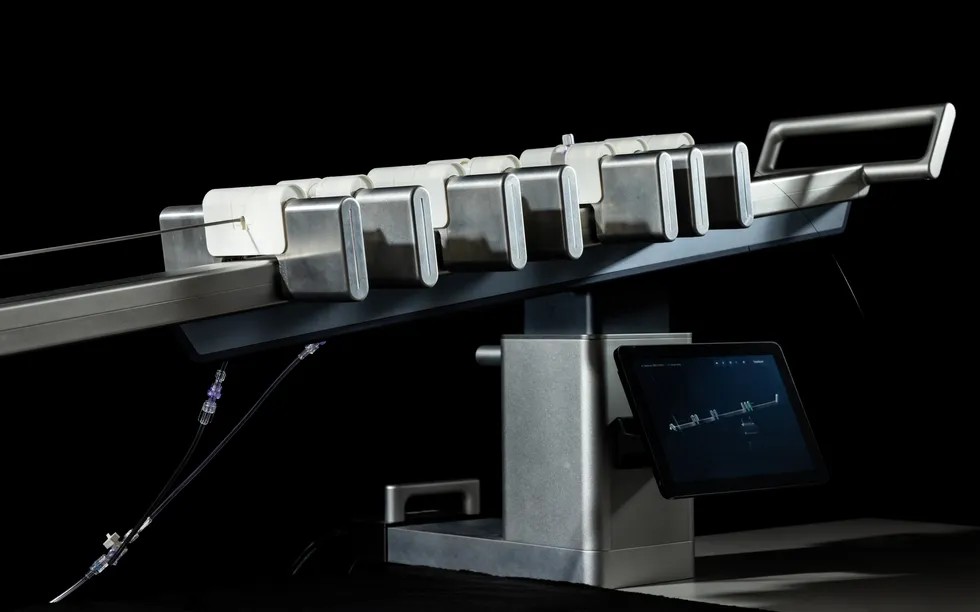
The N1 system feeds a catheter through a guide with seven modules and allows precise control inside the patient’s vascular system, even from several kilometers away. A robotic arm advances the catheter, while thin wires steer its tip in the desired direction. The catheter does not need a separate guidewire to navigate.
Sganga can overlay a CT scan on an X-ray image to show the three-dimensional path of the blood vessels. Markers on the catheter help a computer vision algorithm determine how it is rotated inside the body. If the surgeon selects a direction to the right on the X-ray image, the system calculates the movement the catheter needs to make.
Motorized cartridges are mounted on the robotic arm. They contain mechanisms that grip thin surgical instruments and move them into and out of the body. These instruments include a stent, an expandable mesh tube that can catch a clot and pull it out.
Bell and Sganga met at Stanford in 2019. Bell was already a doctor, was studying for an MBA and had enrolled in a robotics course to find an engineer interested in medical devices. The instructor introduced him to Sganga, a bioengineering graduate student developing navigation algorithms for an FDA-approved robotic bronchoscope.
Sganga had seen surgical robotics companies fail by choosing problems that were not important enough. For the project, he wanted a medical problem where the value of a robot could be tested before human trials. Stroke fit: the need for treatment was already established, and delays had direct consequences.
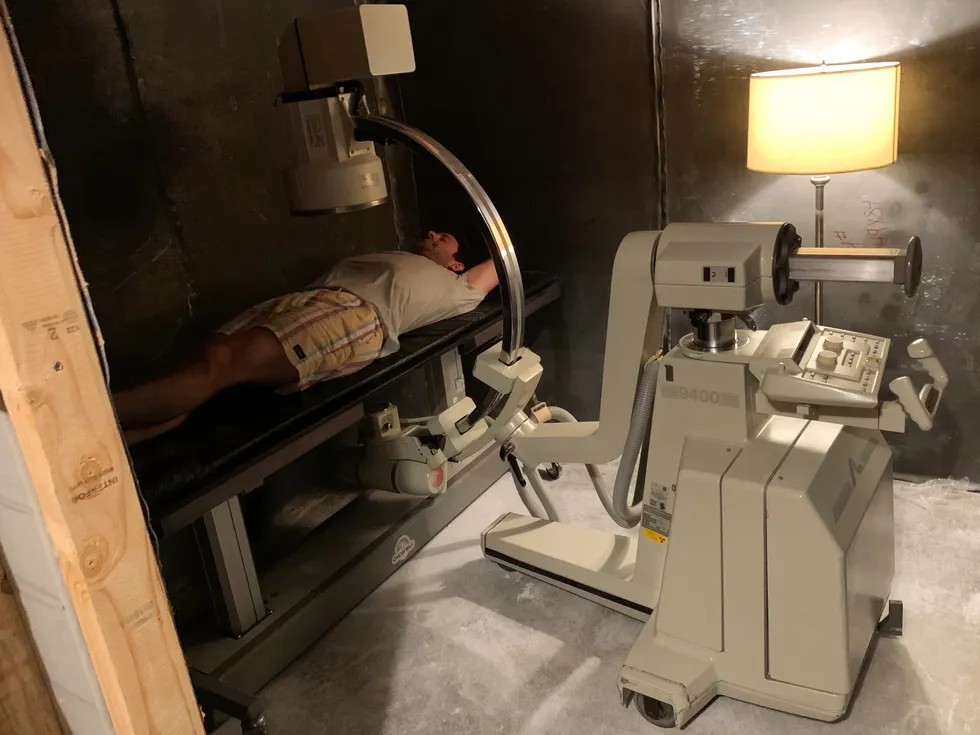
About a year after leaving Stanford, Bell and Sganga rented a two-car garage in Southern California and lined it with lead to shield against X-rays. They called it the bunker. It had room for a bed and an old C-arm X-ray machine. The team tested the catheter prototype there on silicone vessels, first controlling the robot from the next room, then from a laptop hundreds of kilometers away. The tests convinced the founders that remote control could work.
Why remote surgery is returning
Attempts at operating remotely began before modern stroke treatment existed. In the 1980s and 1990s, Computer Motion and Intuitive developed robots to assist surgeons at the operating table. In 2001, French surgeon Jacques Marescaux and Canadian surgeon Michel Gagner removed the gallbladder of a patient more than 6,000 km away. Marescaux controlled a Computer Motion robot in Strasbourg from New York over a high-speed fiber-optic connection. The operation, known as the “Lindbergh Operation,” was completed without complications.
But remote surgery did not become widespread. Companies focused on robots controlled by surgeons in the same operating room. Computer Motion and Intuitive merged in 2003, and other companies later entered the market. Thousands of surgical robots now operate in US hospitals, assisting with about 22% of procedures. In 2023 alone, more than 2 million operations were performed using Intuitive’s main platform, da Vinci.
Source: spectrum.ieee.org
In the summer of 2025, interest in remote surgery picked up again. Surgeons near Orlando removed the prostate of a man in Luanda, 11,000 km away. Around the same time, Intuitive demonstrated “remote collaboration”: two surgeons on different continents operated together on a tissue model. India’s SS Innovations is testing remote cardiac surgery, while Texas-based XCath tested a steerable guidewire for thrombectomy in Panama. These projects draw on advances in computer vision and machine learning, but their success is not yet assured.
Brad Nelson, who develops surgical robots at ETH Zurich and is not affiliated with Remedy, believes procedures where time matters most are the best candidates for remote surgery. In a paper for Science Robotics published last year, he and his co-authors cited stroke, heart attack and fetal surgery as examples of situations where a patient might not reach a specialist in time.
Procedures inside blood vessels could be a good test of remote control. If the connection to the robot drops, the catheter can be stopped inside the vessel without continuing the operation. There is no large open cavity to monitor, or complex sequence of urgent actions as in an organ transplant. Nelson’s lab is also working on stroke treatment: with Mayo Clinic in Arizona, it is developing microscopic robots the size of a coffee bean that are controlled by magnets to dissolve clots.
Connectivity and hospital capabilities
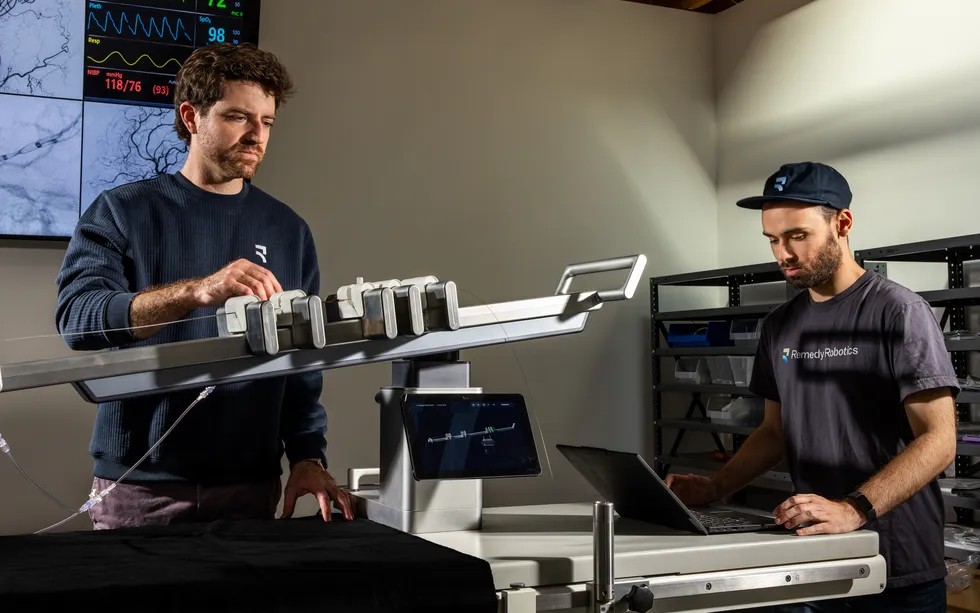
After the first tests in the garage, Bell and Sganga began preparing N1 for use in hospitals. Doctors and nurses asked for better audio and video transmission: an operation requires constant interaction across the team. The team also discussed setup time, maintenance, cleaning, secure connections and cybersecurity.
Source: spectrum.ieee.org
Signal latency — the time it takes a small packet of data to reach its destination and return — remains one of the main constraints on remote surgery. In major cities with good 5G or fiber-optic internet, it can be tens of milliseconds. In rural parts of the US, latency sometimes exceeds 100 milliseconds.
Noticeable lag does not necessarily rule out an operation. Researchers in Japan studied five years of surgical simulations and demonstrations and reported that surgeons adapted to connection speeds by pausing and moving more slowly. Remedy has observed similar behavior. The company aims to keep round-trip latency at or below 150 milliseconds, less than the average human reaction time of 200 milliseconds. If latency exceeds that threshold, the system pauses all surgical actions. Bell and Sganga say they adapted N1 to slower rural internet and recently controlled the system through a mobile hotspot from the other side of the Pacific.
Remote work also raises questions about how surgical practice is organized. Bell worries that surgeons could lose their skills or become dependent on specific platforms. Another concern is how a doctor would divide their attention if two patients in different locations needed help at the same time.
Where telesurgery is most needed
Stroke symptoms can appear within seconds or minutes. The next hour is known as the “golden period”: treatment needs to begin before the risk of irreversible brain damage rises. According to neurologist Archit Bhatt of Providence Medical Group in Portland, 2 million brain cells die for every minute lost or spent waiting. Yet decades after thrombectomy was introduced, one in five US residents still lives more than an hour’s drive from a hospital that performs the procedure.
Small and midsize hospitals often lack a round-the-clock team, the necessary expertise or the equipment, so stroke patients are transferred to major medical centers. As a result, specialist care is concentrated in cities. Alaska, where 739,000 people live or work, has two thrombectomy centers, both in Anchorage. More than half the state’s residents live outside their service areas.
But the remote hospitals that need this care most may lack reliable connectivity. Last June, experts from five major robotics companies proposed technical standards for “surgical-grade networks.” Mike Teodorescu, an information systems researcher at the University of Washington, says specialists generally consider latency below 100 milliseconds safe. But his team recently reported that this level of connectivity is unavailable to many rural areas and even most countries.
Source: spectrum.ieee.org
Connectivity alone is not enough. The smallest and most remote hospitals may lack neurologists, catheter teams, CT scanners and specialized intensive care units. Teodorescu calls this an infrastructure problem. Bhatt believes midsize regional hospitals may be better suited: they rarely perform thrombectomies, but many already have the necessary specialists, experience and patient volume.
Remote surgery could also help train doctors locally. Emergency physician and educator Jaspid Bahra, based in Kilifi, Kenya, worries that robotic telemedicine could concentrate expertise in major cities and widen the gap between wealthy cities and poorer areas. In his view, a system like Remedy’s would be more useful if it not only treated patients but also helped local specialists learn. Sganga said that approach fits Remedy’s goals. Bahra imagines remote surgery as a setup in which an experienced surgeon stays connected, guiding a colleague at the patient’s side.
How the company measures results
In more than 1% of clot-removal procedures, surgeons accidentally damage a blood vessel. That complication can lead to the patient’s death. Bell believes a robot could reduce the risk.
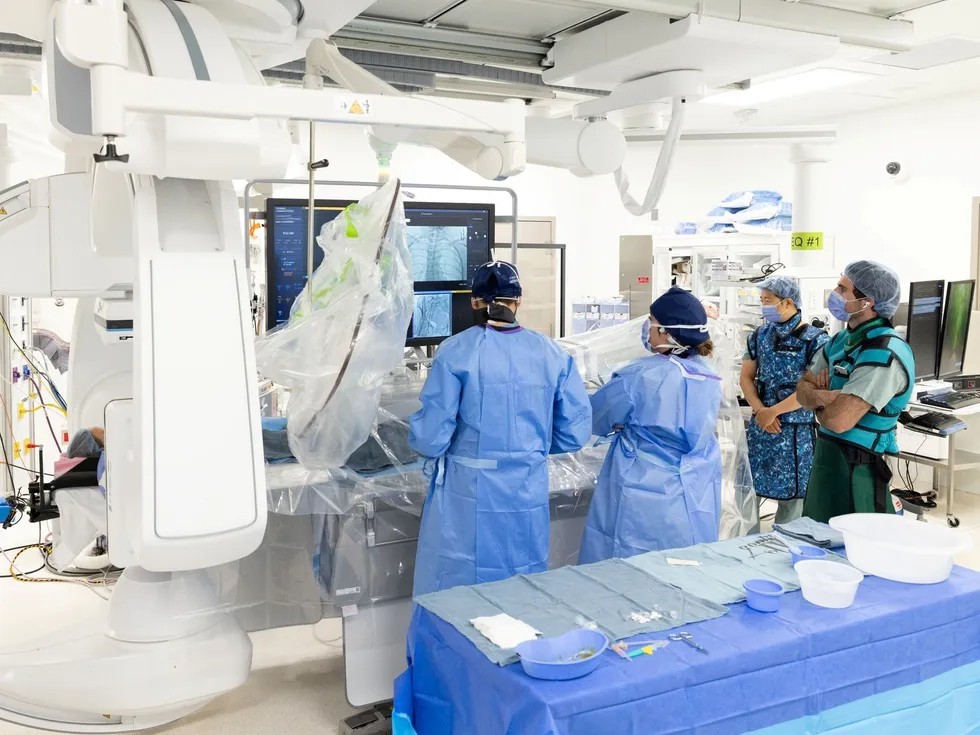
In September 2025, Bell flew to Toronto for N1’s first tests with patients. Ten people agreed to planned, non-emergency procedures. A neurosurgeon with a laptop was to operate on six patients in an adjacent room, two more elsewhere in the hospital, and the final two at a separate hospital across the city. The team had spent years testing the system on silicone models. Tests on laboratory animals showed that the robot made contact with blood vessels less often and completed procedures faster than a human.
Source: spectrum.ieee.org
Before the Toronto procedures, the team carefully measured internet connection latency. Bell acknowledged that it was hard to know in advance how test results would translate to people; he barely slept the night before the first operation. The procedures — imaging the inside of blood vessels, known as angiograms — were successful and took almost half as long as the current standard approach. Remedy considers speed one measure of success: it could let doctors treat more people.
Source: spectrum.ieee.org
A few months after the journalist’s visit, Remedy announced it had raised $62 million to prepare for future clinical trials. Bell said some of the funding came from the University of California system, where clinical trials are expected to take place over the next year. Remedy plans to start with planned procedures performed on site, such as treating unruptured aneurysms, then move to remote operations in Australia or within the University of California system toward the end of 2027.
Sganga stresses that hospital trials with the surgeon beside the patient are not just preparation for remote surgery. In his view, the system should also improve surgeons’ work during conventional procedures; otherwise, doctors will not use it or gain the experience needed for remote operations. Sganga says the steerable catheter and computer vision algorithm could improve thrombectomies regardless of where the surgeon is.
Source: spectrum.ieee.org
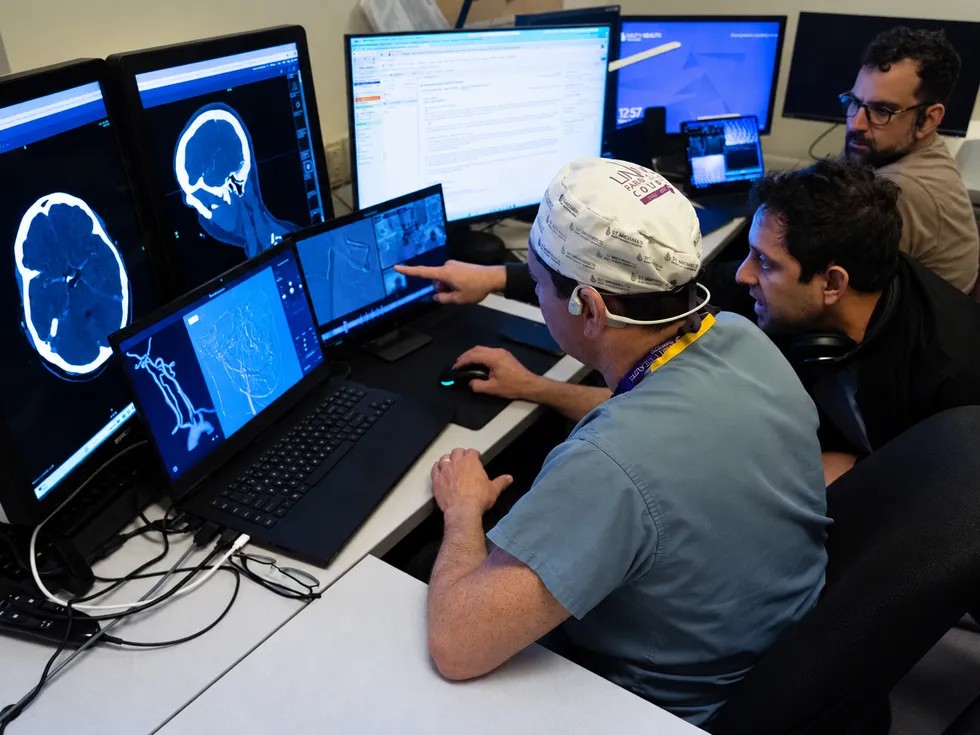
In its trials, Remedy plans to assess more than safety and speed. The company will also look at how quickly doctors learn the new technique, how well staff at the patient’s side work together, and how quickly they can prepare the surgical drape and instruments. Bell is considering whether to show the surgeon a photo or video of the patient’s face, so the doctor does not lose an emotional connection to what is happening.
Remedy has 25 employees. Beyond isolated demonstrations, no robotics company has yet received full regulatory approval for remote surgery, and no patient has undergone remote surgery in the US. The company hopes to change that and expand access to thrombectomy.
Dataist’s take: N1 could help where a patient does not have time to reach a major center, but remote surgery depends on more than the robot: hospitals need connectivity, equipment and a trained team. Remedy is currently testing the system in planned procedures, with remote stroke operations slated for a later stage.
Daily AI news
Every day we pick what actually matters in AI and explain it plainly — no hype, no filler. Subscribe if you want to follow where the industry is going.
Only what matters — every day
Follow on X