
A campus built around the work
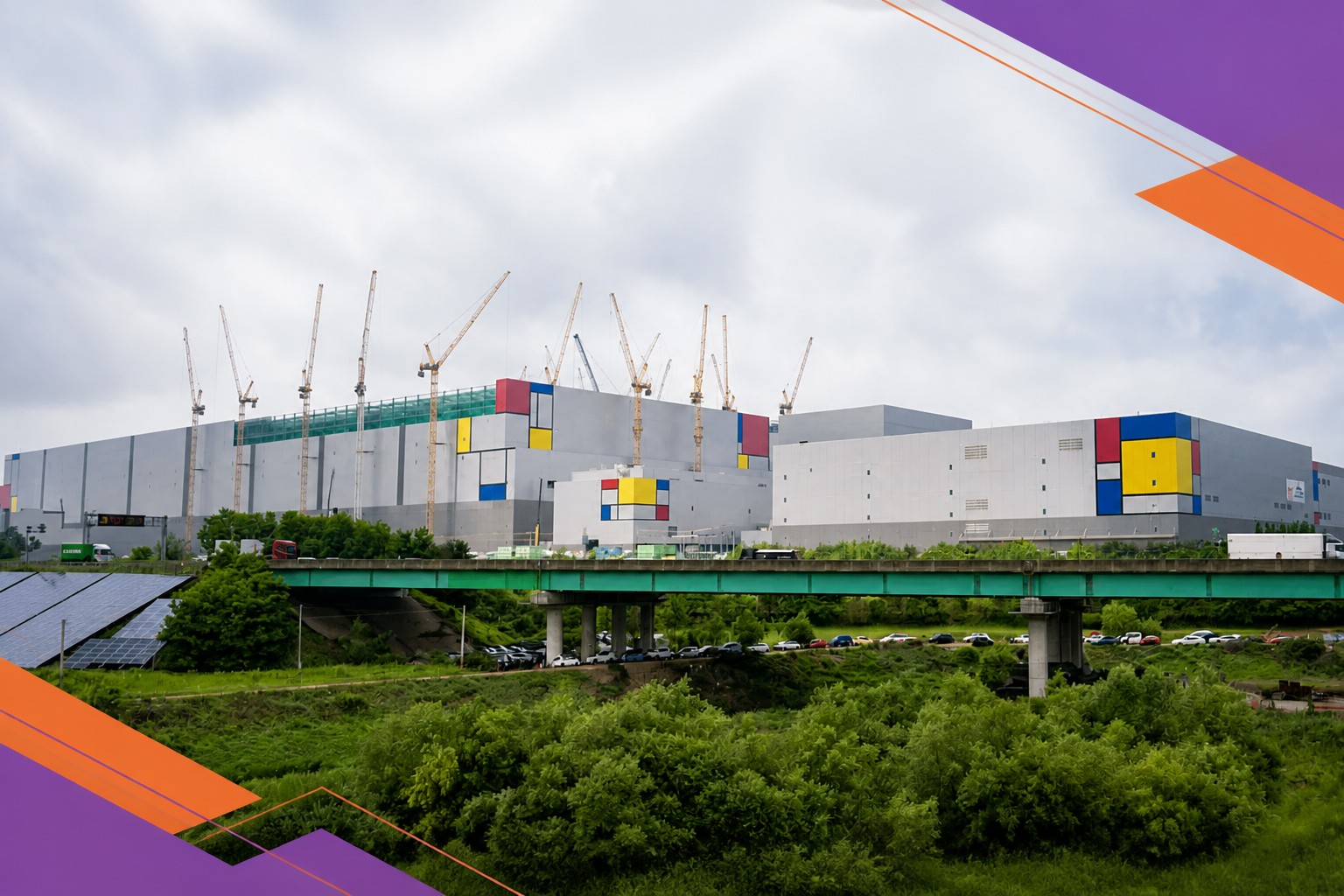
Pyeongtaek’s factories shape the rhythm of the surrounding city. At lunchtime, thousands of workers leave the plants in black clothes and blue vests, their helmets marked with their names and factory numbers. Some use scooters and motorcycles to cross a campus roughly the size of New York’s Central Park.
The site also supports the routines around construction: cafeterias and snack bars, beef-stew restaurants, short-term studio rentals and real-estate agencies where Samsung engineers look for housing.
At the fourth factory, 35-year-old safety specialist Choi Hye-rin checks the work of a crew laying cable conduits. Her job includes writing reports, inspecting equipment and checking the chemicals used by construction workers. She is one of hundreds of women on the site, many of whom walk ahead of heavy machinery to monitor conditions.
Safety messages are visible throughout the site:
A bet on memory demand
Samsung expects demand for memory chips to rise through 2028. The company has spent several years watching South Korean rival SK Hynix gain ground in high-bandwidth memory, a key component in Nvidia’s AI accelerators. TSMC, meanwhile, remains the leading contract manufacturer for chips designed by other companies.
The expansion at Pyeongtaek is Samsung’s attempt to recover its position in memory. On site, that strategy is also a source of steady work. Choi commutes by bus from Songtan, an older, less affluent district, and says she has no plans to leave despite the heat and crowded conditions. She earns 140,000 won a day, about $97, and says the pay is higher than at other construction sites while the job is relatively easy.
I think the most telling detail is not the size of the campus but the expectation that it will keep generating work. Choi is counting on being able to return again and again; Samsung is counting on memory demand lasting through 2028. The announcement is quiet about how much of the expansion is aimed at high-bandwidth memory specifically. That distinction matters: more construction shows commitment, but it does not by itself show Samsung has closed the gap with SK Hynix.
Daily AI news
Every day we pick what actually matters in AI and explain it plainly — no hype, no filler. Subscribe if you want to follow where the industry is going.
Only what matters — every day
Follow on X