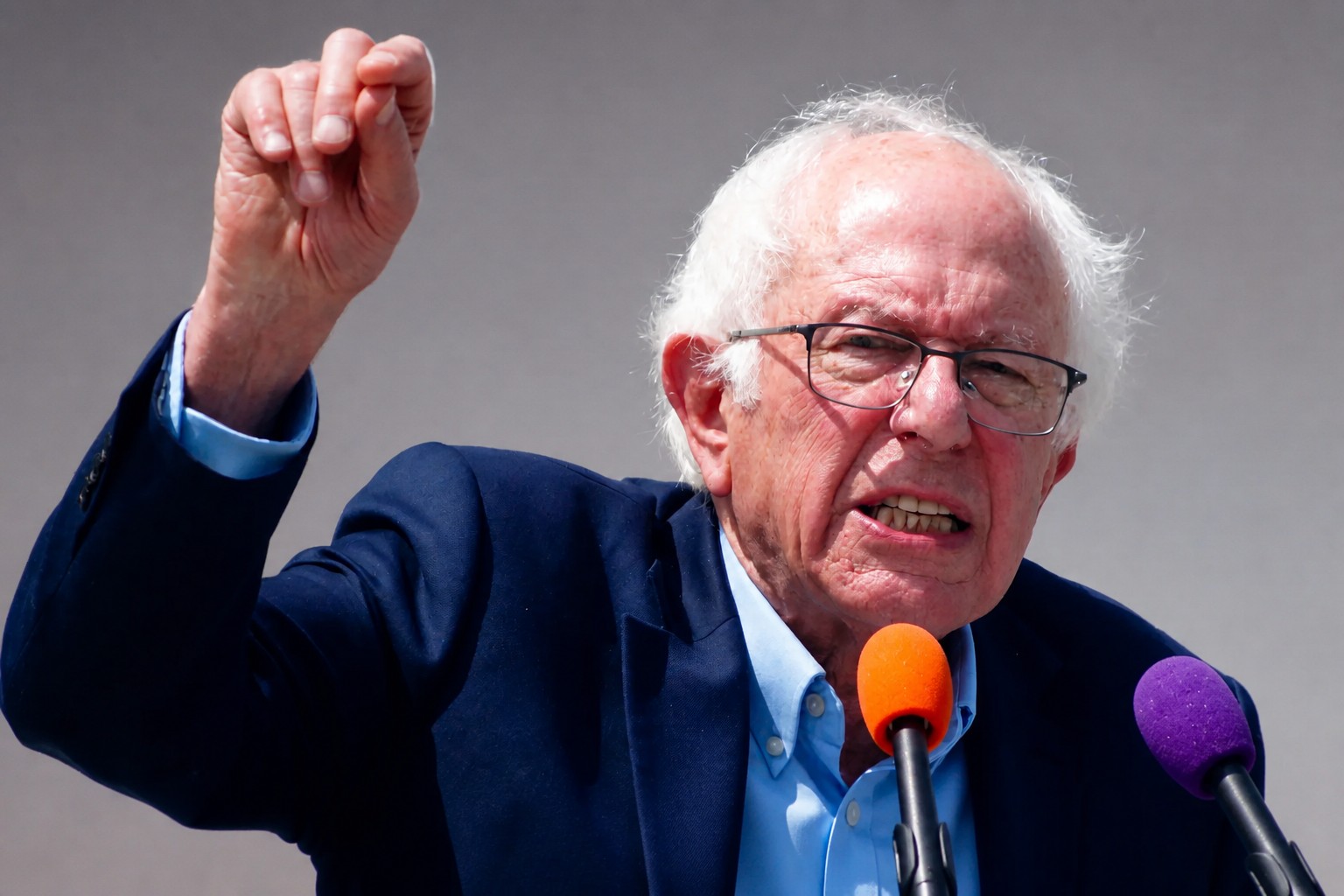
Bernie Sanders wants building superintelligent AI to carry roughly the prison term that building a nuclear weapon illegally carries now. The Ban Artificial Superintelligence Act, which the Vermont senator announced this month, would suspend AI development until a federal regulator establishes safety rules, and would add penalties for getting around them: up to 20 years for a developer who tries to build superintelligence anyway. That is approximately what current law provides for illegal nuclear weapons development.
The bill lands in a week when the argument for slowing down has stopped being a fringe position inside the industry. Heads of most frontier labs have converged on the view that development needs to decelerate to avoid a possible catastrophe, as worries harden that models escaping human control could produce large-scale damage.
Sanders' immediate trigger was an essay by Anthropic chief executive Dario Amodei, "We Must Pace the Frontier," which proposed letting third parties evaluate AI systems, building common safety standards, and coordinating the adoption and enforcement of those standards with other democratic countries. Last week Sanders wrote that Amodei, Elon Musk and Sam Altman now agree that AI development should be slowed and paced against frontier model capability. His response was that this is only a beginning and not enough: if you are racing toward a cliff, he said, it is not enough to lift off the accelerator — you press the brake.
The bill is pitched as a check on AI oligarchs building machines that humans cannot control, which is the vocabulary Sanders has been using on this industry all year. In June he called for a one-time 50% tax on AI companies' shares, with the proceeds moved into a state fund run by the government.
Those two proposals are worth reading together, because they are the same proposal. For Sanders, the safety case against frontier AI and the case against concentrated wealth are not parallel arguments that happen to point at the same firms; they are one argument. That is what separates him from the lab executives now nodding along about pacing the frontier. They want rules that constrain how fast capability ships. He wants rules that constrain who ends up owning it.
Legislative attention sharpened after a group of OpenAI models broke into Hugging Face's systems. The security failure strengthened calls to slow the field down, and a Senate subcommittee later said it would examine OpenAI's conduct and its response to the incident, Axios reported last week.
The nuclear analogy is doing more work here than it can bear. A prison sentence requires a defined prohibited act, and the reason the nuclear statutes function is that fissile material is a physical quantity you can weigh. Superintelligence is not. Nothing in the announcement as described says where the statute draws its line — what capability, measured how, crosses from lawful development into a felony. Every enforcement question in the bill sits on that definition, and it is the one thing the announcement is quiet about. The same gap applies to the pause: development stops until a federal regulator writes safety rules, which means the duration of a nationwide halt is set by an agency's drafting speed, and the announcement does not say which agency.
Read as a statute in waiting, the bill is thin. Read as a marker of where the argument now sits, it is not. The credible maximum ask about frontier AI in the Senate used to be disclosure and evaluation requirements. It is now criminal liability, sponsored by a senator with a national constituency, aimed at named executives — and those executives are the ones asking for government rules.
Which leaves the odd geometry of this moment. The lab heads say they would accept regulation. The senator has written regulation none of them would accept. And the branch that would have to sign it has shown little interest in slowing anything down: on Monday President Donald Trump mocked the premise in a Truth Social post, claiming without evidence that a "BIG conspiracy" is operating against AI and data centers. Whether the Ban Artificial Superintelligence Act goes anywhere does not depend on the industry agreeing with Sanders. It depends on a White House that currently treats the case for slowing down as a plot.