

Source: techcrunch.com
From chemical process to factory floor
Finding a promising material is only the start. Turning it into a product requires developing a manufacturing process, qualifying production sites, meeting strict quality requirements and coordinating supply chains that can span several countries. Scimplify’s pitch is that its software and network of partner factories can shorten that path.
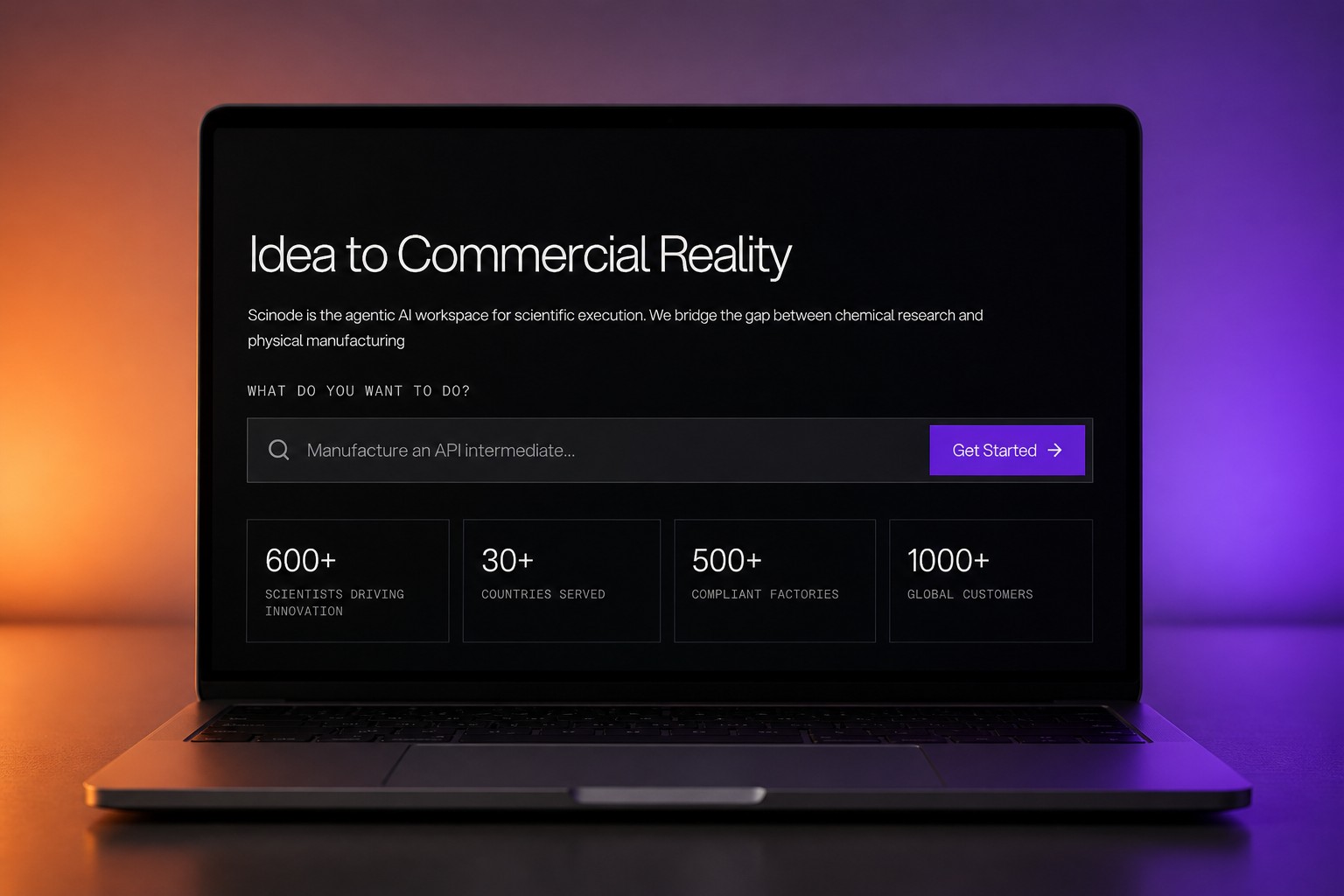
After receiving a customer’s requirements, the company develops production processes at research centers in Bengaluru and Hyderabad, then transfers them to partner factories. Its Scinode platform helps identify production methods and sites, while tracking quality and regulatory requirements. Specialized AI agents handle tasks across research, manufacturing and quality control, co-founder Sachin Santhosh told TechCrunch.
Santhosh said some projects have gone from customer requirements to delivery in two months, compared with the usual 12 to 18 months. The company’s scientists and engineers oversee production across a network of more than 500 sites, and help customers find alternatives for materials whose supply is concentrated in China and a few other countries.
About 90% of Scimplify’s products are currently made in India. The company plans to extend its site network into the US and Japan over the next year.
Growth, with a demanding target
Scimplify serves more than 1,000 customers in over 40 countries. Its annualized revenue run rate is about $200 million, Santhosh said, three times the level a year ago. The company is targeting $400 million over the next year.
The company is also working on tungsten derivatives made from scrap, positioning them as an alternative to materials largely sourced from China, and on rare-earth materials whose global supply chains are similarly dependent on China. Customers include Japanese electronics maker TDK, German chemical group BASF and Hitachi.
The test behind the growth story
Scimplify has been EBITDA-positive for the past two months and expects to become profitable after tax this month, Santhosh said. It plans to spend about $7.5 million of the new funding on US expansion, including its manufacturing-site network, and $2 million on further development of Scinode. The company employs about 340 people, including around 70 scientists, with most of the team in India and local staff also in the US, Japan, Indonesia and the UAE.
I think the central question is not whether Scimplify can find demand for materials outside China; its customer and revenue figures suggest it already has. It is whether the company can reproduce its claimed speed across a growing network of factories while maintaining quality and regulatory compliance. The two-month timeline is striking, but the company says results vary by project. Its expansion depends on making that exception dependable enough to support a $400 million run rate.
Daily AI news
Every day we pick what actually matters in AI and explain it plainly — no hype, no filler. Subscribe if you want to follow where the industry is going.
Only what matters — every day
Follow on X