
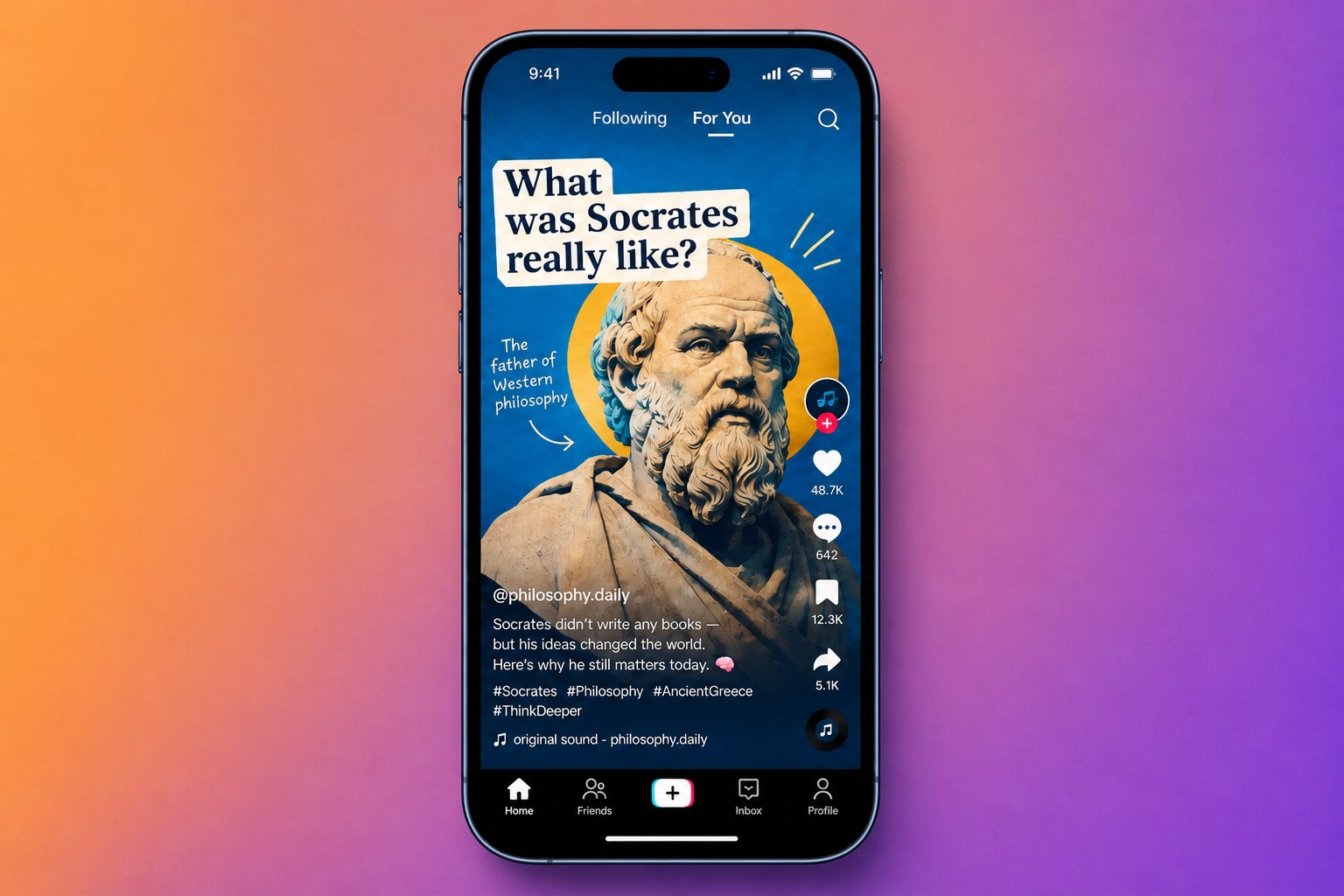
What shipped
ScrollEd is designed around the mechanics of a social feed:
The company says the goal is not to maximize time spent inside the app. A short video should create curiosity, then make it easy to reach a fuller explanation or leave ScrollEd and continue searching elsewhere. In that sense, the product is trying to borrow the entry point of short-form video without copying its entire incentive system.
Co-founder Utsav Gupta says younger users increasingly choose short vertical feeds, especially the 18-year-olds the team spoke with while developing the product. That habit is poorly matched to material that requires sustained attention. ScrollEd’s answer is not to fight the habit directly, but to change what appears inside it.
Gupta launched the company this year with his co-founder and wife, Rebecca Neff. Gupta studies AI and the purpose of humanity at Stanford University; Neff studies computer science at the University of Pennsylvania. Both say they noticed a sense of dissatisfaction after spending evenings scrolling through endless feeds.
The business behind the feed
ScrollEd plans to sell to three groups:
Its model has three layers:
Institutions will be able to publish learning materials through the platform and receive reports on engagement, lesson progress and other data. The company is also building infrastructure that could eventually let teachers evaluate individual students and adapt materials to their needs.
The near-term roadmap is more practical than the social-network ambition suggests. ScrollEd plans to focus on launching the consumer version, expanding its lesson library and creating a process for checking sources. At the same time, it will prepare pilot projects for institutions.
That source-checking process is the important detail. Generating a video or a quiz from a document is a product feature; deciding whether the resulting lesson is trustworthy is the foundation of an education business. The announcement does not say how ScrollEd will verify the material, how much human review will be involved or how errors will be handled.
A social feed with a different promise
Gupta joked that the company hopes to “change social media and short video.” That is a large ambition for a product whose first task is to turn existing educational text into a more familiar format.
My read is that ScrollEd is making a defensive product bet before it is making an educational one. It accepts that the feed has won users’ spare attention and tries to redirect that attention toward structured material. The tension is clear: the more ScrollEd resembles the products it wants to improve on, the harder it may be to preserve the patience that serious learning requires.
The long-term goal is a social network that provides users with more benefit. The immediate test is narrower and more consequential: whether a feed can make deeper study as easy to enter as the next swipe.
Daily AI news
Every day we pick what actually matters in AI and explain it plainly — no hype, no filler. Subscribe if you want to follow where the industry is going.
Only what matters — every day
Follow on X