
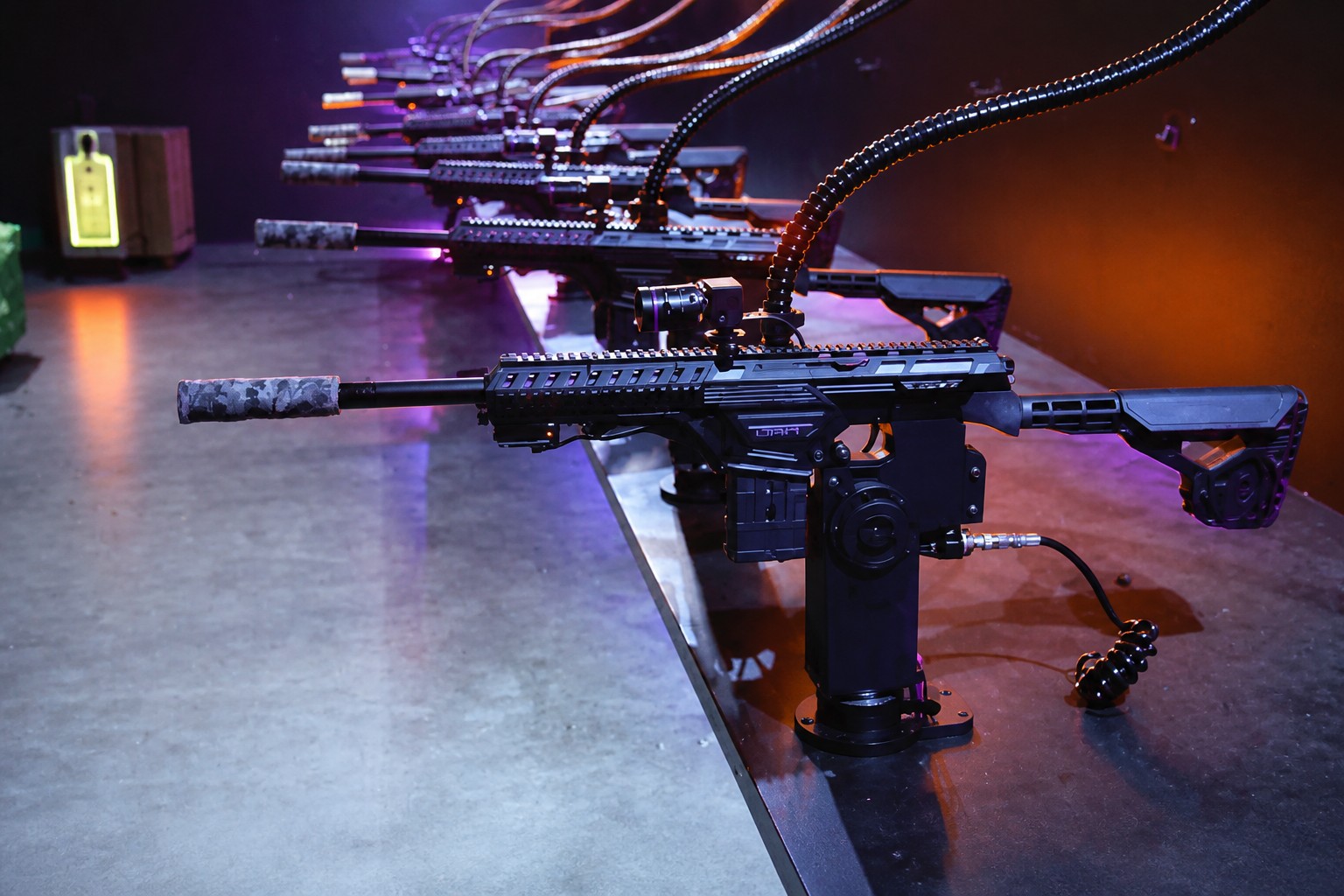
The project arrives as remotely operated weapons have moved from science fiction into warfare. Israel used a similar remote installation to kill an Iranian nuclear scientist in 2021. In Ukraine, both sides use explosive-laden drones, while AI-based autonomous weapons can find and attack targets on their own. Shov does not reproduce that complexity, but it borrows the same basic distance between the person making the decision and the weapon doing the shooting.
What Shov shipped
A livestream shows a long metal structure fitted with 12 .68-caliber pneumatic guns. Each appears to aim and fire independently. When the sound is on, the shots become a disorienting chorus, while a low voice announces the beginning and end of each round.
Users buy five credits for $5, wait about 30 seconds in a lobby, and then control a turret. The objective is simple: hit the green circular targets before they turn red. The arena includes motorcycles and mannequins, but the turrets apparently refuse to fire at those objects.
Shov founder Dom Holland told Futurism by email that the turrets run on “extremely high-pressure air, not gunpowder.” Hoses feeding round projectiles into each installation are visible on the stream, making the system look less like a remote battlefield device than an online fairground shooting gallery.
The ammunition was made specifically for the project. Holland says it is mostly hardened rubber, but not soft or harmless: he showed Shov's founder a photograph of a sign dented by one of the projectiles.
The machine can play without you
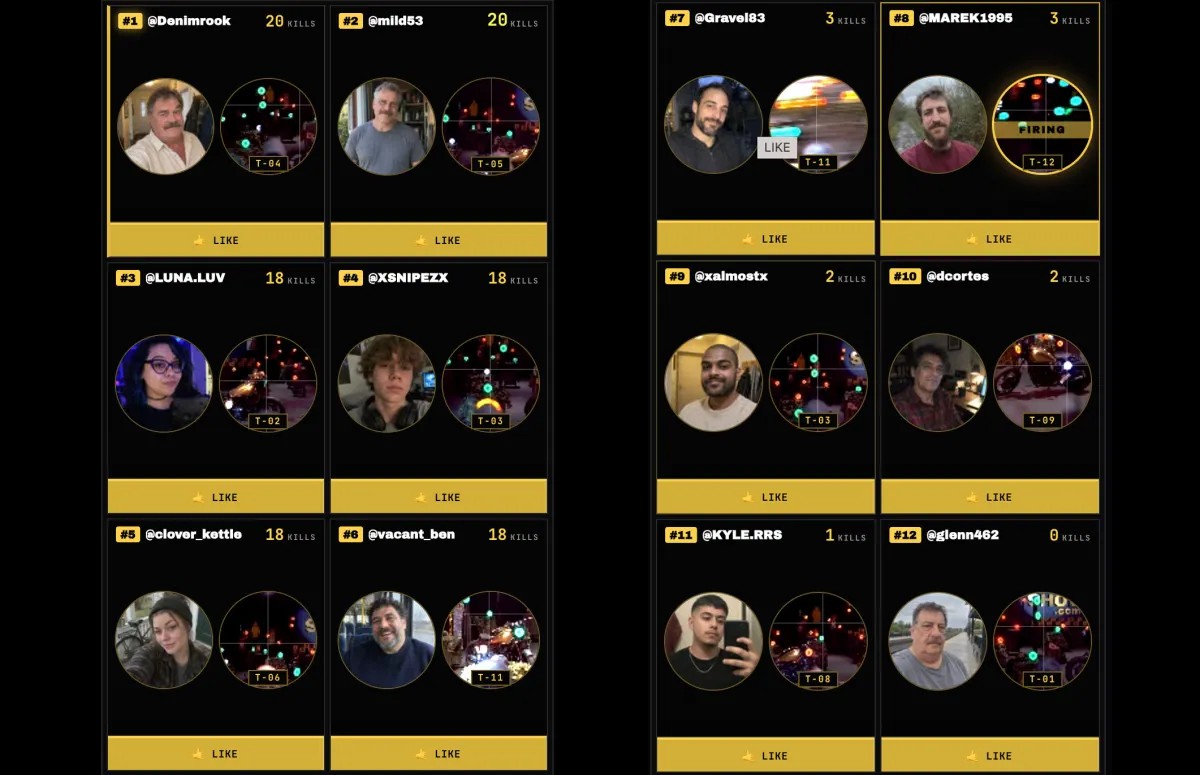
Human players are optional. A notice at the bottom of the site says that every vacant position is filled by an AI player marked [AI], ensuring all 12 turrets participate in every round.
A panel on the right displays the users currently firing at targets.
Source: futurism.com
Before launch, each listed player was paired with a suspiciously well-lit portrait. The profiles resembled AI-generated images that journalists have repeatedly encountered while reporting on the internet's low-quality content problem.
That detail makes Shov feel less like a multiplayer game and more like a deliberately populated stage: the system supplies the crowd, the opponents and the noise even when people are not there. I think that is the site's sharpest design choice. It removes the need for a critical mass of players while making an automated firing line look socially active.
The site's rules are narrow: shoot green targets at a real range, and the winner is whoever records the most hits. That boundary matters, but it does not resolve the central discomfort. The platform demonstrates how little interface is needed to turn remote weapon control into entertainment. The targets provide the distance that makes the activity playable; the visible hardware provides the unease that makes it more than a conventional browser game.
The announcement is quiet about everything beyond the round itself: how the system is supervised, what happens when something goes wrong, and why an online shooting game needs the visual language of a weapons platform at all. My guess is that this tension is the product, not an accidental side effect. Shov makes the action feel safe enough to click while keeping the machinery close enough to suggest what the format could become.
For now, the project stops short of lethal weapons and limits the player to hardened-rubber ammunition. That restraint is precisely what lets the idea travel: the browser turns a weapons platform into a toy without fully hiding what the platform is.
Daily AI news
Every day we pick what actually matters in AI and explain it plainly — no hype, no filler. Subscribe if you want to follow where the industry is going.
Only what matters — every day
Follow on X