
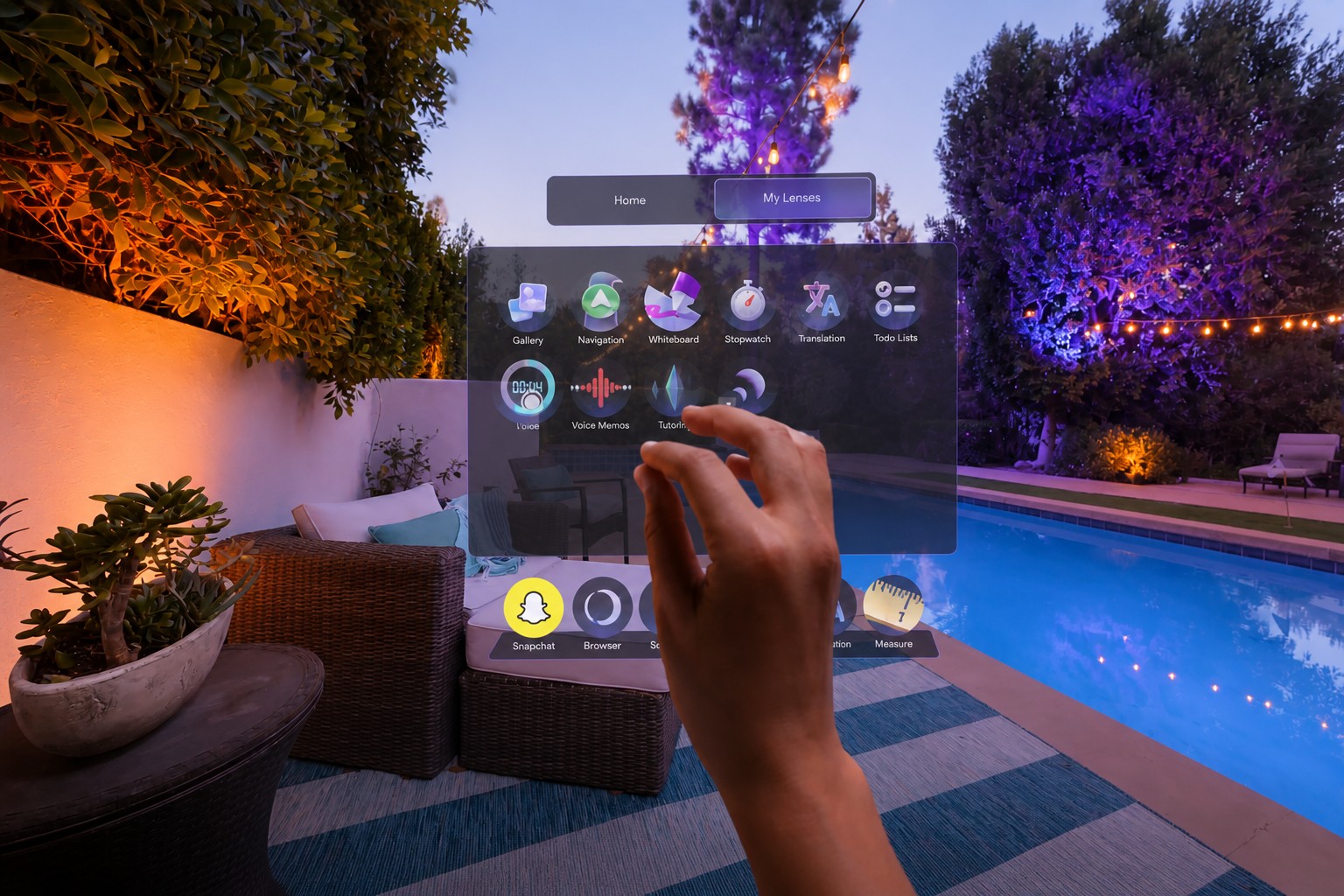
Snap spent this week trying to make a $2,200 pair of glasses make sense. At an event in Los Angeles, CEO Evan Spiegel and other executives announced HBO Max and Spotify on Specs, a proactive AI system called Specs Intelligence, an enterprise program with Amazon, Salesforce and Nvidia as partners, a basketball training app built with the NBA and WNBA, and a cellular charging case sold through a Verizon deal. What the company did not announce was a lower price.
It needed the week. When Snap unveiled the long-awaited Specs earlier this year, the presentation was a failure. A $2,200 device that distantly resembles diving gear drew mockery online and calls for Spiegel to resign, and Snap's stock fell sharply afterward. Since then the company has been looking for an opportunity to explain what heavy, expensive glasses are for, given that most ordinary buyers probably cannot afford them.
Source: techcrunch.com
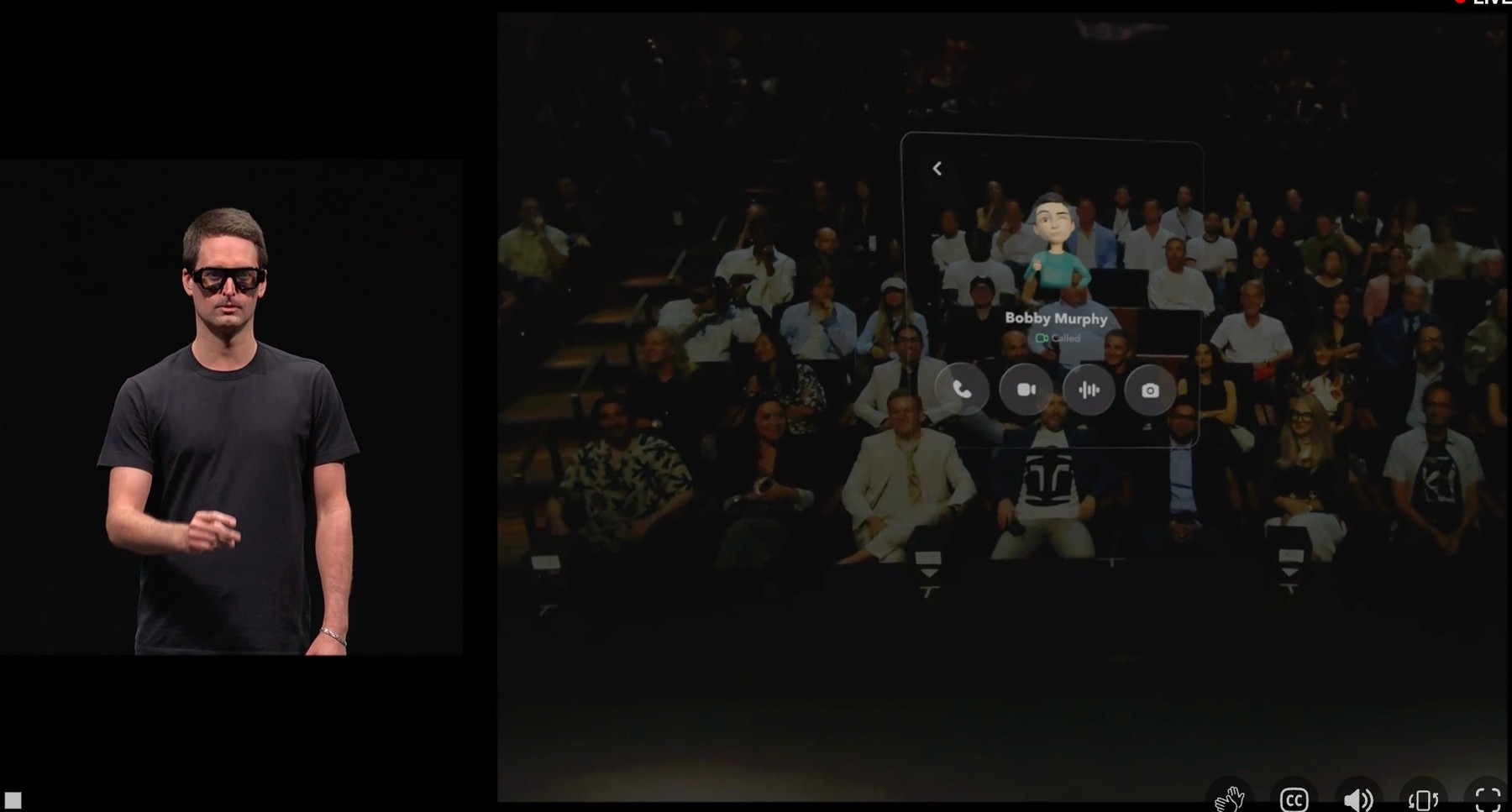
Wednesday was that opportunity. After an advertising spot with a surreal atmosphere that resembled an ayahuasca hallucination, Spiegel came on stage and ran a series of demos. The entertainment additions came first: Specs can now connect to HBO Max and Spotify, which gives the category a baseline layer of interactive entertainment it has mostly lacked.
The main announcement was probably Specs Intelligence, which Snap describes as a new system of "proactive AI" that works not only with the glasses but with a user's other devices, including iPhone and Mac. By the company's account, it studies a user's goals, priorities, connections and habits from the apps and tools they connect, and uses that to help them concentrate on what is in front of them and make progress toward longer-term goals. Spiegel described it as an operating system built from the start around AI and around the user's projects, one that ties information together across Lenses — Snap's name for the augmented reality effects it runs on phone and glasses cameras — so that tasks get done without pulling attention away.
In practice that description fits a productivity app with Snap glasses support rather than a feature that requires glasses at all. The iPhone and Mac integration is the tell: the more capable Specs Intelligence becomes, the less of it depends on the hardware Snap is trying to sell.
The enterprise announcement was more concrete about who it is for, and less concrete about everything else. Specs for Enterprise is a program for embedding the device into corporate workflows, and on Wednesday Snap named partnerships with several technology companies, including Amazon, Salesforce and Nvidia, whose employees it wants Specs to be useful to. Where exactly the device fits, and which buyer the service is aimed at, remains unclear. Judging by the presentation, one core user is IT staff: the demo video shown at the event had an IT technician repairing equipment while wearing Snap glasses. The company plans to build out mobile device management, security tooling, and deployment and fleet management for teams alongside major vendors, on the theory that this makes life easier for IT departments.
Other announcements raised more questions than they answered. With the NBA and WNBA, Snap built an app that lets users practice basketball and improve their shooting using augmented reality in the glasses. Who will actually play basketball with heavy glasses strapped to their head is not addressed.
Snap also introduced a connectivity package for people who want to use Specs on the move and outside Wi-Fi coverage. It is sold separately and includes a charging case with built-in cellular plus a connection through the Verizon partnership. Verizon customers pay $10 a month; everyone else pays $20.
Spiegel's closing frame was that Specs represent a new and more human-centered way of interacting with computers. Launching a new computer right now is an unusual thing to do, he said: the technology industry is going through a strange period, and people are being told that AI will take their jobs and that virtual worlds will replace the real one. Snap does not accept that future, because removing the human's role is not progress; computers, in his view, should make people more significant rather than less. The company has repeatedly defended the device's irritating price by calling it a computer you wear on your face.
Sort Wednesday's announcements by who signs the check and they separate cleanly. HBO Max, Spotify and AR basketball are consumer features with no revenue attached to them. Specs for Enterprise, device management, security tooling, fleet deployment and an IT technician fixing hardware are a product with a purchase order behind it, sold to organizations that buy $2,200 devices in quantity without an individual having to swallow the price. This reads like a repositioning from consumer hardware to enterprise hardware, executed without the company saying so, because saying so would concede that the original launch was aimed at the wrong buyer.
Notably absent from the event was a price for Specs for Enterprise, a date for it, or a single named customer. Amazon, Salesforce and Nvidia were presented as partners, which is a different relationship from buyer, and the tooling Snap described — mobile device management, security, fleet deployment — is the work that has to exist before an enterprise sale can close, not evidence that one has. Meanwhile the connectivity package charges $10 or $20 a month on top of a device that already costs $2,200, which is an unusual thing to ask of a customer you are still trying to win over.
Specs go on display at a temporary Snap exhibition in Los Angeles in October, and the device ships in late fall. Between now and then the company has to convert a repositioning it has not acknowledged into orders it has not named — and the first people asked to hand over $2,200 will still be consumers.