
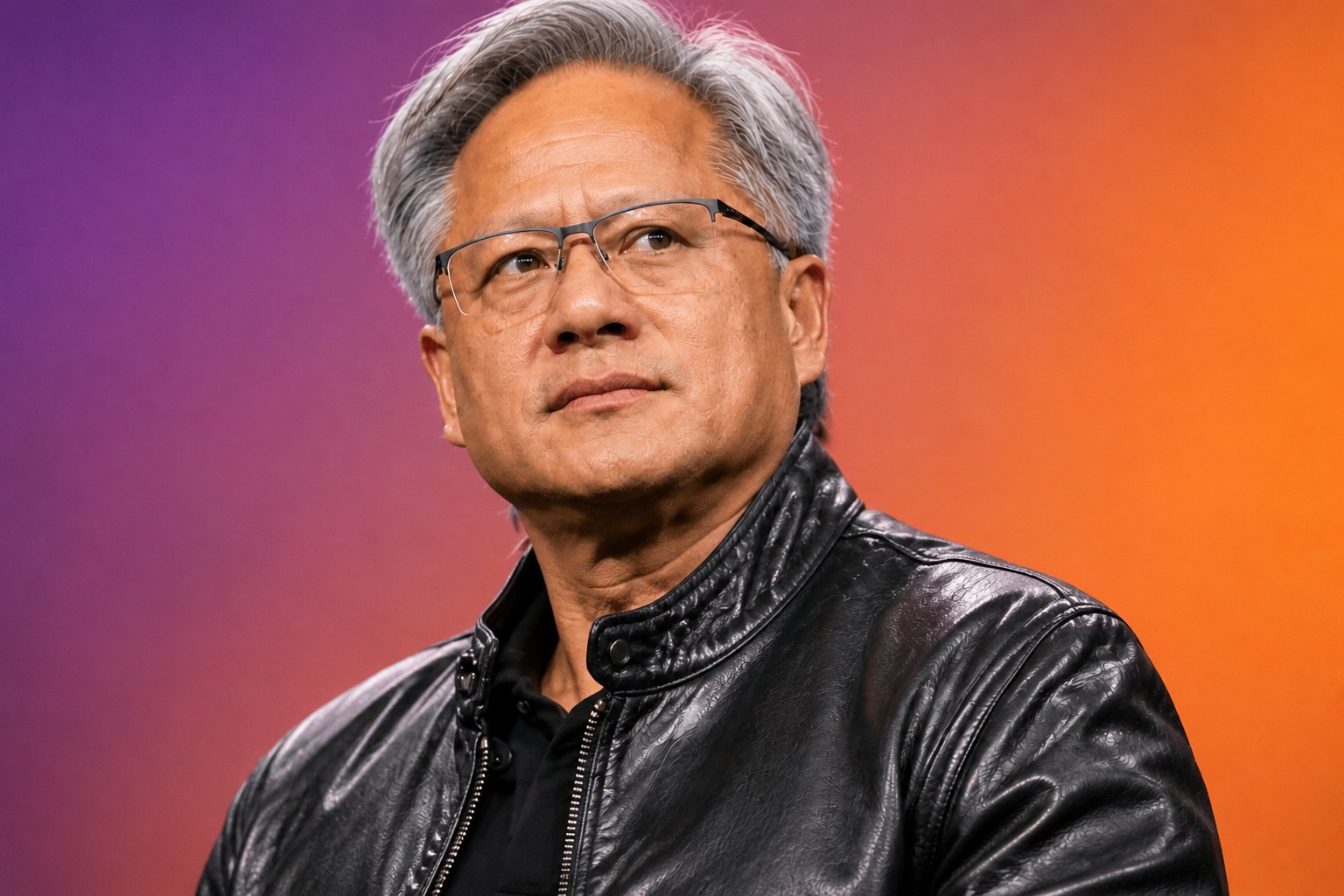
Huang’s return and criticism of the board
As recently as last week, Nvidia’s chairman was reportedly ruling out Huang’s return. Then, over the weekend, senior administration officials, including Vice President JD Vance, held a series of private calls and urged the board to reinstate him. Donald Trump personally called directors in support of Huang. On Monday, the president told CNBC that he had made the deal himself.
In an interview Tuesday morning, Sonnenfeld questioned whether the market was properly assessing what was happening. In his view, Nvidia may have helped transfer advanced technology to US adversaries at a particularly high-risk moment.
Sonnenfeld accused the board of failing to consult experts, investigate the situation thoroughly, and changing course too quickly. The law firm Wachtell, hired to conduct the investigation, had barely begun work when the board reinstated Huang. Sonnenfeld believes the directors face significant personal legal consequences, and that Nvidia’s directors and officers liability insurance is inadequate.
He also called Huang’s return to the board inappropriate. Sonnenfeld said the administration had little leverage: less than 1% of Nvidia’s business comes from the US government. By comparison, he cited SpaceX, where 46% of the business is tied to government contracts. Trump can halt federal investigations, Sonnenfeld argued, but not shareholder lawsuits. He estimated there could be around 30 lawsuits, which would cost the company dearly.
According to Sonnenfeld, criticism of the board’s decision has come from more than just Democrats. Fourteen Republican senators opposed it, along with conservative politicians Pete Ricketts, Josh Hawley, Tom Cotton, and John Cornyn. Sonnenfeld linked the situation to Nvidia’s falling share price.
Lawsuits and investigations
The first legal claims appeared almost immediately. A potential class-action lawsuit was filed first, followed by a shareholder derivative suit against board members on behalf of Nvidia itself. It alleges that the board ignored warning signs in Huang’s relationship with Alice Huang, who is suspected of spying for China.
The class action seeks to recover investors’ losses from Nvidia and Huang. The derivative suit concerns the directors’ conduct; any compensation in that case would go to Nvidia. Three more lawsuits were filed on November 18, the day after Nvidia’s latest financial results. All five cases are being heard in Northern California, where the company is headquartered.
At the same time, Nvidia and Huang face an investigation by the US Department of Justice’s antitrust division, reports of an accounting review by the Securities and Exchange Commission, a possible FBI investigation, a subpoena from California authorities, and an export-control inquiry. On Monday, Nvidia partner Megaspeed was added to the US trade blacklist. Congress is also conducting its own investigations. Huang has agreed to testify next week at a hearing of the Senate Banking Committee.
Sonnenfeld said the board had not yet seen classified intelligence materials and did not know the findings of investigations by the intelligence committees, the Senate’s special investigations committee, the Banking Committee, or their counterparts in the House. But in his view, even reviewing those materials would not absolve the board of its duty to assess the situation independently.
Nvidia chips and Chinese models
Sonnenfeld said Nvidia chips had been found in Chinese military systems. According to him, they were supplied to the Northwestern Polytechnical University, a military institution. He alleges the chips are used to develop weapons that could then reach Iran and Russia, and that a year ago those countries did not have access to this technology.
The article notes that China has long denied supplying weapons to either country. Nvidia chips have, however, been found in Russian drones, and the US ambassador to China said in September that Trump had discussed selling weapons to China. Trump denied the statement.
Sonnenfeld also linked Chinese models to work by US labs. He alleges that Kimi, DeepSeek, and other models praised for results comparable to Anthropic’s achieved them through copying: the models were supposedly created by distilling Anthropic’s work using powerful Nvidia chips. The research he cited indicates that Nvidia’s most advanced chips reached China despite export restrictions. The company denies reports that they were smuggled.
Sonnenfeld said the Israeli company Lava showed three weeks ago that dozens of Blackwell chips were in China. He also linked Huang’s return to Anthropic’s falling share price. In his account, what is happening is hurting OpenAI, Grok, Perplexity, and Gemini. Sonnenfeld noted that executives at Microsoft, IBM, J.P. Morgan, Walmart, General Motors, and Caterpillar had not publicly backed Huang’s return. He contrasted their silence with rallies held by Huang’s supporters in what he called a locker-room style.
Who developed the chips and software
Sonnenfeld believes Nvidia did not need Huang back to develop its products. According to him, the company’s GPUs were designed by co-founder Chris Malachowsky, who remains at Nvidia, alongside a next-generation team of specialists that includes Jonah Alben.
Ian Buck, not Huang, was responsible for CUDA, the software that lets users harness the chips’ capabilities. Sonnenfeld stressed that these specialists were not planning to leave and that Huang’s location did not determine their work.
Allegations about Huang’s conduct
Some of Huang’s supporters, Sonnenfeld said, explain his forced departure as a consequence of extramarital relationships he had discussed himself, and portray the situation as an excessive application of corporate personnel rules. Sonnenfeld countered that a leader who does not follow his own code of conduct makes it unenforceable.
Wired quoted an Nvidia employee who said that after Huang’s return, he would no longer undergo training on personnel rules. Sonnenfeld said a relationship with a subordinate is a problem whether it involved coercion or was consensual. In his view, such relationships call the impartiality of decisions about resource allocation, hiring, and products into question: colleagues may receive an advantage or face retaliation after a breakup, even though they have no control over the situation.
Dataist’s take: Two distinct questions converge in this story: oversight of advanced-chip exports and the board’s accountability for decisions about company leadership. Sonnenfeld’s claims about chip shipments and the origins of Chinese models sit alongside Nvidia’s denials of smuggling reports. The company’s fate will therefore depend not only on Huang’s return, but also on the results of legal and government investigations.
Daily AI news
Every day we pick what actually matters in AI and explain it plainly — no hype, no filler. Subscribe if you want to follow where the industry is going.
Only what matters — every day
Follow on X