
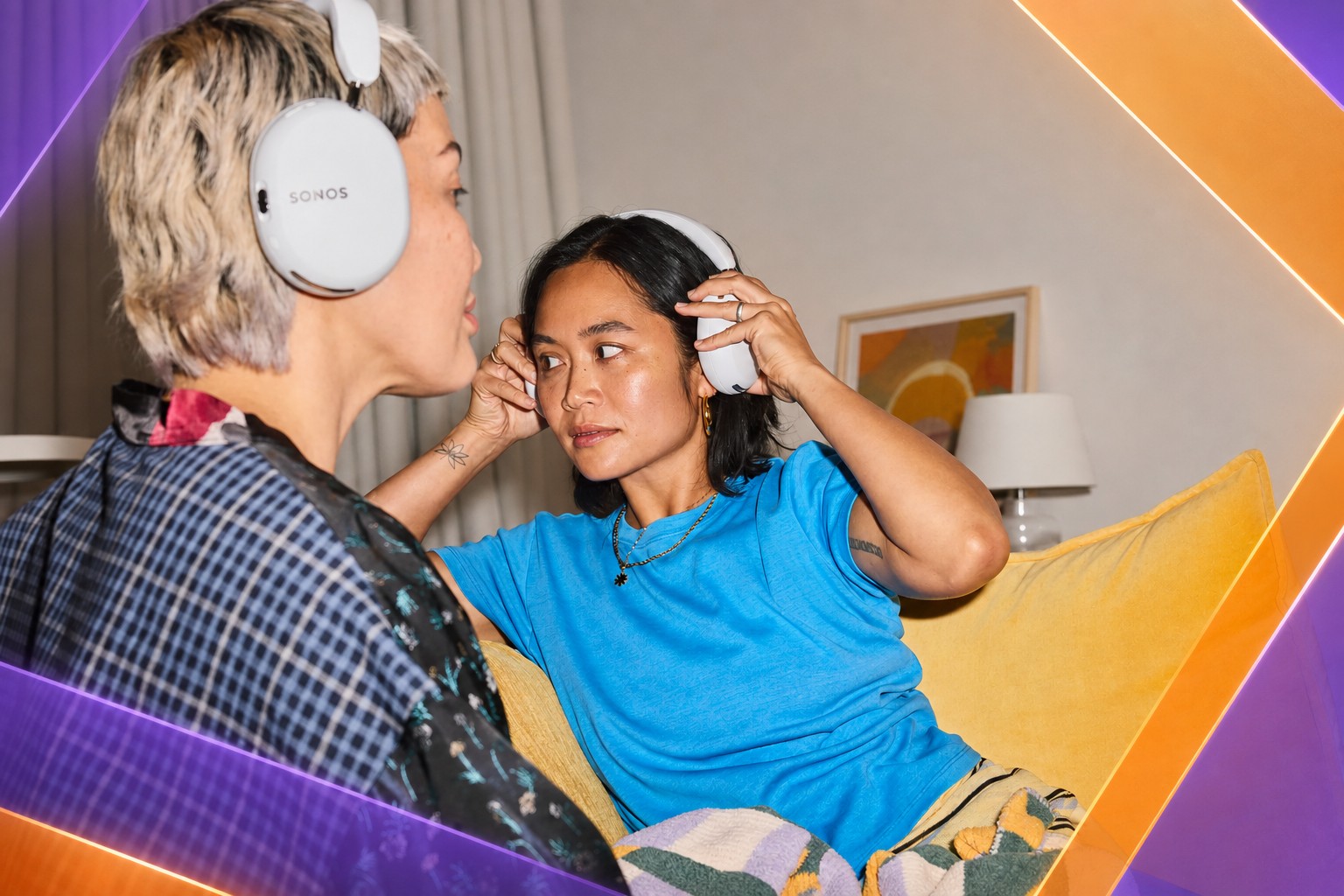
Sonos has a new app. For a company whose last app release stripped out volume controls and accessibility tools for blind users, broke multi-room playback and ended with the chief executive gone, that sentence is the whole story. Alongside it come a soundbar called Beam Ultra, a second pair of full-size headphones called Ace Ultra, and a name for the software layer running underneath everything: Sonos 27. Brandon Holly, Sonos's interim head of hardware, says the company now sees itself as a developer of an "audio operating system" rather than a speaker maker. The rebuilt app ships with generative AI in it.
Source: wired.com
The context is two years old and still radioactive. The 2024 update cycle broke the app that controls Sonos multi-room systems, removed features customers had been using for years, and produced near-universal dissatisfaction among the people who had to open it. Sonos admitted the failure, weighed rolling the old app back, pushed out its CEO, and had new management apologise publicly to furious customers. Sid Patel, the company's VP of software, acknowledged he knows exactly what the phrase "new Sonos app" now does to people.
His answer is process. Patel says the app was built with continuous user feedback, with the team talking to the community and following forum discussions, Reddit among them. The changes he lists are small and remedial in a way that reads as deliberate: better tab navigation, easier room sorting, reworked volume controls. In the autumn, system status screens arrive to help diagnose connection problems device by device. That last item is the most honest thing in the announcement. A company that has to build a diagnostic screen for its own network is a company that knows its network fails.
The part Sonos wants talked about is the assistant. Sonos 27 includes a generative AI voice assistant, shipping in early access, which lets you talk to your speakers roughly the way you talk to Amazon Alexa or Google Home and ask for music that fits a mood. The system also supports Model Context Protocol, so a user can attach an AI service of their choosing and, for example, tell ChatGPT to start playback on the speakers. On top of that sit Sonos custom agents, configurable for tasks inside the system such as turning on speakers in a given room at a given time. Voices are changeable: Sonos's own illustration is a kitchen speaker that talks like a refined French chef and a bathroom unit that talks like a pirate. All of it is opt-in, and can be declined entirely.
Sonos also gave a name to the thing that always actually mattered: Sonos Fabric, the network that keeps devices in different rooms in sync. Patel describes it as the foundation Sonos was built on — one, two or three speakers cooperating as a home theatre, a group, or some other arrangement. Two features are coming to it. Portable surround lets you carry devices between rooms and have them re-sync automatically, so a pair of speakers from elsewhere in the house can join the soundbar at the television as rears; the devices work out where they are and split the audio accordingly. Headphone handoff moves playback between speakers and headphones.
The Sonos Fabric synchronisation system
Source: wired.com
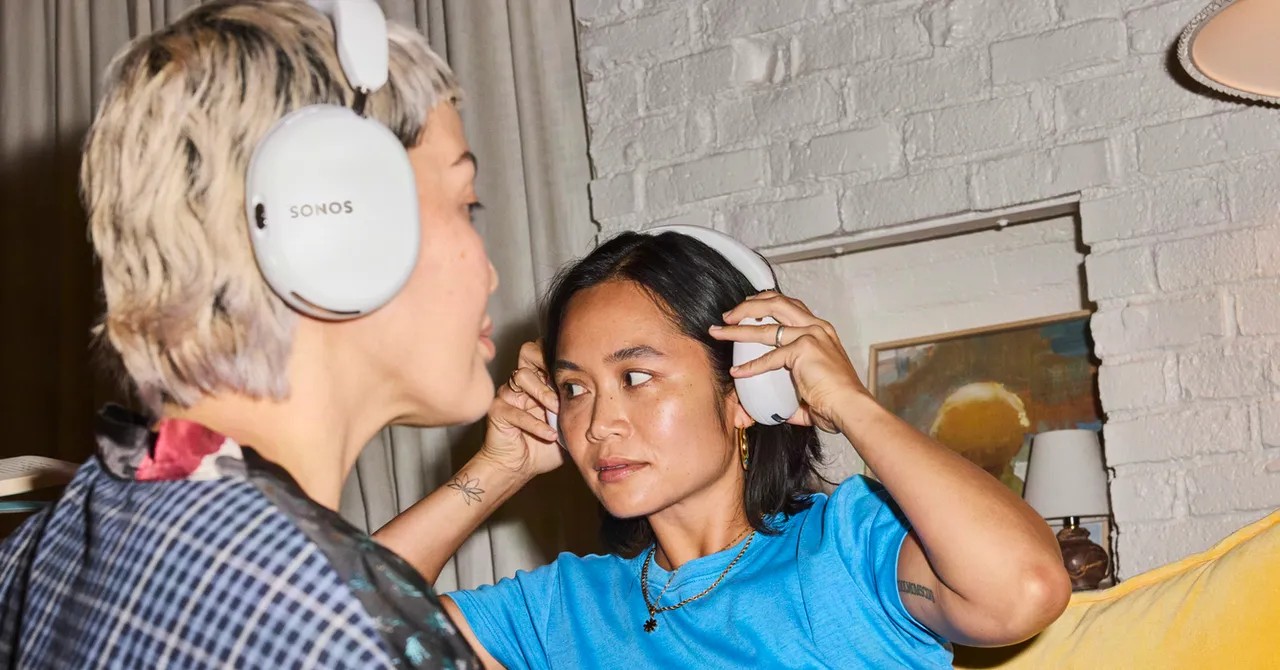
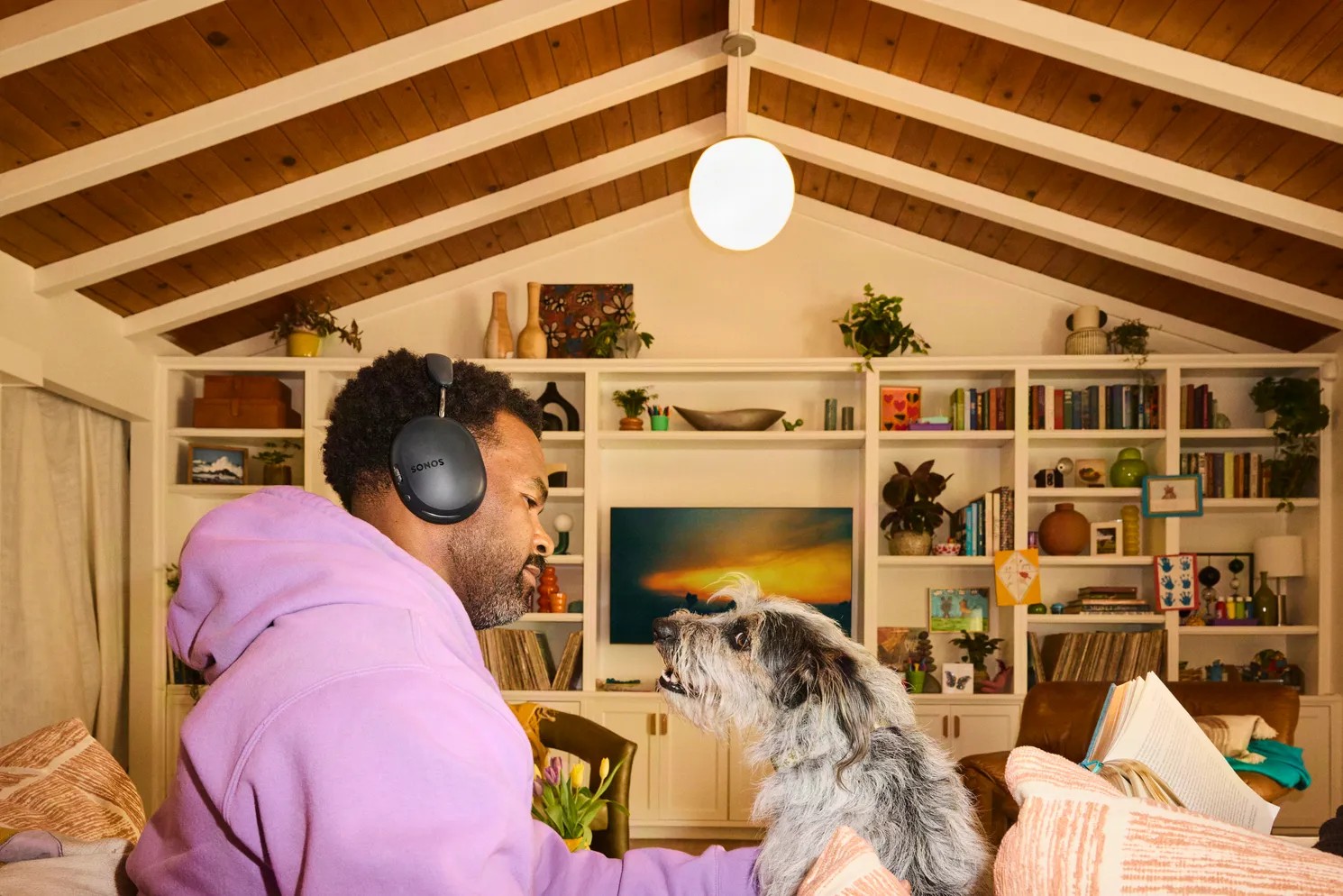
That second feature exists because of a self-inflicted gap. Sonos's first full-size headphones, the Ace, arrived in 2024 in the middle of the app crisis, reviewed well, and could not work inside Sonos's own speaker ecosystem — a pair of headphones from the multi-room company that could not join the multi-room system. Ace Ultra is the fix. It runs 35 hours on a charge, connects over USB-C and a 3.5 mm jack, and links wirelessly to other Sonos speakers. Because it sits on Sonos Fabric, playback moves between speakers and headphones with one button.
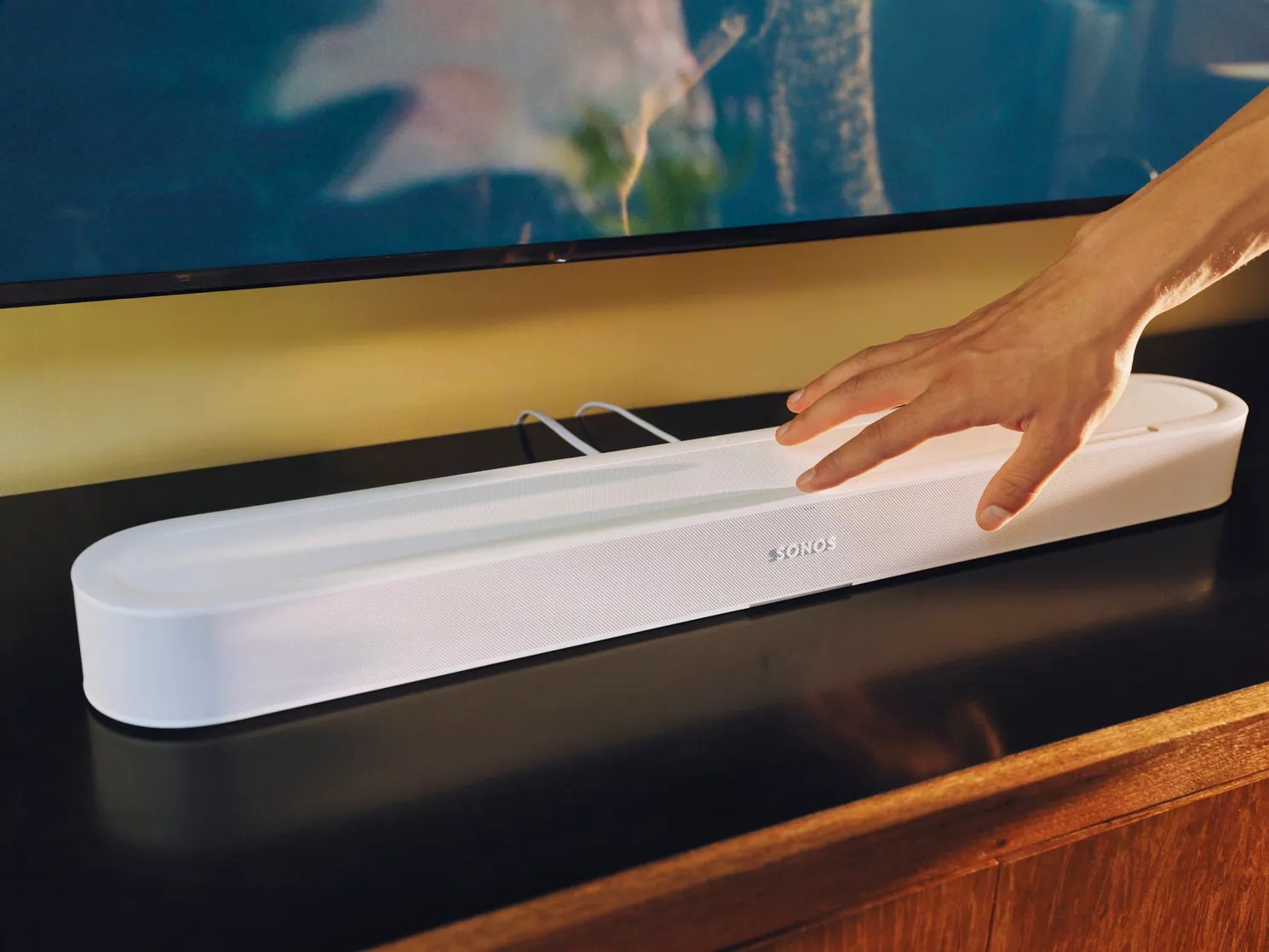
Beam Ultra is the soundbar, an updated Sonos Beam with nine drivers, four more than previous Beam models. Some fire upward so sound reflects off the ceiling. It carries AI features of its own, including speech clarity enhancement aimed at dialogue in noisy scenes, and connects over wireless, Bluetooth or wired HDMI eARC.
Here is what I think is being announced. Sonos 27 runs in the S2 app and not in S1, the version that still drives part of Sonos's older hardware, so owners of legacy devices get none of the new AI features. Sonos says Sonos 27 is built for what new hardware can do, that different devices will therefore support different feature sets, that it will be open about the limits, and that it will keep shipping security and other updates for as long as the hardware allows. Read that sequence again. The grievance of 2024 was that a software release took away things customers already had and left them with a system they could not use. The architecture announced here formalises that outcome: capability now depends on which box you bought and when. It is a more defensible version of the same result, and calling it an operating system is what makes it defensible.
Which makes the omission the loudest part. Sonos says it will disclose product-by-product compatibility and upgrade options later. Upgrade options is not a neutral phrase — it is the phrase a hardware company uses when the answer to "does my speaker get this" is "no, but here is a discount." Nothing in the announcement says which speakers in which homes move to Sonos 27, and nothing says what any of the new hardware costs. A company rebuilding trust with customers it stranded once has chosen to announce the platform first and the stranding list second.
The self-description is also doing work. An operating system is a thing other people build on; Sonos, for now, is a company that makes speakers and the only software that talks to them, and the software is what has been failing. Its own home systems are still not simple to set up, and some older products still require separate apps to manage — a state of affairs that has a name, and the name is not "operating system."
Patel says the new release approach is closer contact with customers: bring users into changes gradually, listen harder to what comes back. That is the right lesson from 2024 and it is being applied to the smallest part of what Sonos just announced. The app redesign is the piece that was co-developed with the community. The AI assistant is early access and opt-in, so it can fail quietly. The decision nobody voted on — which existing devices are carried forward and which are not — is the one Sonos has kept to itself, and it is the one that will decide whether the next apology is needed.