
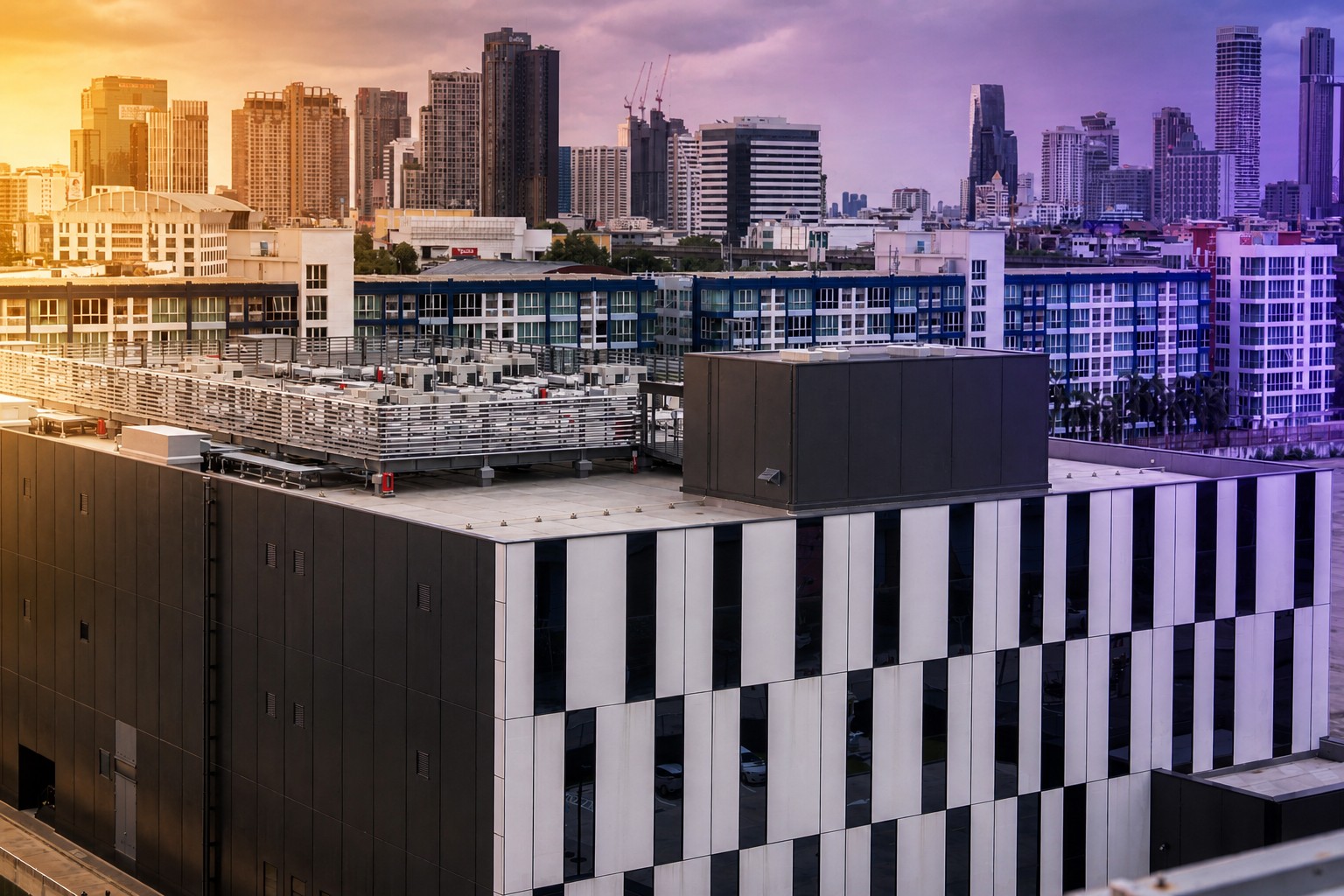
Governments across Southeast Asia are reviewing data center construction plans as the fast-growing industry runs into shortages of electricity and water, along with environmental and regulatory constraints. In September 2026, Thailand halted construction at 49 sites and suspended reviews of another 117 projects. Meanwhile, according to Cushman and Wakefield, the region accounts for about 50% of data center capacity under construction in the Asia-Pacific region. The industry has grown especially quickly in Malaysia’s Johor state, where operational capacity rose from 94 MW in 2023 to 1110 MW in 2026.
Southeast Asia’s energy-intensive data center growth slows
The boom gives way to scrutiny
Early in 2026, Thailand’s Board of Investment approved data center projects by TikTok, UAE-based Skyline, and Singapore’s Bridge. The planned investment totaled $27 billion. But by September, the government had halted construction on 49 projects and deferred decisions on another 117, after officials raised questions about regulatory details and oversight.
Reviews have also affected neighboring countries. In Indonesia, the governor of West Java, the country’s most populous province, halted construction of a data center because it lacked permits and had not completed an environmental assessment.
As AI use has grown, Southeast Asia has become one of the main hubs of expansion in the Asia-Pacific data center industry. China has the region’s largest operational capacity, but according to Cushman and Wakefield’s 2026 report, about half of the capacity being built in the region is in Southeast Asia. Much of it is in Malaysia and Thailand.
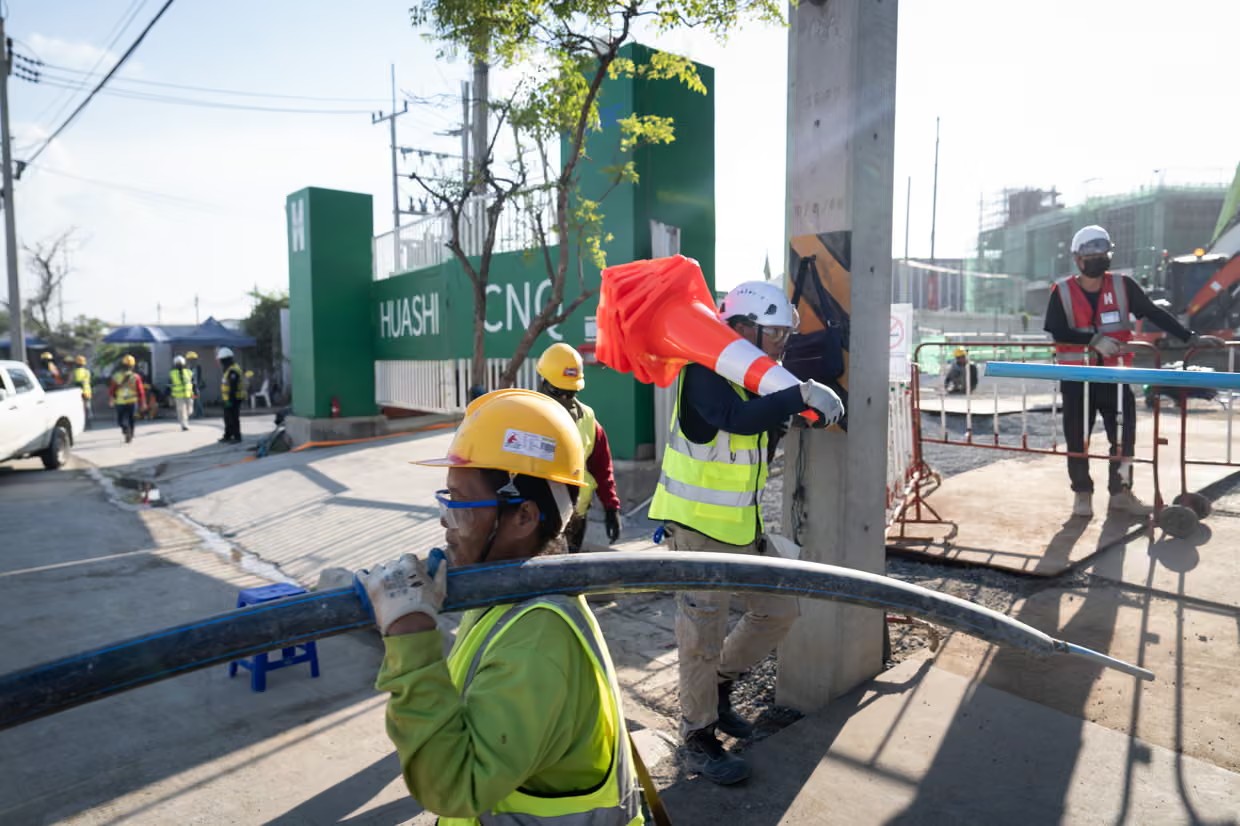
A general view of the construction site of GSA Data Center 02, a multi-facility hyperscale project jointly developed by Gulf Development, the Advanced Info Service and Singtel Group, in Chonburi, Thailand, on 23 October 2026. Photograph: Matt Hunt/Anadolu/Getty Images
Source: theguardian.com
In the 2010s, Singapore was Southeast Asia’s main data center hub, with Alibaba and Facebook opening facilities there. From 2019 to 2022, the city-state imposed a moratorium on new data center construction. Its Ministry of Trade and Industry said the facilities consume large amounts of water and electricity.
After the moratorium ended, approvals were granted selectively, taking into account land constraints and sustainability requirements. Cushman and Wakefield estimates that Singapore added just 95 MW of operational capacity from 2023 to 2026.
Malaysia becomes the region’s largest hub
The rise of large language models and wider AI use has sharply increased demand for computing capacity. Companies that found it difficult to build in Singapore turned to Malaysia. In the southern state of Johor, operational data center capacity grew more than tenfold, from 94 MW in 2023 to 1110 MW in 2026. Another 3088 MW is under construction or planned.
Johor’s chief minister, Onn Hafiz Ghazi, said the state had attracted $40 billion in data center investment by 2026 and become Southeast Asia’s largest industry hub. Operators include Microsoft, which announced a $2.2 billion investment in cloud and AI infrastructure in Kuala Lumpur and Johor in 2024, and Australian company AirTrunk. It plans to invest $3 billion to expand its data centers in Johor from two to four.
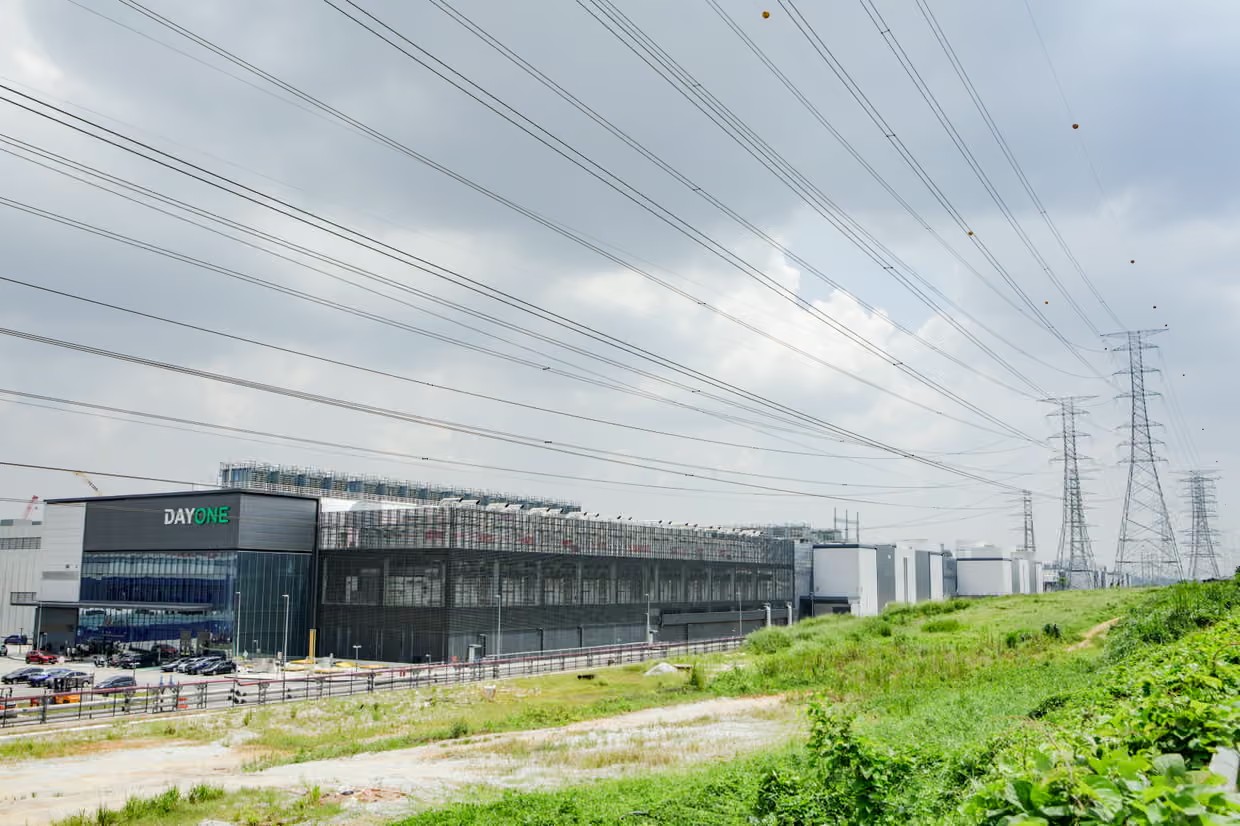
The DayOne Data Centers Ltd campus and electricity supply infrastructure in the Kempas Tech Park, Johor, Malaysia, on 27 October 2026. Photograph: Samsul Said/Bloomberg/Getty
Source: theguardian.com
The number of projects is also growing elsewhere in the region:
Electricity and water constrain growth
New data centers put added pressure on infrastructure and natural resources. Energy consultancy Wood Mackenzie estimates that operating facilities in Johor already consume 24% of the state’s electricity. That share could rise to 40% by 2035.
Wood Mackenzie analyst Alvin Tan warns that rapid data center growth could create local bottlenecks in connecting to power grids. Addressing them may require upgrades to transmission networks and new sources of generation.
Thailand’s energy minister, Akanat Promphan, has noted that data centers need electricity generated in part from expensive imported gas. He proposed creating a separate customer category for the industry, with higher tariffs that reflect its level of demand.
Water consumption is also a concern. In drought-prone Johor, operating data centers are estimated to require about 675 million cubic meters of water per day. Research firm Tenggara Strategics says many Indonesian facilities use water for cooling and are located in hot, humid lowlands. In these conditions, they consume more water than data centers in places with a more suitable climate.
In Thailand, residents are concerned about the strain on reservoirs in the already depleted Eastern Economic Corridor. Researcher and EEC Watch director Somnuk Jongmeewasin identified the Khlong Luang reservoir in Chonburi as a flashpoint: it is shallow and under pressure, yet the authorities are directing its water to industrial sites.
Residents want the costs taken into account
In February, Johor saw its first public protest against data center construction. Protesters picketed a facility belonging to China’s ZData Technologies near a residential area. They were concerned about construction dust and the project’s possible effects on the water supply.
Tse-Sheng Tan-Su, an assistant professor at the Lee Kuan Yew School of Public Policy in Singapore, says data centers can attract large investments and create jobs during construction, but in the long run they typically provide less employment than other industries with similar land, electricity, and water needs. As a result, he says, local communities may ask whether the benefits they receive are proportionate to the environmental and infrastructure costs.
Operators say they are trying to use resources more efficiently. Bridge has built a water treatment and reuse facility in Johor, along with a pipeline network to cool its new data center. The facility is expected to begin operating next year. In April, AirTrunk reached an agreement with wastewater operator Johor Special Water to recycle unused wastewater for its facilities.
An AirTrunk representative said the company’s campuses are designed to operate more efficiently than conventional data centers and use technology to optimize energy consumption. However, the company did not answer detailed questions about efficiency and energy savings.
Microsoft said it is exploring clean energy projects in Southeast Asia to supply its data centers. Yet the company’s published PUE figures — an industry metric for data center energy efficiency — show that its Asia-Pacific facilities are the least energy-efficient among its sites worldwide.
New rules for the industry
As pressure on resources mounts, countries have become more cautious about approving construction. Since ending its moratorium, Singapore has tied permits to factors such as energy efficiency and carbon emissions. Malaysia has set up a task force to assess new projects in terms of energy and water security.
Johor’s authorities announced that they would no longer approve Tier 1 and Tier 2 data centers. These facilities consume up to 50 million liters of water a day — enough drinking water for 25 million people. Thailand has introduced an approval system for new projects that takes into account energy and water consumption, power supply guarantees, and higher tariffs for operators.
Tan-Su is urging governments to establish consistent rules that require operators to account for the full social cost of the resources they consume. In his assessment, Southeast Asia is already aware of the environmental risks but has only partially prepared for them: environmental safeguards need to keep pace with investment.
For the region, this means moving from a race to add capacity to assessing whether power grids and water supplies can withstand further expansion. Resource requirements are already influencing construction decisions, while announced efficiency measures have yet to resolve questions about data center performance. Dataist’s take: the sustainability of this growth will depend on how effectively rules compel operators to account for the pressure they place on local infrastructure and residents.
Daily AI news
Every day we pick what actually matters in AI and explain it plainly — no hype, no filler. Subscribe if you want to follow where the industry is going.
Only what matters — every day
Follow on X