

What the video puts in their mouths
The video appeared on PP’s social media accounts this week. It alters the likenesses of several people associated with Prime Minister Pedro Sánchez’s party, making them seem to admit to pimping and taking kickbacks.
An AI version of Begoña Gómez says she got a university job because of her husband’s position. A deepfake of former Socialist prime minister José Luis Rodríguez Zapatero discusses hiding jewels in a safe. Both episodes allude to ongoing investigations; Gómez and Zapatero deny any wrongdoing.
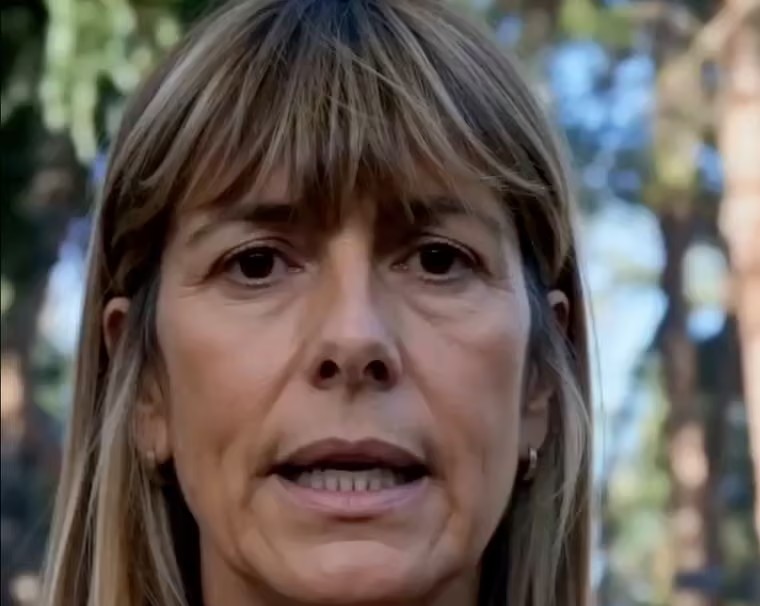
A still from the People’s party AI-generated video featuring a deepfake of Begoña Gomez. Computer-generated: @ppopular/X
Source: theguardian.com
The Socialist response was swift. By Friday, the clip had nearly 2 million views. Spain’s minister for digital transformation, Óscar López, told TVE that the party was spreading “a huge lie” and said using official accounts to publish it was unacceptable. He warned that viewers unfamiliar with AI could mistake the video for real footage.
The AI disclosure sits at the bottom of the clip in small, nearly transparent text. That is a disclosure in the narrowest sense, not necessarily one a viewer will notice.
Legal does not settle the question
On Friday, Leire Díez, a former Socialist Party member shown in the video, sued PP and sought its immediate removal. Her complaint accused the party of defamation and digital identity theft. The video uses her likeness to suggest allegations that she tried to undermine the work of the judiciary and law enforcement on behalf of the Socialists.
Most of nine lawyers consulted by El País considered the video legal: it is labeled as AI-generated, and its overall tone is satirical. Íñigo Navarro, former dean of the law faculty at the Pontifical University of Comillas in Madrid, told the paper that in context it is clear the people depicted did not say the words attributed to them.
But legality is only one test. Juan Antonio Lascuraín, a criminal law professor at the Autonomous University of Madrid, said the video’s appropriateness, example to others, and consistency with ethical and political norms are separate questions.
José Javier Olivas, an associate professor at Spain’s National University of Distance Education who studies populism, conspiracy theories, and AI bias, called the use of AI deepfakes in the campaign “truly regrettable” for a party that says it wants to govern and strengthen democracy. He also described a campaign in which both major parties seek support by stoking emotion and attacking rivals’ moral character. In his view, this video crosses a line: it uses real people’s faces to assign them words they never said, making it disinformation.
A campaign tactic, not a settled standard
The Spanish argument comes as AI-generated or AI-edited political ads are also under scrutiny in the United States ahead of next month’s midterm elections. A recent report by a research group at Wesleyan University in Connecticut found more than 200 such ads, the vast majority linked to Republicans.
Erica Franklin Fowler, co-director of the Wesleyan Media Project, said AI is being used widely in the 2026 midterm campaign. In the 2024 cycle, researchers identified less than $50,000 in spending on AI-generated ads. Many uses of AI this cycle, however, came without any disclosure.
PP dismissed the criticism. Borja Sémper told reporters the problem would arise if the video deliberately tried to convince viewers that the people shown were real. He said it was obvious digital tools had been used to expose what PP sees as the Socialist Party’s hypocrisy.
I think the dispute exposes how little work a faint label can do once a campaign has put fabricated words in a real person’s mouth. The legal case may turn on the disclosure and the clip’s satirical tone; the political question is harder to sidestep. Most polls predict PP will win the general election on November 29, but it will likely need support from the far-right Vox party to form a government. A tactic that drives attention may also set the terms of what voters are asked to accept as ordinary campaigning.
Daily AI news
Every day we pick what actually matters in AI and explain it plainly — no hype, no filler. Subscribe if you want to follow where the industry is going.
Only what matters — every day
Follow on X