

Source: techcrunch.com
A control layer for recommendations
Spotify’s recommendation system is one of the product’s main advantages, but it can also become repetitive. A listener’s preferences change faster than an algorithm’s profile, and music played for a specific reason does not always represent what that person wants to hear next.
Taste Profile adds a manual correction layer. Users can ask for:
They can also remove music from recommendations even if they listen to it regularly. That covers practical edge cases such as sleep sounds played at night or music a teenager plays through a parent’s account in the car.
The change is more significant than a new preference menu. Spotify decides what appears in several of its most visible discovery surfaces, so a user’s ability to correct the profile affects not just one playlist but the broader stream of suggestions.
Spotify first showed Taste Profile in March at SXSW in Austin, where Gustav Söderström, Spotify’s co-CEO, presented it. The feature initially ran as a beta for listeners in New Zealand. The US rollout gives it access to a much larger audience of users over 18.
What users can change
Spotify had already allowed listeners to exclude individual tracks or playlists from their Taste Profile. It later added a requested setting that prevents children’s music from influencing a parent’s recommendations.
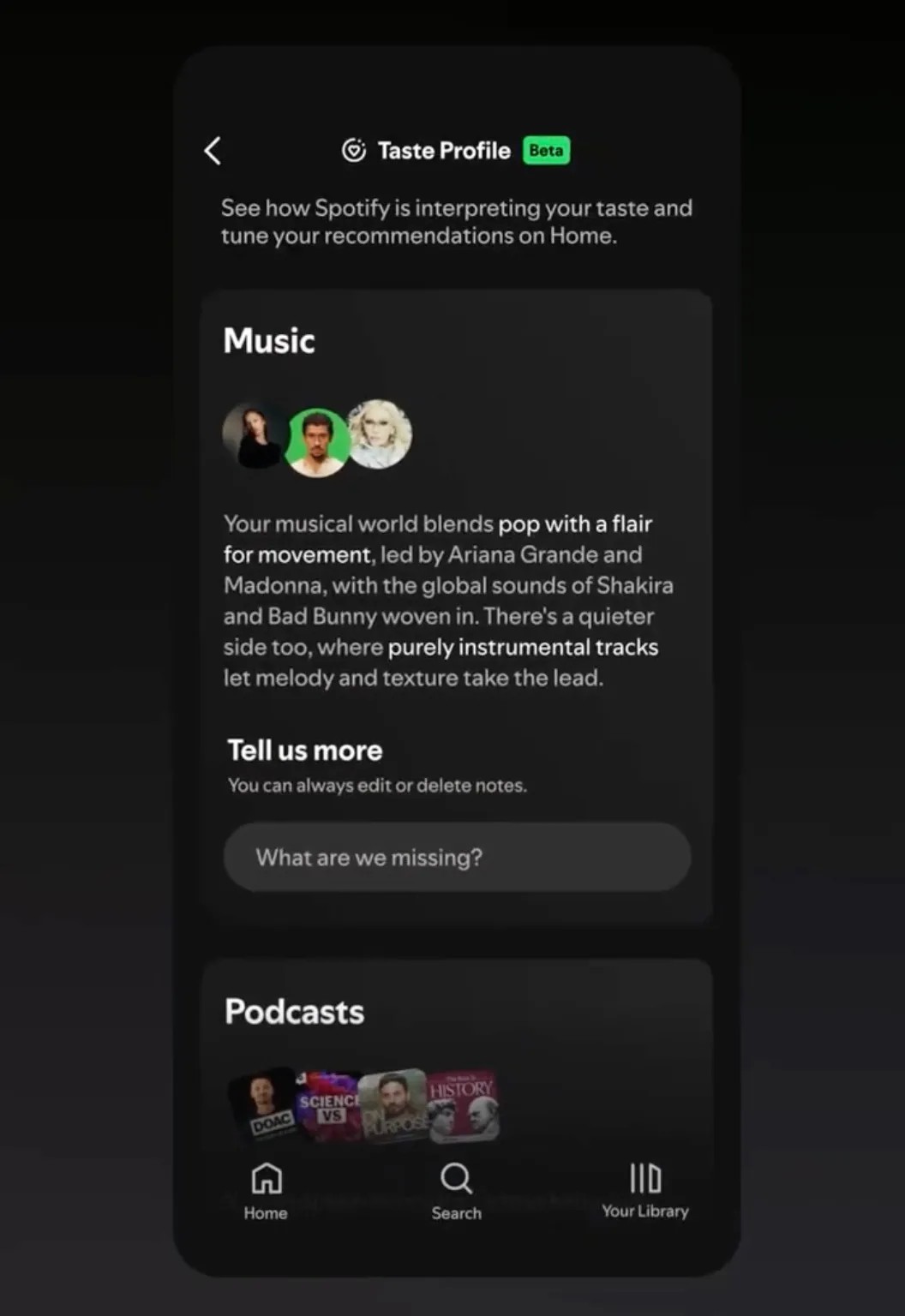
The new interface is broader: it lets people describe the kind of change they want in natural language. Spotify says it can help users explore an unfamiliar genre or musical era, change the mood of their recommendations, and refine suggestions for podcasts and audiobooks as well as music.
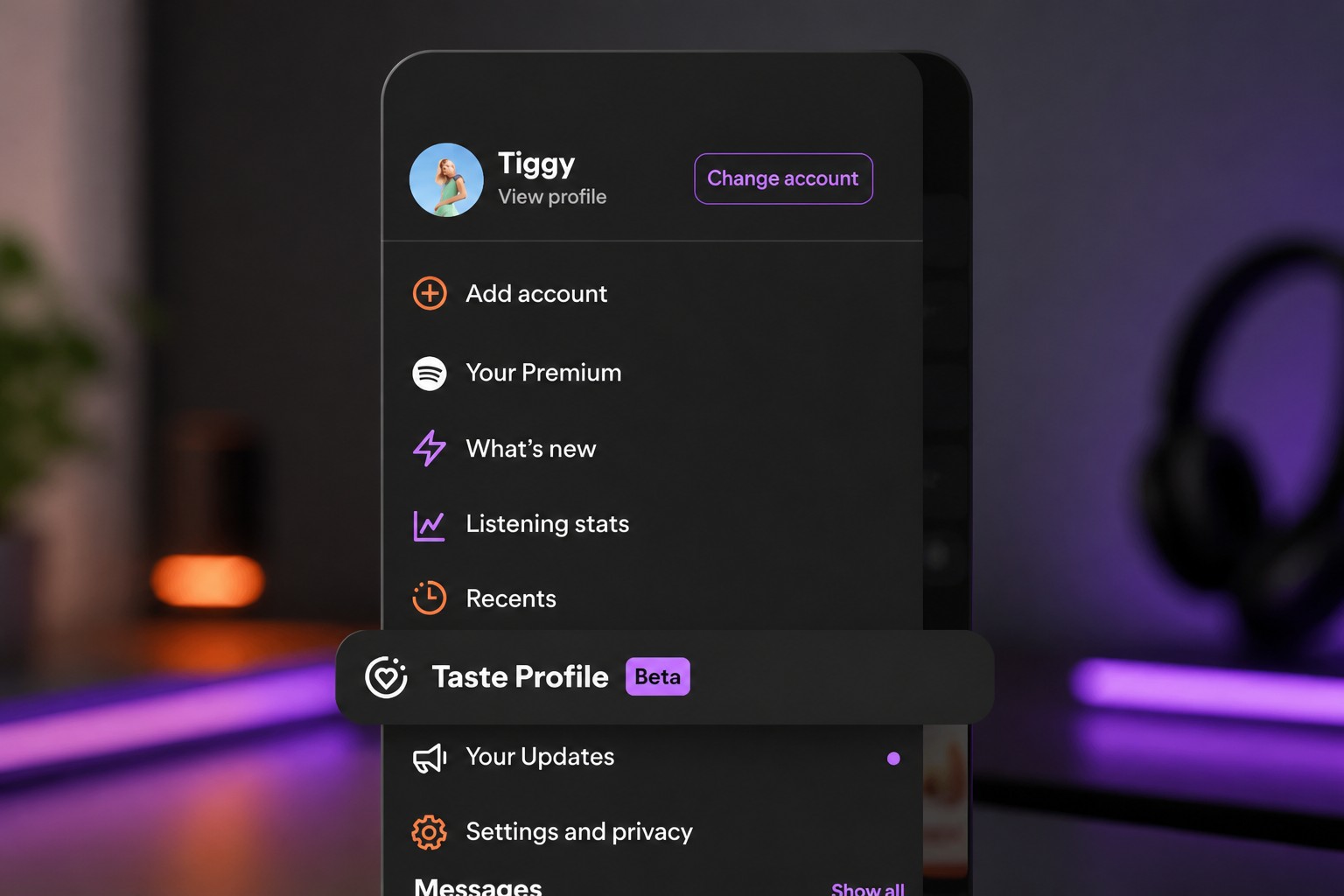
To open Taste Profile in the mobile app:
Tell us more, describe what you want to change and submit the message.A different set of recommendations should appear on the app’s home page within a few hours.
The useful part is also the limitation
I think Taste Profile is a sensible admission that recommendation systems need an edit button. A person can deliberately listen to something without wanting Spotify to treat it as a lasting preference; the examples of sleep audio and a child’s music make that distinction obvious.
But this is still not direct control over the recommendation system. Users can state an intent, and Spotify’s AI decides how to interpret it. The company says the feature is in beta, which makes the rollout look less like a finished redesign of personalization than a test of how much users want to steer it.
The announcement is also quiet about the rollout beyond the US. Spotify has not said when Taste Profile will reach a wider audience. For now, the company is testing whether a more conversational correction layer can keep its recommendation engine from confusing listening history with listening intent.
Daily AI news
Every day we pick what actually matters in AI and explain it plainly — no hype, no filler. Subscribe if you want to follow where the industry is going.
Only what matters — every day
Follow on X