
Spotify’s line on AI
Spotify requires artist profiles without a real person behind them to carry an “AI persona” badge, but not individual tracks. The company also lets users build playlists with generative AI and has promised a tool for creating AI remixes and covers. Other streaming services have taken a tougher stance.
The policy is less a rejection of AI than an attempt to separate its uses. Spotify is willing to put generative tools in the product, while treating AI spam as a recommendation problem.
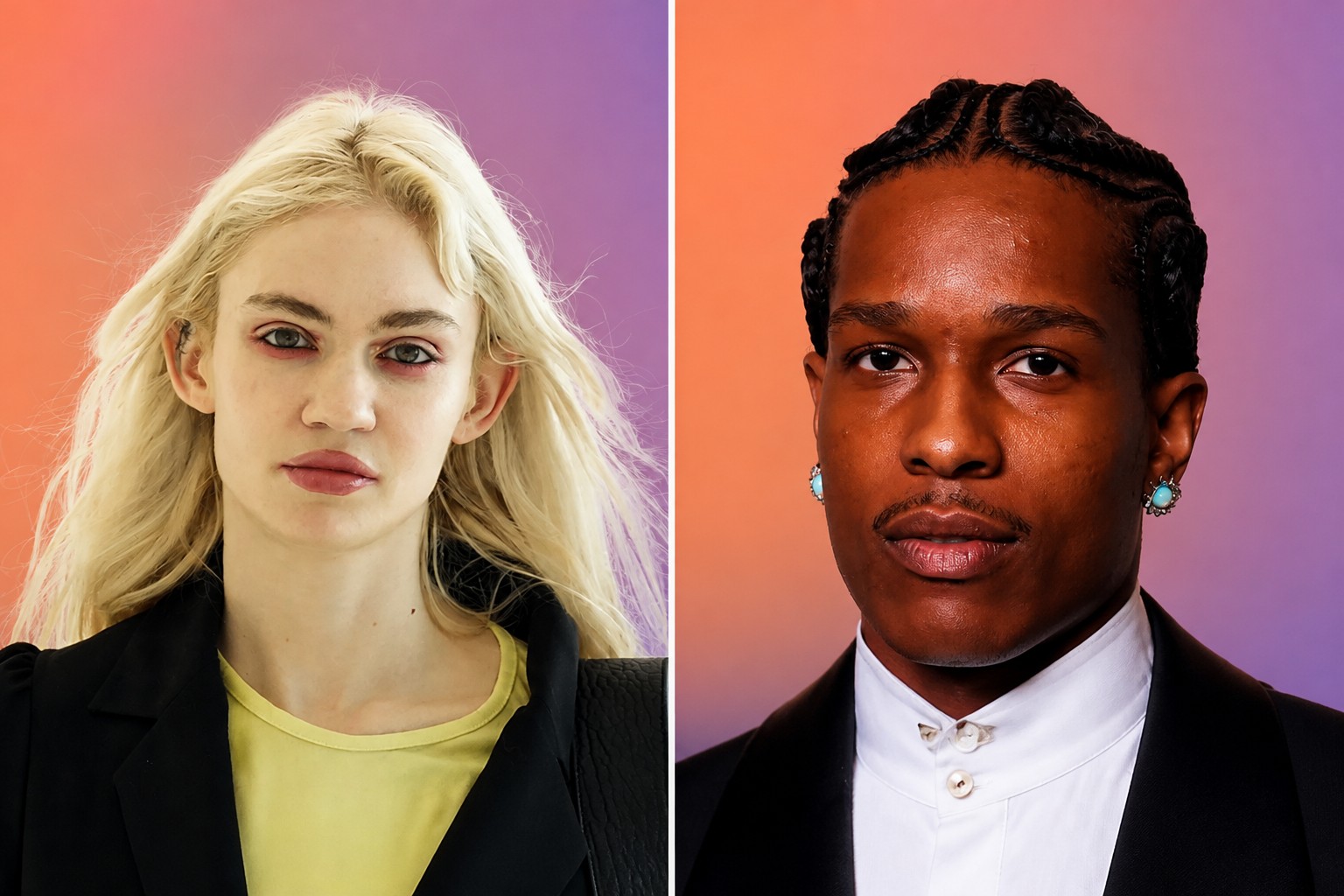
Musicians are drawing a similar distinction. A$AP Rocky told Billboard he prefers making music himself, practically and by hand. If someone creates a whole song by entering a prompt, he said, that is their business; he is focused on working the way he always has. Kelly Clarkson has also described limits on her use of AI while expressing interest in the technology.
Grimes, an early supporter of AI, has set a boundary of her own. Her first album in six years, Psy Opera, is being promoted as AI-inspired, but not AI-made. In an interview with The Paris Review, she described it as conveying the emotion of a person suddenly thrown into the future. Stereogum called the album AI-inspired rather than created by AI; Grimes insists the credits should name her team of 70, rather than reduce their work to machines.
Three years ago, Grimes let fans use her voice for free to make whatever they wanted. She has still not made music with AI herself.
What listeners are choosing
The contrast is clearest in the charts. Billboard’s album top 10 is led mostly by records that put singers and acoustic instruments up front, including Olivia Rodrigo’s you seem pretty sad for a girl so in love, Ella Langley’s Dandelion, Olivia Dean’s The Art of Loving, Taylor Swift’s The Life of a Showgirl, Noah Kahan’s The Great Divide and Stick Season, and Morgan Wallen’s I’m the Problem.
The same stripped-back sound runs through the top four of the Hot 100 singles chart: Taylor Swift’s Patient Zero, Ella Langley’s Choosin’ Texas, Stella Lefty’s Boston and Morgan Wallen’s Been by Now.
Last week, the Beatles’ Rubber Soul, released in 1965, unexpectedly reached No. 4 on Billboard’s album chart. The chart does not prove that listeners are rejecting AI music, but it does show that a technologically ordinary sound has not lost its pull.
The missing distinction
I think the more revealing divide is not between musicians who use AI and those who do not. It is between using a tool and handing over the act of making a song. Grimes and A$AP Rocky are open to AI music, yet neither has chosen to make it themselves. That is a meaningful limit, especially from an artist who once invited fans to work with her voice.
The story’s author listened to Bomboclat Wallahi, an AI song found through fast, overloaded Instagram videos. Its comic excess did not make it memorable; a replay the next day left no impression. The author compares it to bad food that leaves you hungry again, and argues that “slop” still describes AI-made content best.
That judgment is sharper than the evidence in the charts, which shows what is popular, not why. What I’d want to know is whether listeners are rejecting AI itself, or songs that feel generic regardless of how they were made. Spotify’s removal of 50 million tracks suggests that sheer volume is already a problem. The harder test is whether AI music can earn a place in people’s listening habits without hiding how it was made—or who made it.
Daily AI news
Every day we pick what actually matters in AI and explain it plainly — no hype, no filler. Subscribe if you want to follow where the industry is going.
Only what matters — every day
Follow on X