
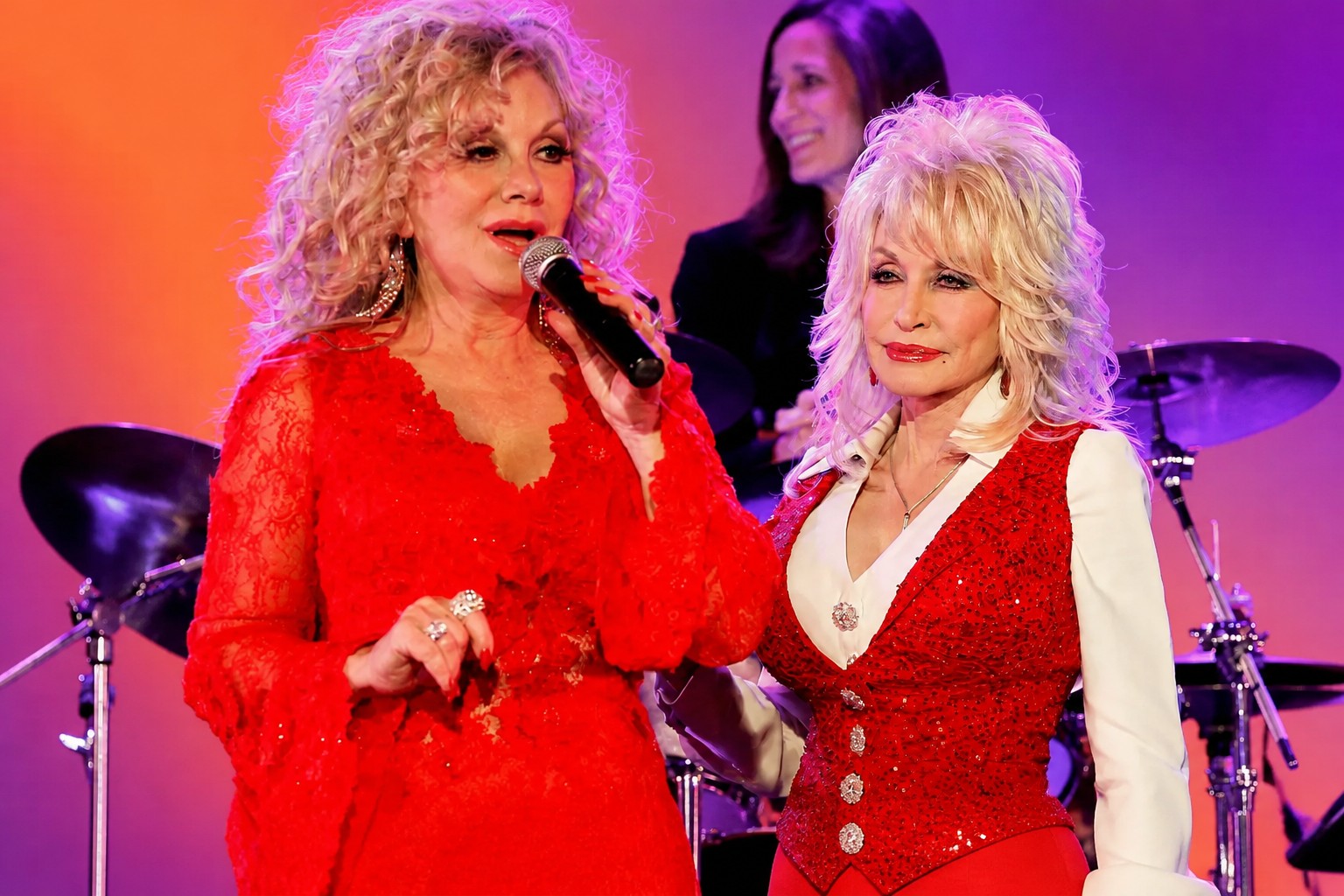
Stella Parton has asked people to stop posting AI-generated material about her sister. In a social media post she wrote that a life lived in public exposes the family to intense pressure and insensitivity from strangers, and that every day brings a volume of AI-made content and other garbage that is hard to take in and equally hard to ignore. She thanked fans for their genuine support and asked for more compassion while the family celebrates Dolly Parton's life and grieves her death. This, she said, is not the moment for the wittiest comments, "fake AI garbage" and snarky posts.
The volume she is describing is measurable. A clip billed on YouTube as a heartfelt fan tribute to Dolly Parton by Miley Cyrus is circulating now, one of many being passed off as posthumous tributes from well-known pop performers. The videos have drawn more than 1.5 million views. The song in the Cyrus clip was generated by AI, as were the others in the same format, a point the BBC made. The label on the video describes what it is supposed to feel like and says nothing about how it was made.
The president of the United States joined in. After Dolly Parton's death, Donald Trump generated and posted an image of himself posing smugly beside the singer with his arm around her. It did not match how the real Parton tried to hold herself above partisan fighting. She also spoke up for the rights of gay and transgender people, positions Trump firmly opposes.
Parton lived 80 years and spent almost 60 of them famous. That is the detail that makes the synthetic images strange rather than merely tasteless: nobody generating an odd AI picture of Dolly Parton is doing so because real photographs are hard to find. The archive is one of the largest any American performer has left behind. It was ignored anyway.
Parton's own position on the technology was mixed. She allowed that AI could be useful in science and medicine, and worried that it would push out human self-expression. In a 2023 interview with the Hollywood Reporter she said the technology could be useful when applied correctly, but should not replace human voices, human lyrics, and the person, who belongs to God.
My read is that the archive point explains the whole phenomenon. AI slop attaches itself to a famous person's death because a death is the one attention event whose timing and scale are known in advance, whose supply cost has fallen to roughly zero, and whose subject cannot issue a correction. Accuracy is not what the Cyrus video is selling. Nobody watching it is checking whether Miley Cyrus recorded a song; they are looking for something to feel, and the machine produces that more cheaply than a real tribute can be organised. The insensitivity Stella Parton describes is not a failure of manners by individual posters. It is the predictable output of a system that pays for grief-shaped content and does not ask where it came from.
The more interesting question is who Stella Parton's request can actually reach. She is asking strangers, one by one, for compassion. The 1.5 million views did not accumulate one stranger at a time; they accumulated through recommendation systems that treated an AI-written song as a fan tribute because that is what its title said. Nobody in this story is asking the platforms distributing the material to label or throttle it, and no mechanism in the story would stop the next 1.5 million.
The 2023 interview reads differently now. Parton set a condition on the technology: not her voice, not her words, not her. The condition held exactly as long as she was alive to enforce it.