
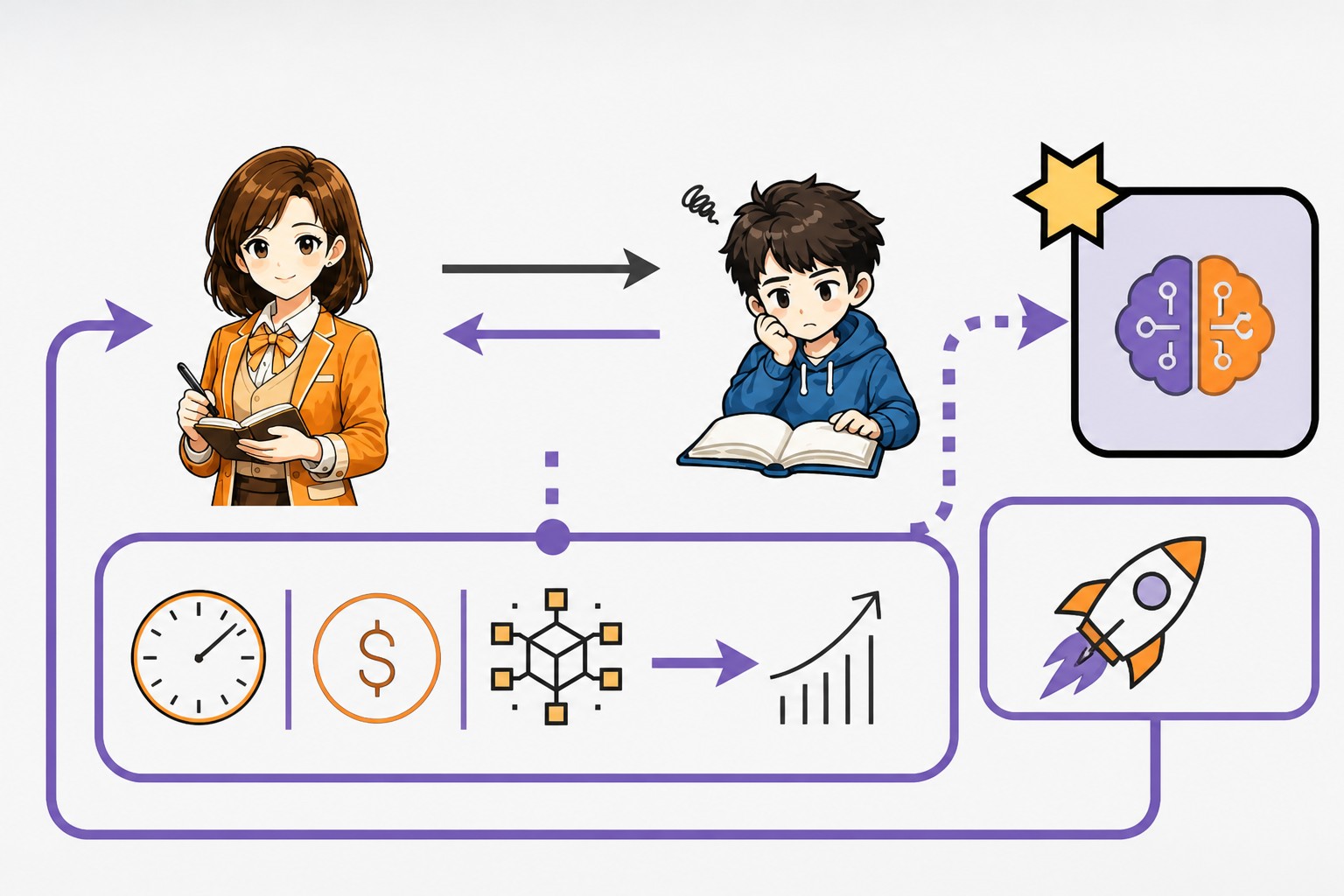
A student simulator has to do more than sound like one
A language model can be prompted to act like a young student who struggles with math. But sounding uncertain is not the same as having a child’s limits: a model may speak in a childlike voice while reasoning with knowledge the student does not have. That could make a tutor look more effective than it is.
Conventional models of student knowledge have a different limitation. They can use learning records to estimate what a student knows or how they tend to behave, but often cannot account for a tutor’s natural-language explanation, hint, or Socratic question. They describe what a learner has done; they may not predict what the learner will do after a specific piece of advice.
StudentSim evaluates simulators on two dimensions:
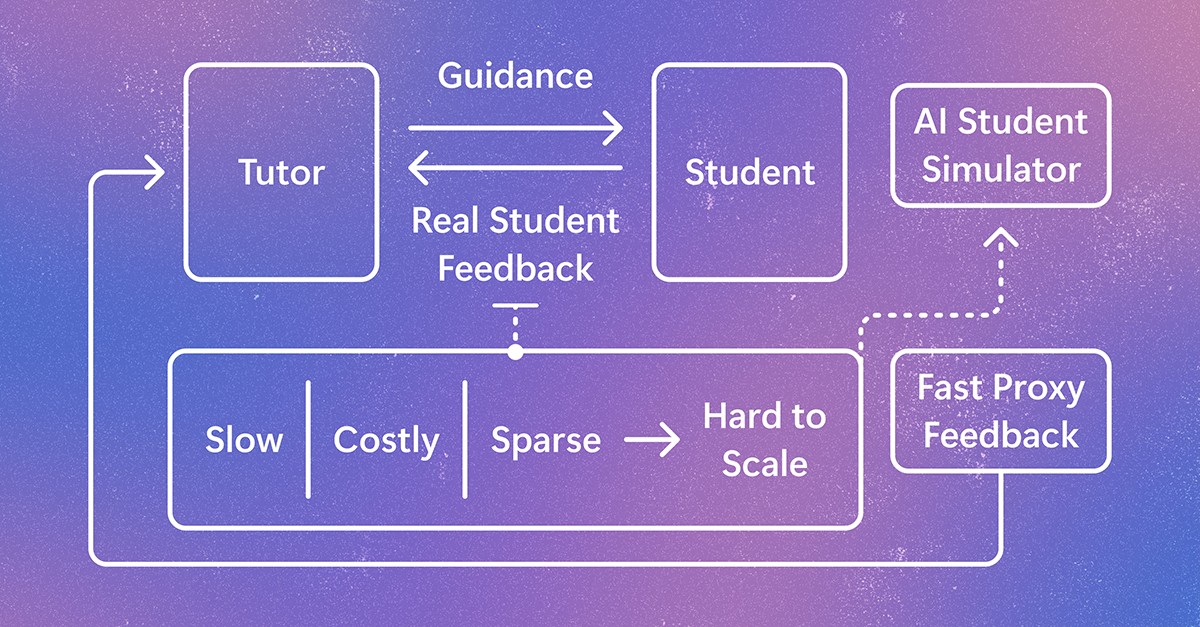
Source: microsoft.com
The two measures are meant to capture different things. A simulator that reproduces past answers may predict a student’s baseline, but cannot show whether a tutor helped. One that always follows advice may respond coherently without reflecting the learner’s actual strengths or mistakes.
The distinction draws on the educational idea of a gap between what a learner can do independently and what they can do with help. For tutor development, both matter: where the student starts, and how the advice changes the result.
From shared learning patterns to an individual model
StudentSimEval uses open, anonymized datasets published for research. Each personal simulator is trained only on records from the student it represents. Since an individual may have contributed only a few essays, answers, or interaction records, training a separate model from scratch risks overfitting and relearning patterns that are common across a subject.
Instead, StudentSim uses a two-stage pipeline. First, a model learns from records belonging to many students in one subject, including common answer patterns, mistakes, and revisions after recommendations. It is then fine-tuned on one student’s records to create that student’s simulator.
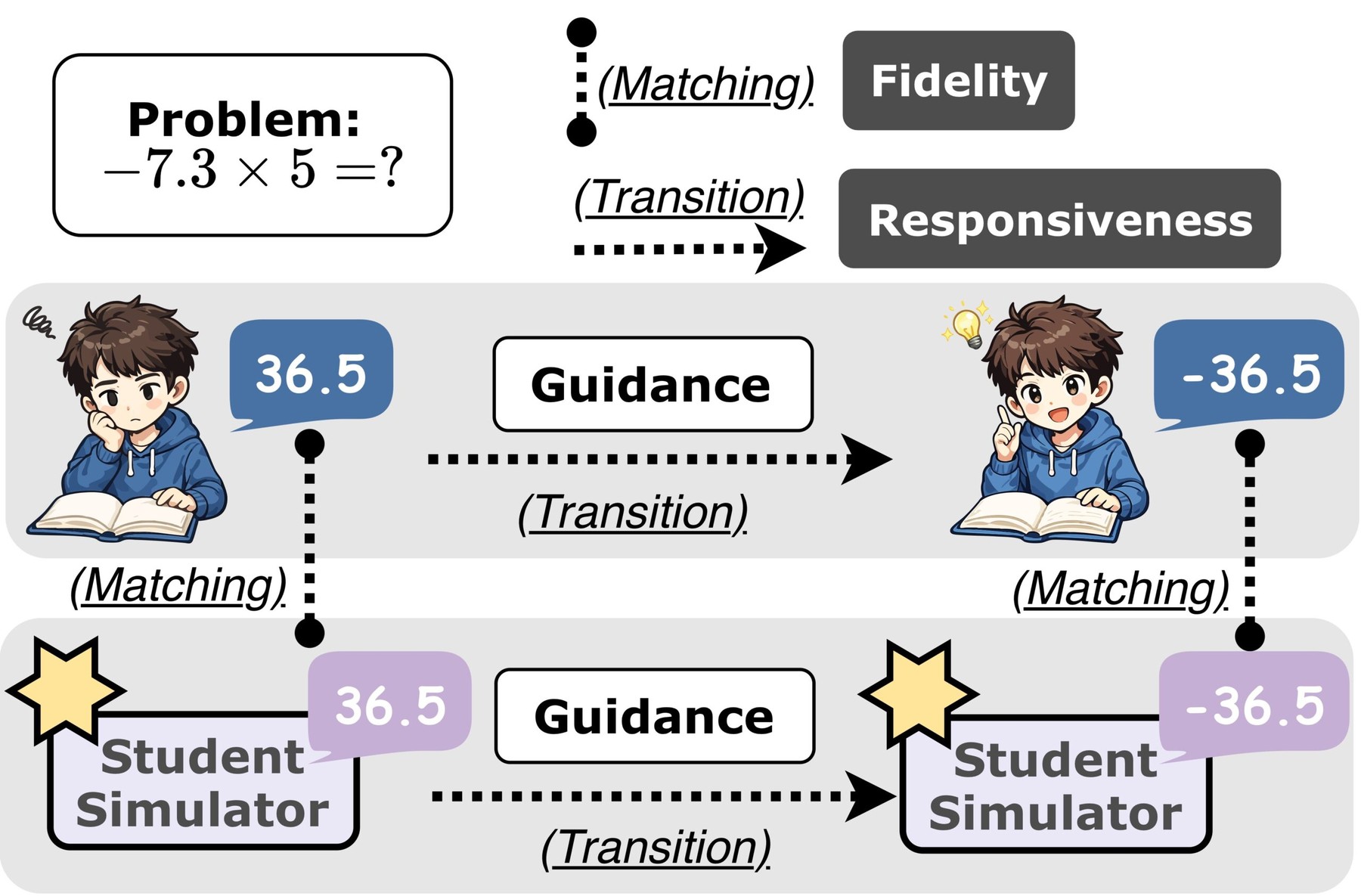
Figure 2: StudentSimEval evaluates whether a simulator matches a student’s independent behavior and whether it responds to guidance.
Source: microsoft.com
The benchmark covers three tasks:
The methods are compared using the same learning records for each student and the same held-out data. StudentSim outperformed the leading baselines in all three areas. In chess, it scored 0.5150 on behavioral alignment and 0.9067 on response to help. GPT-5.4 scored 0.2316 and 0.7186, respectively; Maia2, a model that predicts human chess moves, scored 0.4535 and 0.2721.
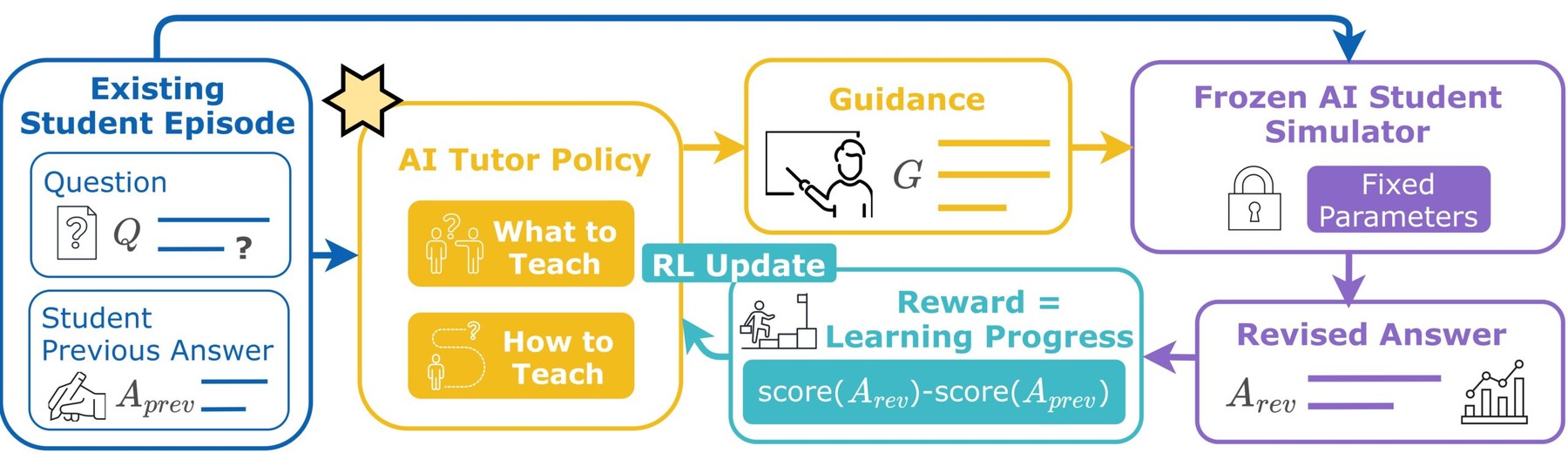
Figure 5: StudentSim can provide feedback during AI tutor reinforcement learning by estimating how a student response changes after guidance.
Source: microsoft.com
The gap illustrates why the benchmark separates the two measures: GPT-5.4 responds to recommendations but does not always reproduce an individual student’s behavior, while Maia2 predicts human moves more closely but cannot account for natural-language advice.
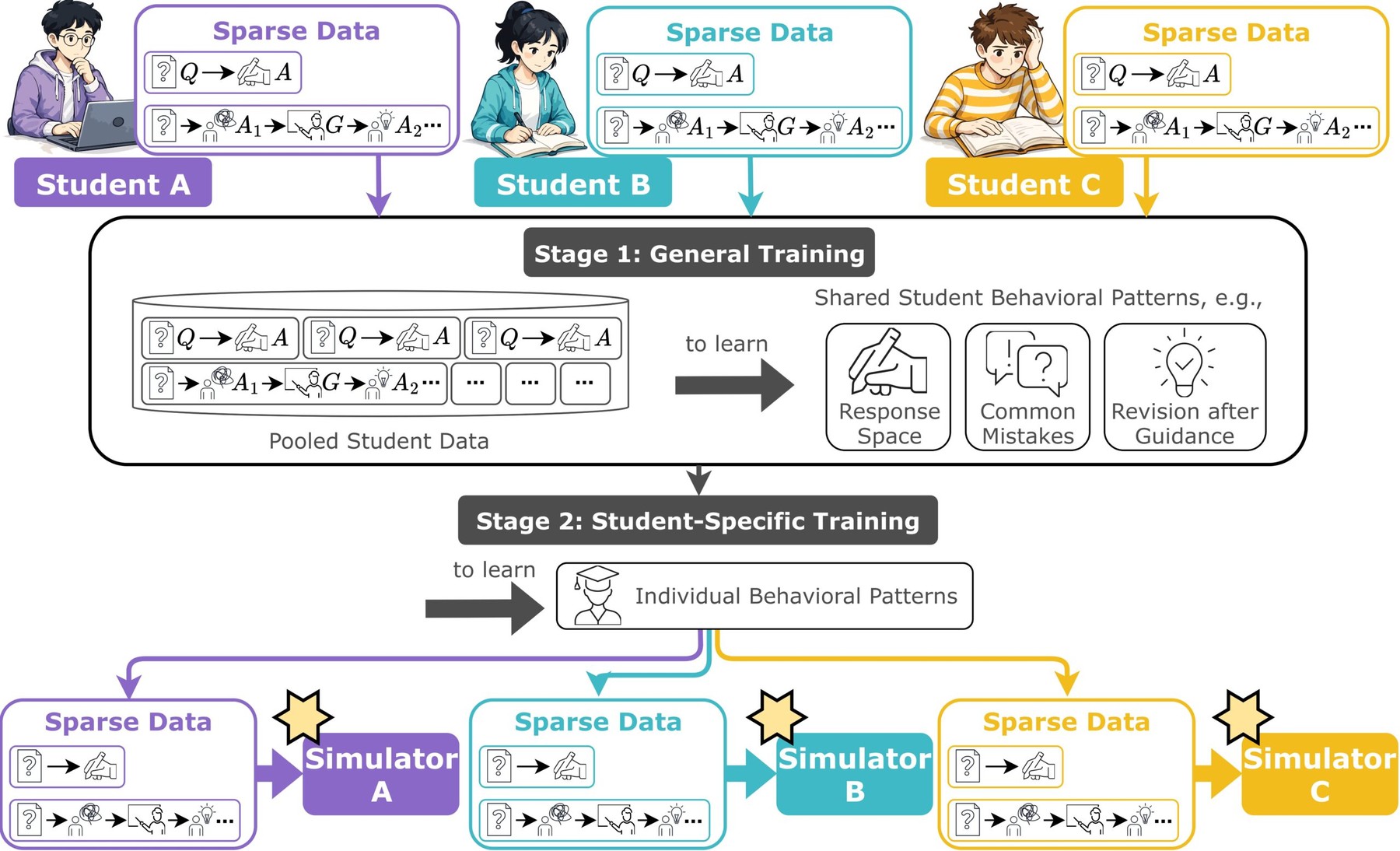
Figure 3: StudentSim first learns shared student behavior from pooled records, then adapts to each student’s own data.
Source: microsoft.com
The test that matters: training a tutor
The researchers also tested whether a student simulator could provide a useful reward signal for training a chess tutor. The tutor receives a position and a real student’s previous mistaken move, then gives a recommendation. StudentSim’s parameters stay fixed; it reads the recommendation and returns a revised move. Stockfish, an independent chess engine, scores whether the move improved.
The study compared three tutors:
The tutors shared the same policy, initial supervised model, and reinforcement-learning setup. Chess experts then evaluated their responses without knowing which system had produced them.
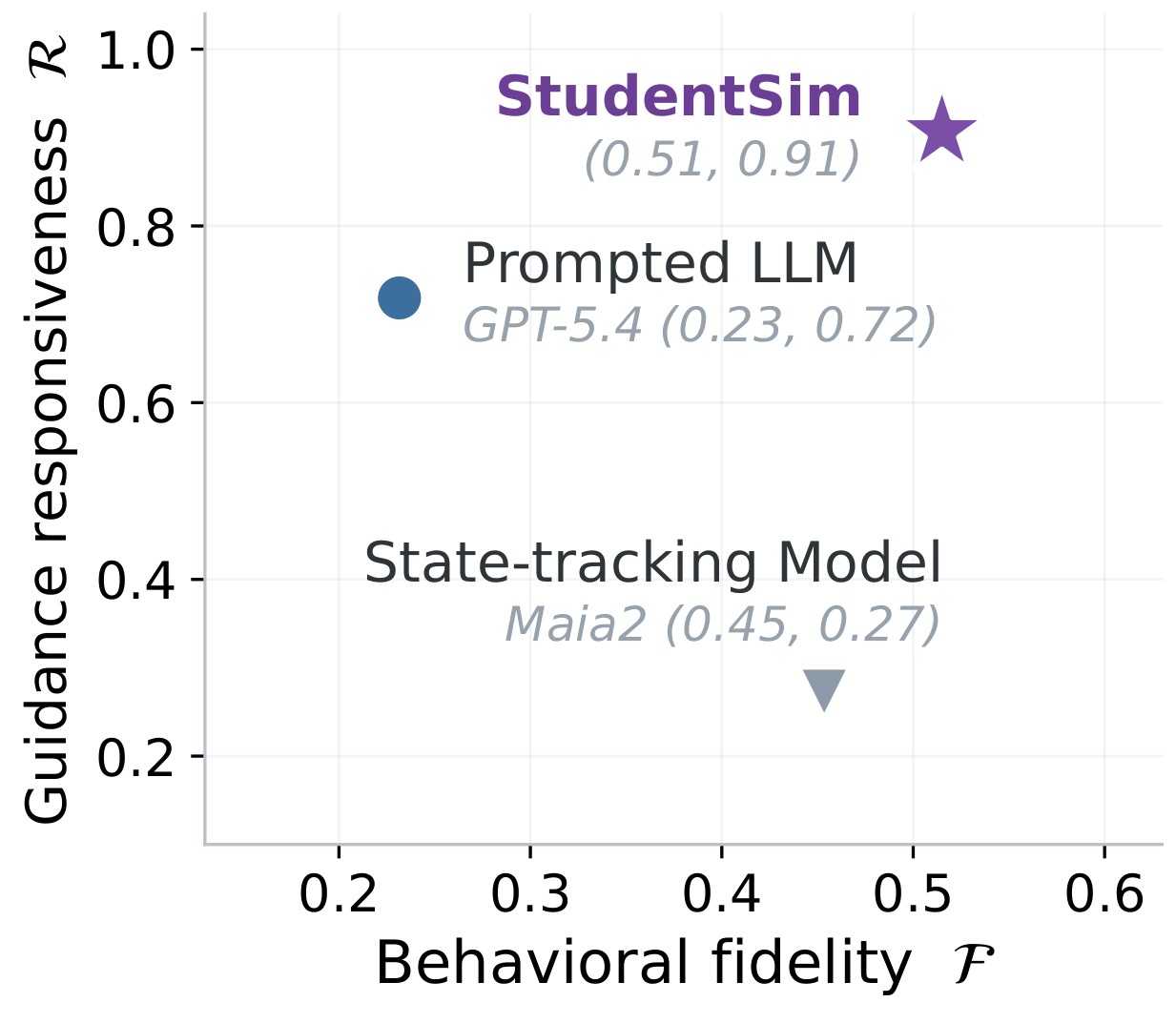
Figure 4: In chess, StudentSim improves both behavioral fidelity and guidance responsiveness compared with leading baselines.
Source: microsoft.com
The StudentSim-trained tutor scored highest on every reported measure. Its accuracy was 90.5%, compared with 75.7% for the tutor without reinforcement learning and 71.6% for the GPT-5.4-reward version. It also received higher ratings for recommendation quality and fit to the student’s needs.
I think this is the paper’s most consequential result, but also the one that most needs careful interpretation. It shows that a simulator trained on learning records can be useful inside this chess-tutor training setup; it does not establish that simulated feedback improves learning in a classroom.
The authors explicitly retain real-student studies for evaluating learning outcomes, safety, usability, and classroom fit. They present simulation as an earlier, cheaper stage for testing tutor strategies and refining training signals—not as a substitute for those studies. Their next steps include longer learning trajectories, more subjects, richer student profiles, and studies linking simulated feedback to real learning outcomes.
The open question is how reliably a simulator’s response tracks a student’s actual progress beyond the tasks and records used to build it. StudentSim offers a way to scale early testing; the case for trusting its feedback will ultimately depend on whether that feedback predicts what happens with learners themselves.
Daily AI news
Every day we pick what actually matters in AI and explain it plainly — no hype, no filler. Subscribe if you want to follow where the industry is going.
Only what matters — every day
Follow on X