
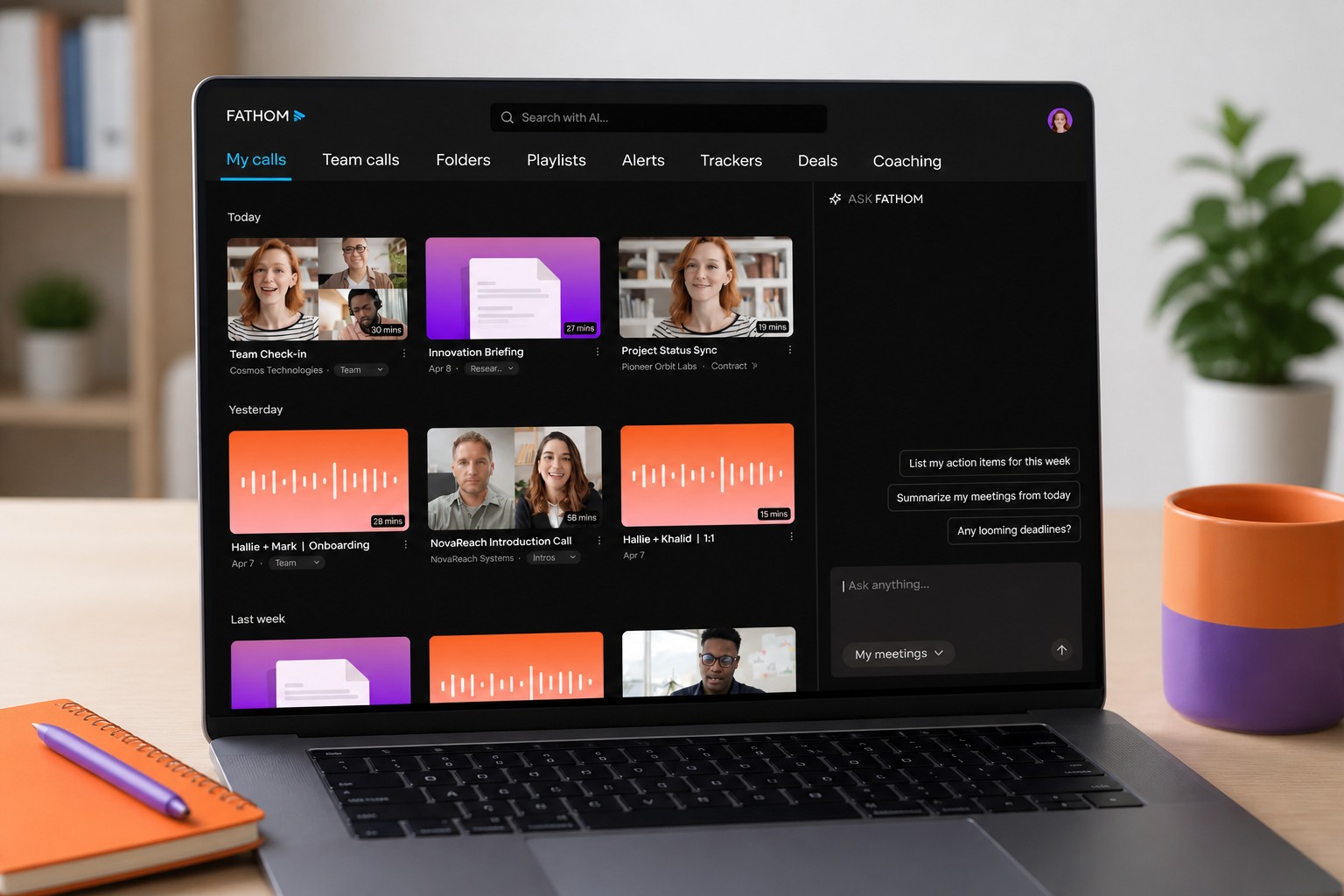
Superhuman has acquired Fathom, the Y Combinator-backed meeting notetaker, after building a version of the same product itself earlier this year and deciding not to finish it. Fathom was founded in 2020, raised more than $30 million and was valued at $94 million in 2024, according to PitchBook. A generous free tier gave it more than 400,000 monthly active users, and the company has said over a million people have recorded meetings with it. The notes are not the point of the deal. Superhuman recently launched a platform for building AI agents, and an agent that waits to be prompted is not much of an agent.
That is the logic the productivity category has converged on. Automation today starts when a user types a prompt or wires up a workflow in advance. The step everyone is chasing is software that starts work on its own, and to do that it needs to know what the meeting was about and what was agreed. Meeting notes are the cheapest available source of both, which is why Superhuman and its competitors have all moved toward owning one.
Superhuman tried the direct route first. TechCrunch reported that the company tested an in-house notetaker with a group of users earlier this year, then chose to buy a finished product and fold it into its platform instead. CEO Shishir Mehrotra confirmed as much, saying the team learned during testing how hard a good notetaker is to build: the internal project validated demand for the category while revealing the depth of these products and the volume of work they require. Such services can look like simple tools, he said, even though getting every part of meeting capture right is difficult. He credited Fathom's technical work without naming which features he meant, and said the notetaker will let Superhuman surface meeting context in real time.
Fathom's investor list is a tour of the last decade of consumer-adjacent software: Zoom Apps Fund, Telescope Partners, BoxOne Ventures, Maven Ventures, Reddit CEO Steve Huffman, former Twitch CEO Emmett Shear and Cruise co-founder Kyle Vogt. Zoom's participation is the structurally interesting one — a fund attached to the meeting layer backing a company that extracts value from what happens inside it.
The market Fathom leaves is crowded and under pressure. Granola, Read AI and the more recent Wispr have each raised millions. The problem is that recording meetings is no longer a business by itself: even companies with steady customer bases or meaningful revenue face demand to do more than transcribe, and those conditions shaped Superhuman's decision to buy rather than compete. Fathom CEO Richard White framed the deal in scale terms, saying Superhuman's audience of 40 million users allows for rapid reach, and that on its own Fathom would have had to build many features Superhuman's platform already has.
On Superhuman's side the pieces now assemble into something coherent. It already has an email client, a document app, a calendar, a database product and the agent platform. The notetaker is the connective tissue: meeting data becomes drafted emails, updated records and scheduled follow-ups, and gives the agents something to act on and extract from.
Look at the traction numbers again, though, because they are free-tier numbers. More than 400,000 monthly active users and over a million lifetime recorders are impressive counts of people who tried a product with a generous free plan. No paying-customer figure appears anywhere in the announcement, and neither does revenue. White's comparison — 40 million Superhuman users against Fathom's 400,000 monthly actives — is meant to read as distribution upside, and it does, but it also quantifies how much smaller the acquired company was than the buyer's existing base. That is a product being absorbed into a distribution machine, not two businesses merging.
The price is the other absence. Nothing in the announcement says what Superhuman paid, which leaves the 2024 valuation of $94 million as the last public mark on a company that raised over $30 million. Acquisitions that beat their last round tend to say so. Mehrotra's refusal to specify which of Fathom's technical solutions impressed him is a smaller gap but points the same way: the case being made here is about category and integration, not about a technology Superhuman could not have eventually built. He said so himself — the internal project proved the demand and revealed the work. Buying is what you do when you believe the demand and would rather not do the work.
What Superhuman has actually purchased is a position at the moment where intent becomes explicit. An email client sees what was written after a decision; a calendar sees that a decision was scheduled. The meeting recording sees the decision being made, which is the only input from which software can credibly act without being asked. If agents ever do start work on their own, the companies holding that recording will be the ones deciding what counts as a reason to begin.