

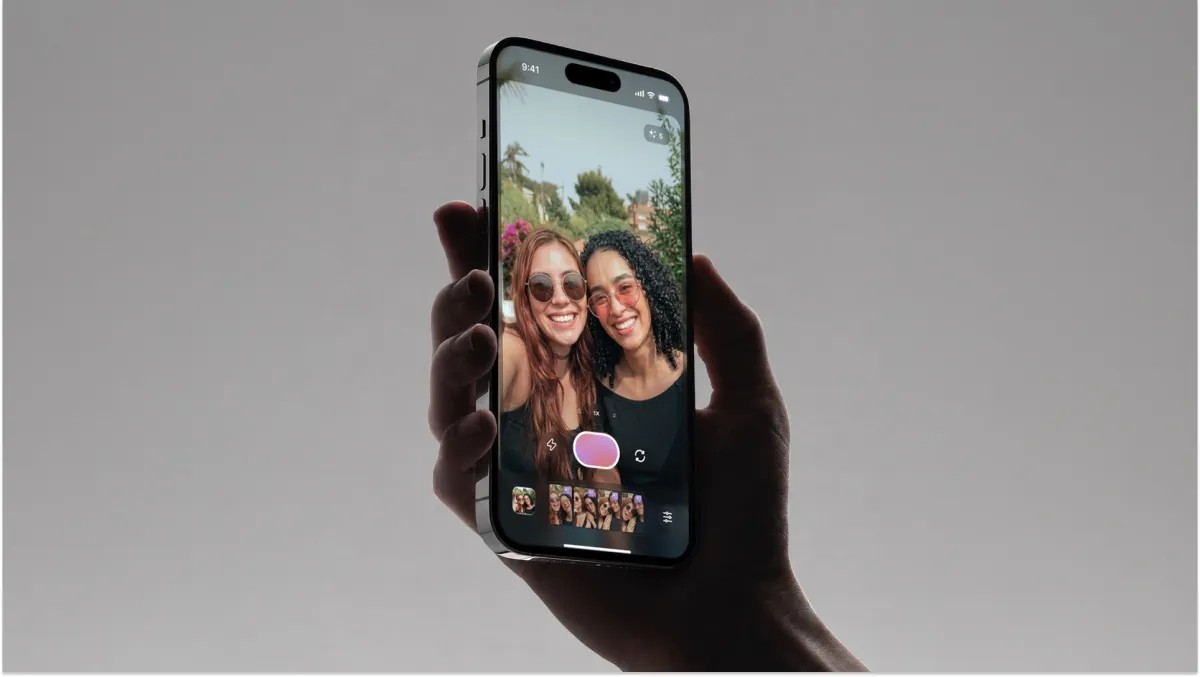
Superpose, a camera app built by two people who both came through TikTok, has raised $2.2 million to solve a problem that sits between photography software and social awkwardness: most people do not know what to do with their bodies when a camera points at them. The app takes a selfie or a photo of a friend, generates four poses the subject could be holding instead, and then guides the user into one of them. Khosla Ventures, the Chinese smartphone and selfie-app maker Meitu, and OVTR Ventures all took part in the round.
The generated poses can be saved, and a feature called Match Pose helps the user stand in frame the way the app suggests. Some of the suggestions are extravagant, and some simply look unnatural — a limitation the company acknowledges rather than hides.
Source: techcrunch.com
Melody Chu held a series of product roles at Meta, Nextdoor, Roblox, TikTok and Slack before starting the company. Her co-founder, Jing Liu, was one of the first engineers at a startup that scanned faces in 3D and later worked on image and video models at TikTok. Chu says the idea came from a domestic grievance: her husband was not good at photographing her, she consistently looked bad in the results, and she told TechCrunch it had become a sore subject in their marriage. She concluded the problem was solvable with computer vision and generative AI.
The category is filling up fast. Google shipped Camera Coach on Pixel phones last year to help with composition and framing. In July, Adobe added a tool to an experimental camera app that uses AI to critique a shot and propose changes to settings or composition before the shutter fires. Google's version lives inside the camera a Pixel owner already opens by default, which is the position every standalone app in this category has to compete against.
Chu's answer to that is a deliberate narrowing. Superpose will not do AI backgrounds or fully generated images; the company's stated goal is real photographs of real events, on the grounds that there are already enough apps for dropping a person into a fantastical place. It wants to be the camera for portraits, the thing that helps a user act on an AI suggestion rather than replace the photo with a synthetic one. Planned improvements are generation styles, personalization, and prompts delivered directly in the viewfinder.
The numbers since the July launch are modest and worth reading carefully: 22,000 downloads and 190,000 generated poses. That averages out to roughly nine generations per download over roughly two months, against a free allowance of five per day. Most people who installed the app appear to have tried it once or twice and stopped, and very few of them can have come anywhere near the paywall. Paid packs cost $2.99 for five generations and $9.99 for twenty — about 60 cents and 50 cents per pose respectively, which is steep for a consumer camera and, more tellingly, makes the bulk pack only 17% cheaper per unit. That is not a pricing ladder designed to move volume. It reads like pricing set before anyone knew what the demand curve looked like.
The restraint in the product strategy is the most interesting decision here, and also the most fragile. Refusing to generate fake backgrounds is a positioning choice, not a technical moat; nothing stops a competitor from shipping pose guidance alongside everything else. Meitu's presence on the cap table sharpens the point — an investor whose core business is making photographs of people look like something other than what the camera saw, backing a company whose pitch is that the photograph should stay true. One of those two views of the market is going to have to give.
There is also a subject the announcement is quiet about. Superpose works by ingesting a photograph of a person's face and body and generating new images of that same person, and one of its founders built her career on 3D face scanning. Nothing in the launch material says where those images are processed, how long they are kept, or what they are used for after the four poses come back. For an app whose entire proposition is that it handles real people in real moments rather than synthetic ones, that is the question most likely to matter as the download count grows.
Superpose has $2.2 million, 22,000 people who have tried being told how to stand, and a thesis that pose guidance is worth opening a second camera app for. Google and Adobe are building their shot guidance into the camera the user already has. A standalone app charging 60 cents a pose has to be materially better at the one thing it does, and the company's own admission that some of its suggestions look unnatural says it is not there yet.