
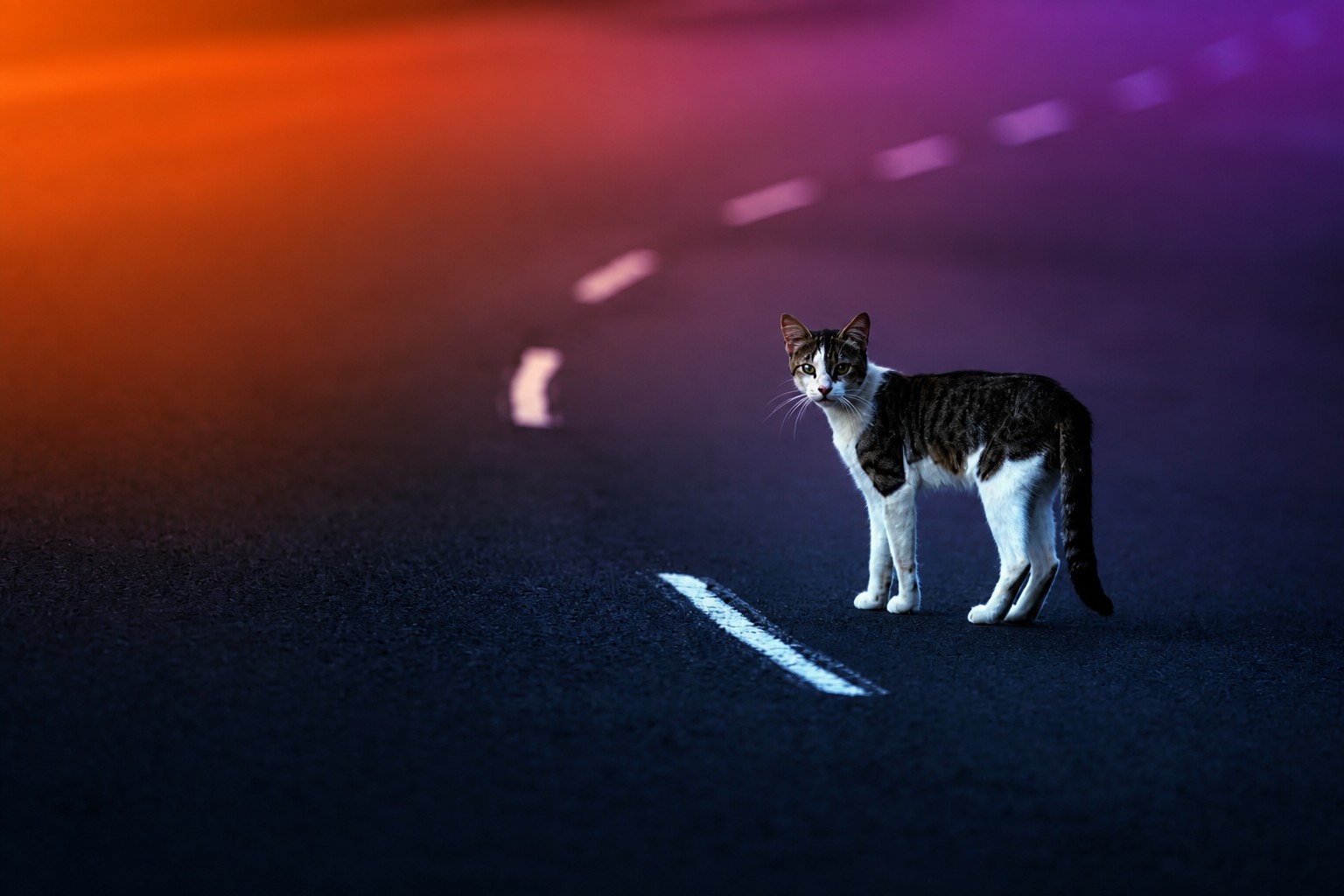
What changes after dark
Musk has argued for years that cameras are enough for self-driving cars. He has called lidar “a fool’s errand” and said radar and lidar can reduce safety by creating conflicts between sensors.
Tesla’s competitors still have a notable advantage in 2026: their additional sensors help them see after sunset. Lidar and radar could help Tesla’s cars spot kittens of any color, even when an animal barely stands out from the road.
But the added hour does not, by itself, establish that visibility conditions have changed. As Electrek notes, the sun in Austin currently sets a little after 7 p.m. local time. At 10 p.m. and 11 p.m., it is already dark; the later cutoff does not make the second hour darker than the first.
A wider gap than one hour
Tesla has struggled to expand robotaxi operations in Austin and other US cities despite Musk’s ambitious launch claims. The company has faced significant regulatory obstacles, particularly around the Cybercab, which has no steering wheel or pedals.
Waymo’s fleet in Austin is significantly larger than Tesla’s. Its cars use lidar and radar, but those sensors have not made encounters with animals risk-free: last year, a tabby cat named KitKat was killed by a Waymo car. The article describes KitKat as one of several beloved local animals killed by self-driving cars.
I think the more telling question is not whether Tesla can keep its cars out later, but what the extra hour demonstrates about its ability to operate safely in conditions its sensor strategy handles poorly. The announcement offers an explanation, not evidence that the underlying limitation has been solved.
Daily AI news
Every day we pick what actually matters in AI and explain it plainly — no hype, no filler. Subscribe if you want to follow where the industry is going.
Only what matters — every day
Follow on X