
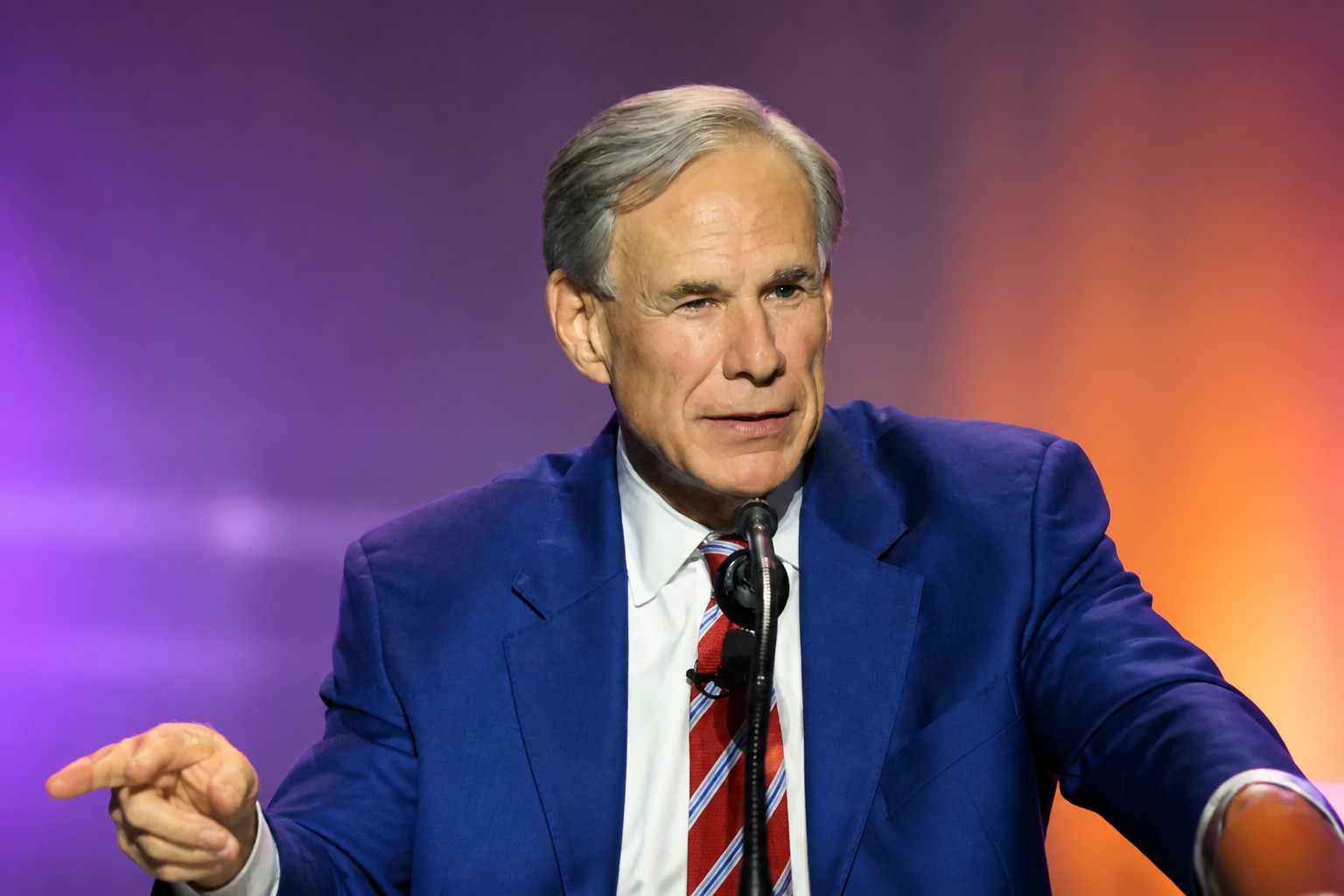
Texas governor Greg Abbott has ordered the state's water regulator to start penalizing data centers that do not report how much water they use. In a letter to the Texas Water Development Board, Abbott wrote that large water users, data centers among them, may have committed civil and criminal violations by failing to file the water-use information the Texas Water Code requires, and told the board to use its authority to punish past failures and apply the consequences the law provides to anyone who does not comply in future. It is the second enforcement move against the industry in a month.
The first came in an executive order a month earlier, when Abbott directed the Public Utility Commission of Texas and ERCOT, the grid operator, to run a comprehensive audit of data centers working through the ERCOT interconnection process. That audit requires each project to disclose how much water it consumes, where the water comes from, and what technologies it uses to reduce the draw. Projects that do not complete the audit, Abbott said, will not be cleared to connect to the state grid.
Monday's letter stitches the two together. Abbott wrote that the water board's own surveys do for water use what the data center audit does, and that the board should coordinate with the utility commission and ERCOT so covered operators hand over the required figures. Refusing to supply that information as part of the audit, he said, automatically triggers the board's independent power to impose sanctions.
Read structurally, this is less about the water code than about the queue. The reporting obligation in the code is not new, and the letter's own language about past violations implies it has been going unmet. What is new is that a data center in Texas now needs something from the state that the state can withhold: a grid connection. Water disclosure has been attached to the one approval nobody can build without.
The scale explains the urgency. Pew Research Center counts Texas second in the country for data centers, with 335 already operating and at least 248 more planned or under construction. Analysts expect the state to pass Virginia by the end of the decade and hold the largest concentration of data centers in the world. The Houston Advanced Research Center puts the industry's 2025 water use in Texas at about 25 billion gallons, rising to as much as 161 billion gallons a year by 2030 — roughly 2.7% of all water used in the state, or about what 1.3 million American households consume.
That 2.7% is worth sitting with, because it is a small number to hang a political fight on. It is also the wrong number. What makes the projection alarming is not the share but the slope: more than six times more water in five years, in a state where drought is a recurring condition rather than an event, and in the specific counties where the buildings actually land. Statewide averages do not draw from a statewide tap.
Notably absent from the announcement is anything that would tell you how big the problem is. The letter names no company, gives no count of operators that failed to report, and attaches no figure to the penalties it threatens. It is also, on its own terms, a disclosure regime and nothing more: neither order sets a ceiling on how much water a data center may take, only a requirement to say how much it took. Texas is buying itself a number, not a limit.
Which leaves a governor asking for a fourth term with the strongest hand any state has yet played against the data center industry — and using it, for now, to make the industry fill out a form.