
What Polygraph+ would do
The budget request says Polygraph+ will “modernize federal polygraph and credibility assessment technologies” and make them more accurate and reliable. The Defense Counterintelligence and Security Agency (DCSA), which conducts federal background checks, would oversee the program.
The document names two intended uses:
Congress has not approved the funding. The budget request does not say which technologies would be included, and DCSA did not respond to a request for details.
The timing is revealing. In September, The New York Times reported that about 50 officers from the Joint Chiefs of Staff had undergone polygraph tests after reports about shrinking US weapons stocks during the war with Iran. The Pentagon is therefore proposing a new detection system while already turning to the old one in a politically sensitive hunt for leaks.
My reading is that Polygraph+ is less a clean technology bet than an attempt to give an existing institutional practice a more modern vocabulary.
The technology already being tested
The Pentagon has tried to broaden deception detection before. In 2023, its Defense Innovation Unit (DIU) invited companies to submit products that could be used to detect deception.
Two companies were selected to build prototypes:
A DIU screenshot of the Altec prototype showed head-motion tracking, facial skin temperature and pore activity. Presage Technologies and Altec Research did not respond to requests for comment. DIU also declined to comment.
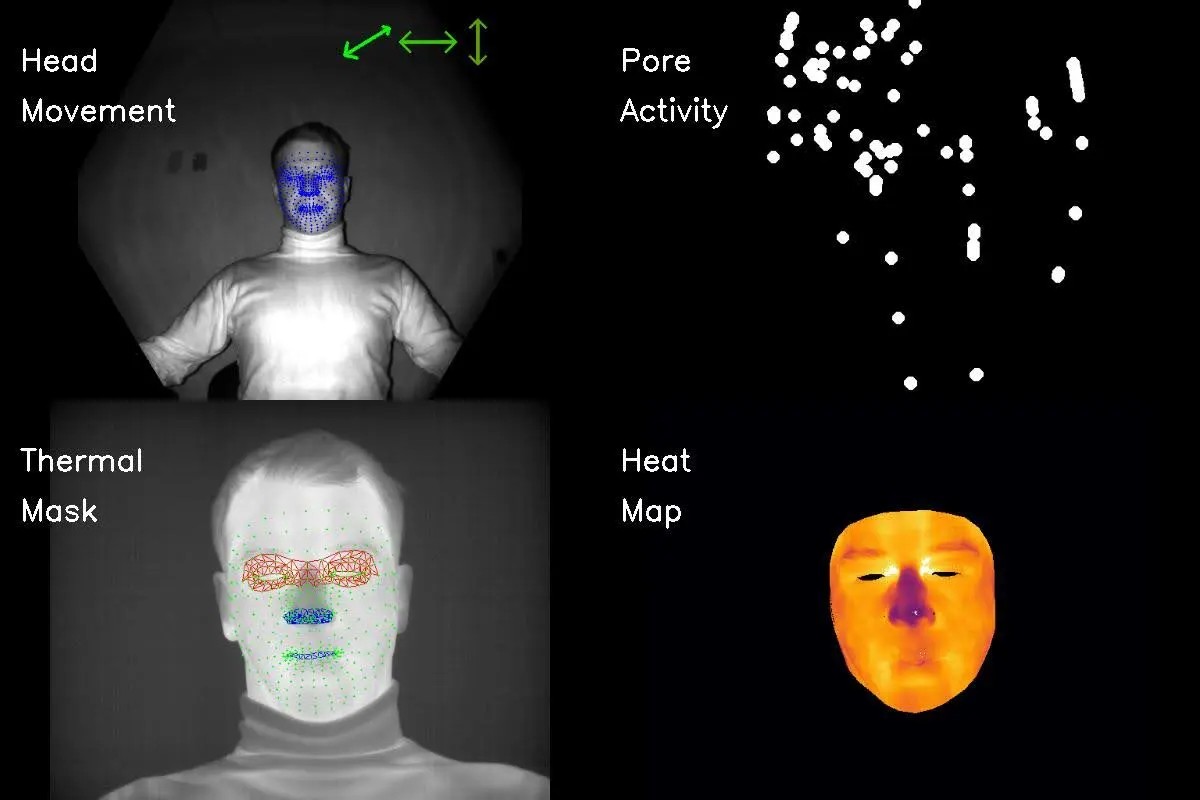
Altec Research has built a prototype that tracks head movement, facial skin temperature and pore activity. (Altec Research)
Source: technologyreview.com
These systems point toward a broader approach than the conventional polygraph: collect more signals, then let software combine them. That sounds plausible until the underlying question becomes unavoidable—what, exactly, makes a physiological change evidence of deception?
The evidence problem
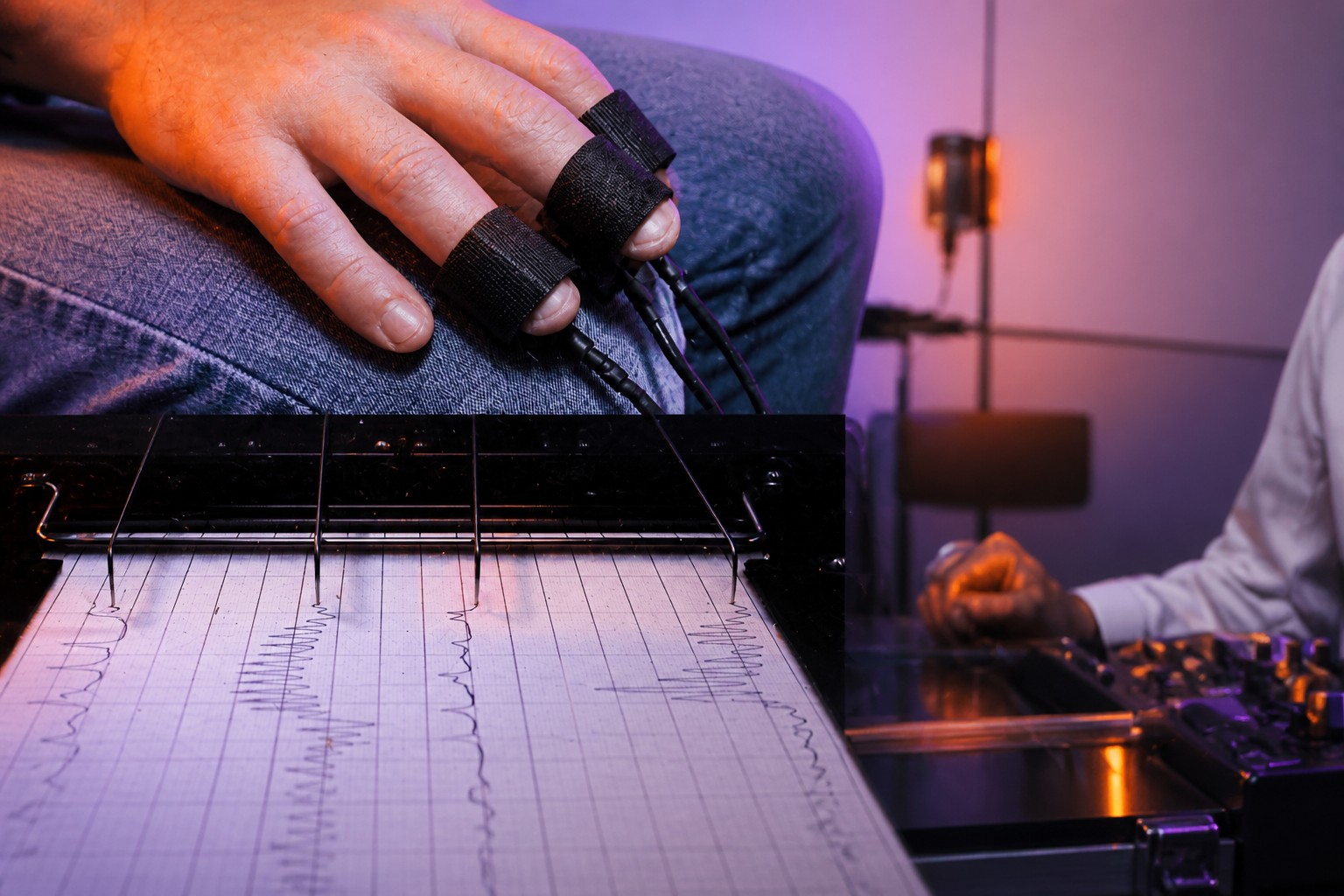
The modern polygraph has changed little since the device was invented in the 1920s. Examiners measure blood pressure, pulse, breathing and sweating, then compare a person's reactions to different kinds of questions.
A baseline question might be “Is the sky blue?” A relevant question might be “Have you ever committed a crime?” The examiner interprets the difference between the two reactions as evidence about whether the answer is truthful.
Federal agencies conduct tens of thousands of these tests each year during employee hiring. Yet polygraph results are rarely accepted in court and have faced repeated criticism.
Applied to the Defense Department's 2.8 million employees, an imperfect system could falsely accuse tens of thousands of people. That is not a marginal failure rate when the proposed use includes insider-threat investigations.
The method also has practical weaknesses:
One common countermeasure is to artificially intensify the physiological response to baseline questions—for example, by stepping on a hidden pin inside a shoe.
Sophie van der Zee, an associate professor at Erasmus University Rotterdam who studies deception detection, says the polygraph can be defeated by someone who understands how it works. In her view, the device's main effect is deterrence: people often confess before testing begins. That effect works only when they believe the polygraph is capable of detecting lies.
AI cannot supply the missing ground truth
The Pentagon's proposal assumes that better measurement and machine learning might improve the result. In theory, an algorithm could find patterns in physiological data that examiners miss. A system could also combine several measurements into an overall probability of deception that would be harder for a person to evade.
Van der Zee identifies three processes that deception-detection systems try to capture:
A conventional polygraph focuses on only one of these areas. Combining methods that address all three could theoretically improve performance.
The idea is not new. In the 2000s, researchers at Manchester Metropolitan University developed Silent Talker, a system that calculated a deception score from video recordings. It was later included in iBorderCtrl, an experimental program funded by the European Union.
In the US, the AVATAR project combined gaze tracking, voice analysis and body-movement recognition for use at border crossings. Both projects have since largely disappeared.
The recurring problem is structural: there is no single sign of lying that appears in the same way for every person and in every situation. As van der Zee puts it, there is still no universal “Pinocchio's nose.”
I think that limitation matters more than the number of sensors. Machine learning can discover patterns, but it cannot reliably label those patterns as lies when there is no dependable basis for knowing which past polygraph judgments were correct.
Kiri Catsoglu, a professor at Northumbria University's law school in the UK who studies the use of polygraphs in the justice system, says the approach reduces a complex phenomenon to measurable indicators. She argues that combining AI with a polygraph joins the weaknesses of both: the polygraph's questionable foundation with the uncertainty of algorithms.
Marion Oswald, a professor of law who wrote about polygraph use in the justice system with Catsoglu, makes the central point more sharply. Even with records from every polygraph examination, she says, it is impossible to know whether the results were correct.
That leaves Polygraph+ with a difficult problem that more data cannot automatically solve. A system can become more consistent without becoming more accurate.
A detection system or a pressure system
Oswald fears that new deception-detection systems, like ordinary polygraphs, will be used more as psychological tools than as scientific ones.
She sees the project as a response by the current administration to concerns about leaks and an alleged lack of loyalty. In that setting, a lie detector may function as a threat: a way to intimidate people and pressure them into confessions rather than a way to obtain reliable information.
That is the quiet issue in the budget request. Polygraph+ may not need to prove that it can detect lies to become useful inside the Pentagon. It may only need to convince people that it can.
Daily AI news
Every day we pick what actually matters in AI and explain it plainly — no hype, no filler. Subscribe if you want to follow where the industry is going.
Only what matters — every day
Follow on X