
The wall saw more than it saved
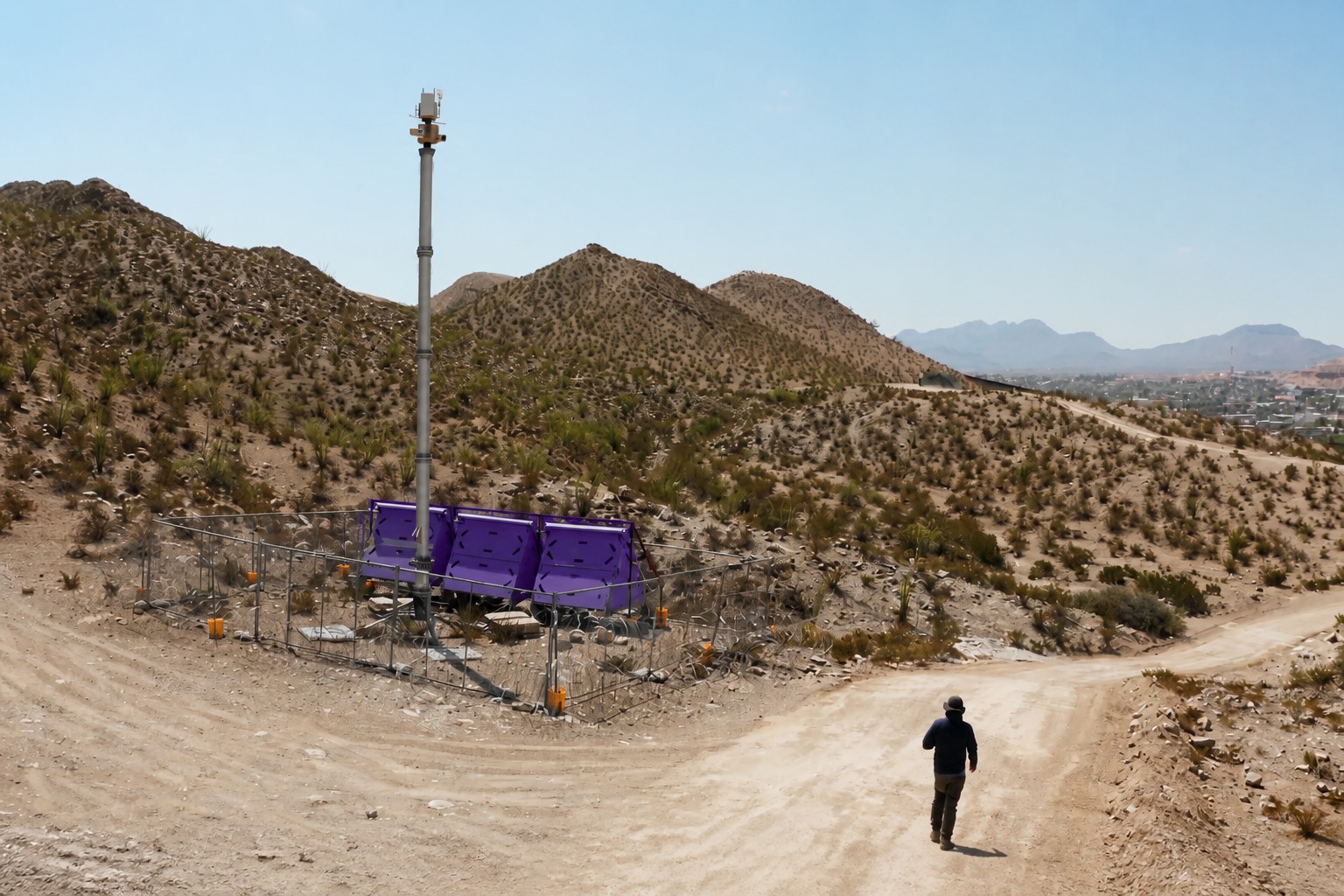
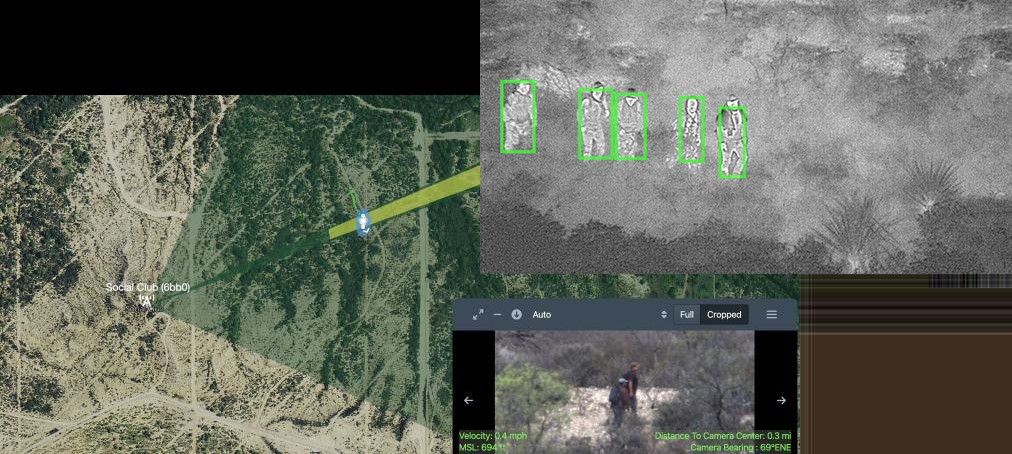
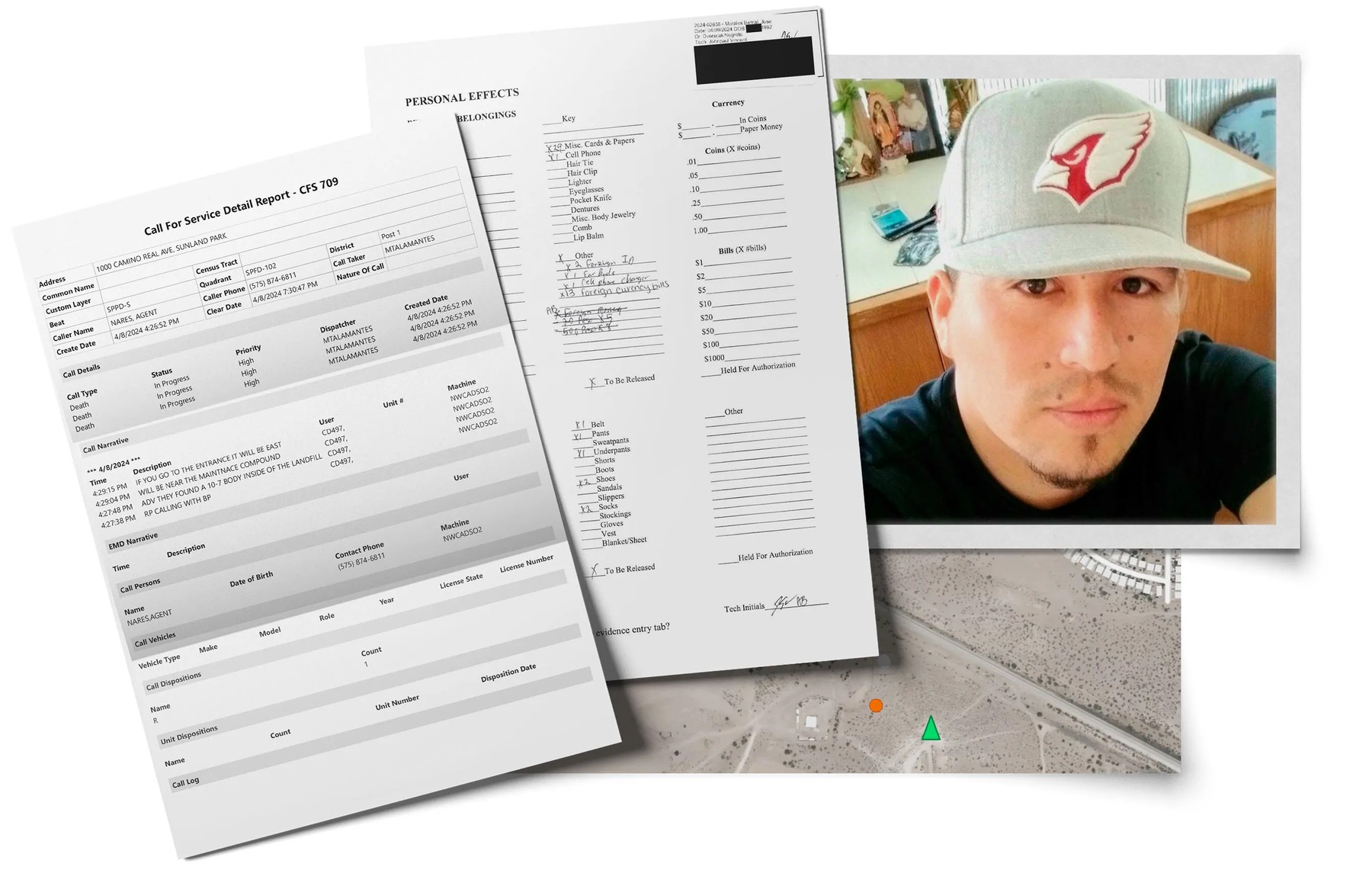
On the morning of April 8, 2024, José Morales Bernal walked through southern New Mexico within range of three recently installed Anduril towers. The towers use cameras and AI to detect and track people, stream video to nearby control centers, and send alerts to government-issued smartphones.
Morales was found dead at 4 p.m. by workers at a nearby landfill. Border Patrol agents arrived 45 minutes after the workers called. He had died roughly 360 feet from the closest tower. An autopsy attributed his death to environmental exposure, including heat and other desert conditions.
The towers had been installed to detect people before they reached Sunland Park. If the system had worked as intended, Morales would have been detained and could have received medical assistance.
Instead, the landfill workers saw him first.
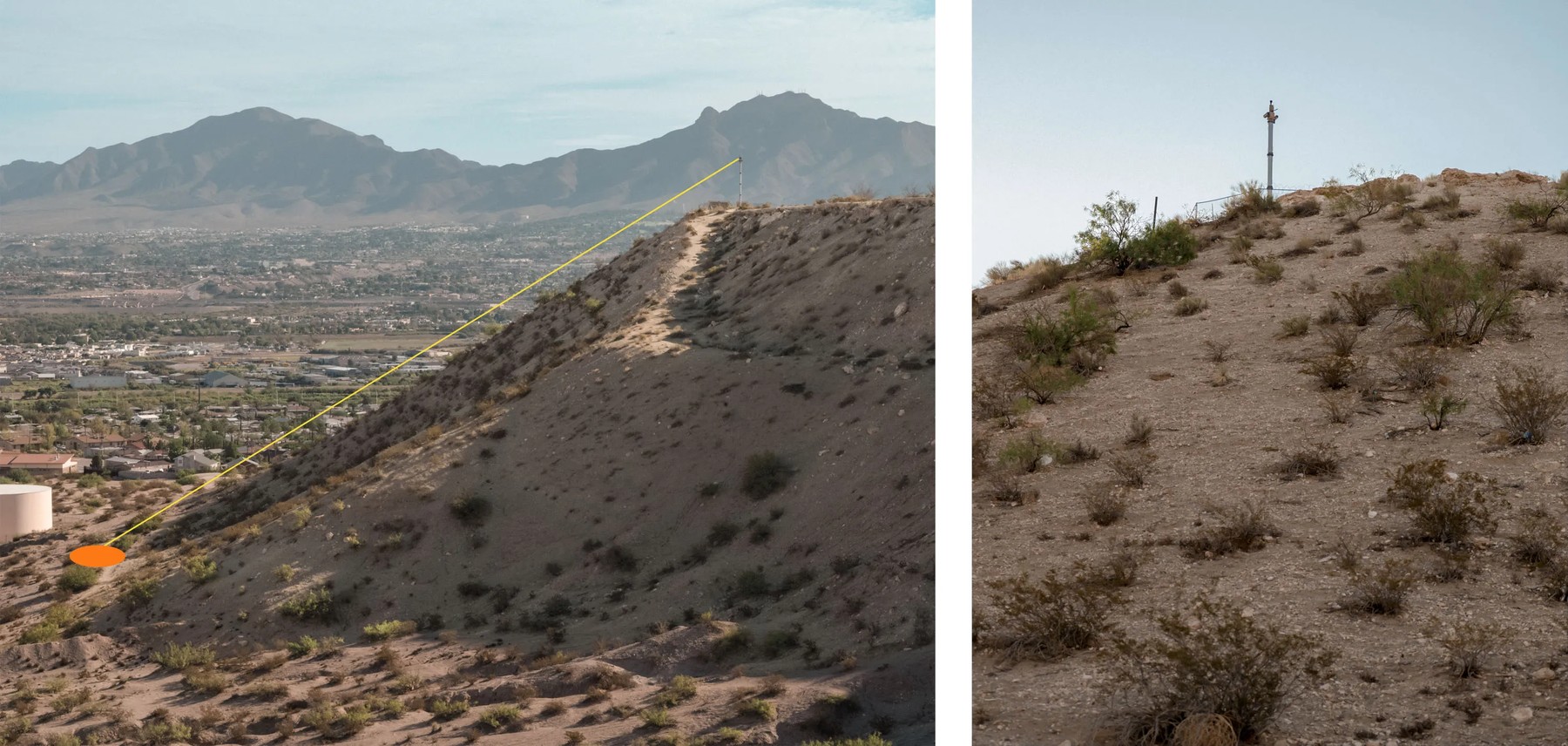
The view from where José Morales Bernal’s body was found toward a Customs and Border Protection surveillance tower made by Anduril, along the southern US border in Sunland Park, New Mexico.
Source: technologyreview.com
The towers around Morales were part of a 25-year effort to build a technology-heavy border system. It includes:
The investigation matched nearly 4,000 locations where human remains were found with information on almost 600 towers, their installation dates, estimated dates of death, terrain and reporting from the border.
Its central findings were stark:
In the same desert area where Morales died, 18 other people died within range of three Anduril towers during that year. Five were, according to the analysis, visible from the tower closest to Morales’s body.
The failures were not limited to one model. In one case, a man carried his struggling 30-year-old brother roughly a mile from the border and pulled him into the shade. Border Patrol noticed them only after the man stopped a helicopter and asked for help. His brother was already dead when agents arrived.
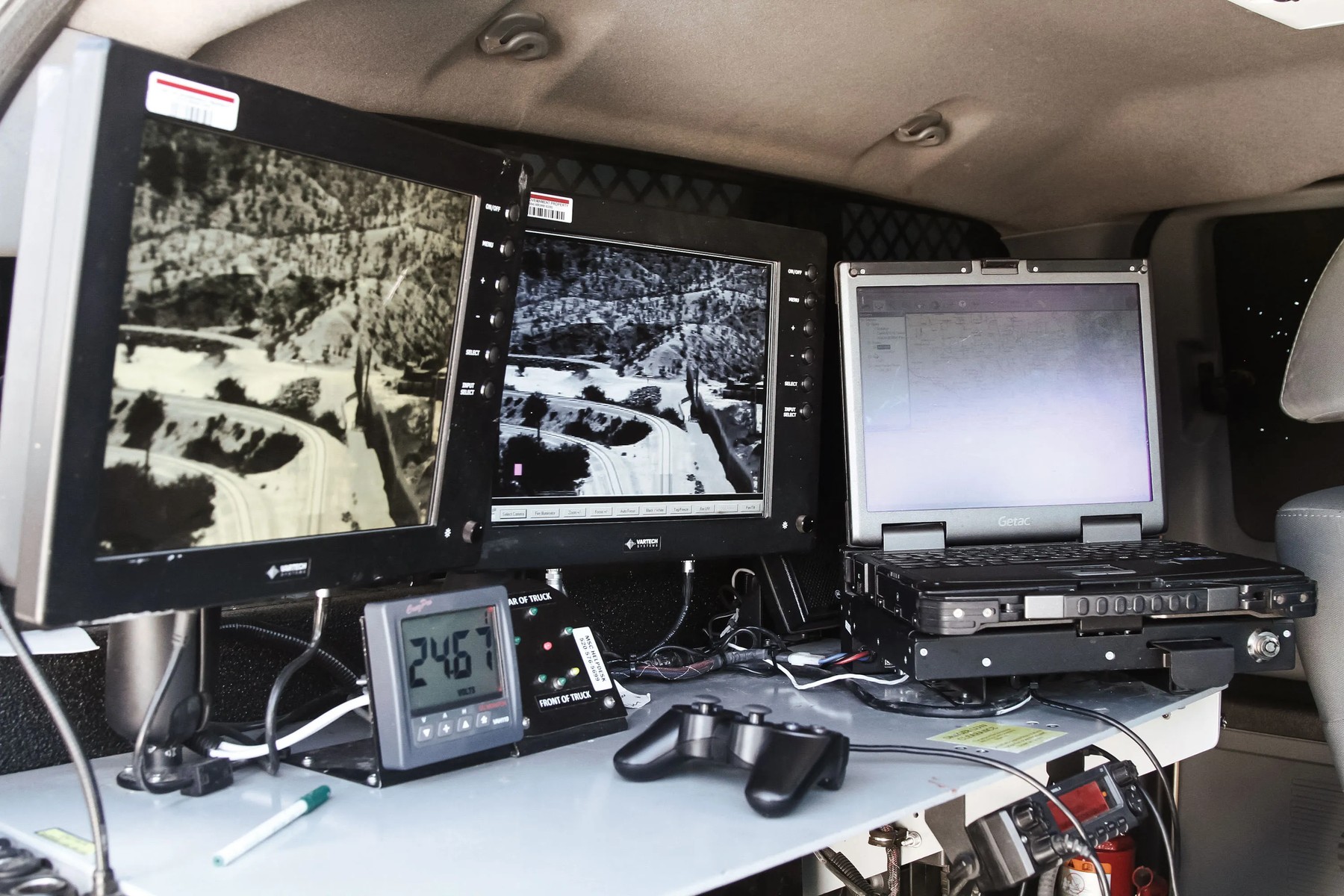
Monitors inside the cab of a Border Patrol truck show a portion of the US-Mexico border in Sunland Park, New Mexico, on Thursday, June 6, 2019.
Source: technologyreview.com
A 24-year-old woman died near another Anduril tower whose camera should have had a direct view. Her body remained undiscovered for weeks, decomposing in the summer heat. Four more AI-equipped towers stood a few miles west, near a Border Patrol station. Ten bodies were found nearby that year, each in a location where at least one tower had a direct line of sight.
Anduril said that CBP operates the towers after delivery and that proximity to a tower does not prove the system failed to detect someone. Its representative pointed to terrain, physical obstructions and viewing boundaries set by CBP, including boundaries created for privacy reasons.
That defense leaves the decisive distinction unresolved: did the authorities know about someone and fail to reach them, or did the system fail to detect them at all? The investigation found evidence of both. In either case, the promise of an automated safety net breaks down.
A costly system with little accountability
The border tower program has survived several administrations because it serves two political purposes at once. Supporters of aggressive enforcement see towers as another tool against people and drug smugglers. Others present them as a cheaper and less intrusive alternative to a physical wall.
The costs are not small:
Yet CBP has done little to measure whether the towers work or how many people die inside their coverage areas. Former officials responsible for border security under the last four US presidents told the journalists that deaths near the “virtual wall” were extremely rare or did not occur. None could identify a comparable analysis conducted by the government.
Former employees and officials said CBP does not formally review whether a system should have detected someone after a body is found, or why agents failed to reach a person if an alert was generated.
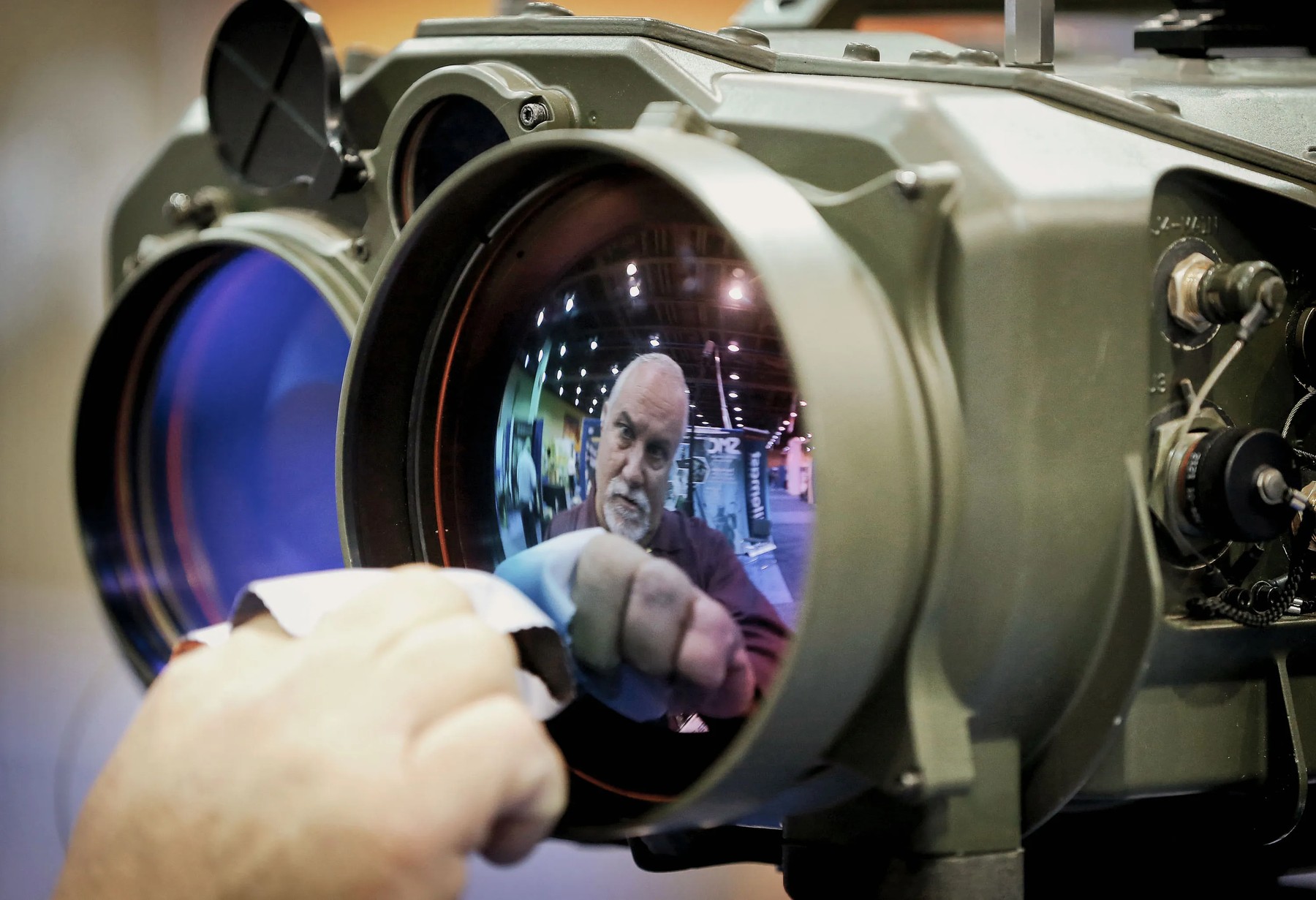
Gary Wagner of Elbit Systems of America cleans the lens of a long-range thermal imaging system at a 2014 border security expo.
Source: technologyreview.com
The older camera network shows why adding hardware is not the same as adding capacity. In the first eight years of the program, the Border Patrol installed 200 towers at a cost of more than $429 million. Some cameras could see three or five miles in every direction, while one operator might be responsible for up to 850 square miles and roughly 30 screens.
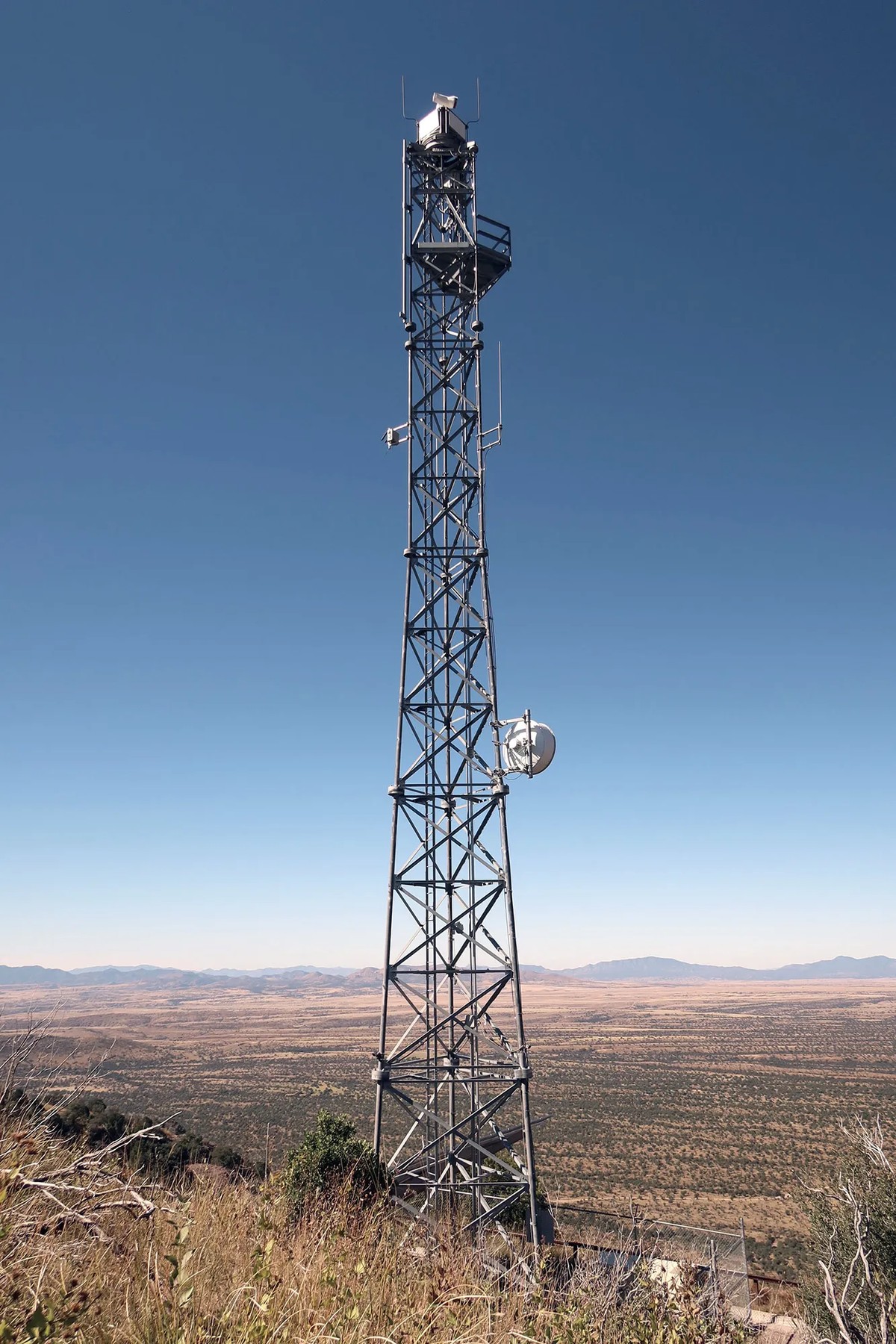
An integrated fixed tower (IFT) on Coronado Peak in Cochise County, Arizona.
Source: technologyreview.com
Mark Borkowski, who managed CBP contracts including the tower program, estimated that after 20 minutes of observation the chance of an operator noticing an event on one of the screens was nearly zero. A system intended to aim cameras automatically at sensor detections was still missing in 2005, when a Homeland Security inspector warned that suspicious activity could go unnoticed unless employees watched constantly.
The network became known as Remote Video Surveillance Systems, or RVSS. General Dynamics later expanded it under a contract worth up to $103 million, whose ceiling rose to $216 million before the company received another order worth up to $135 million in 2023.
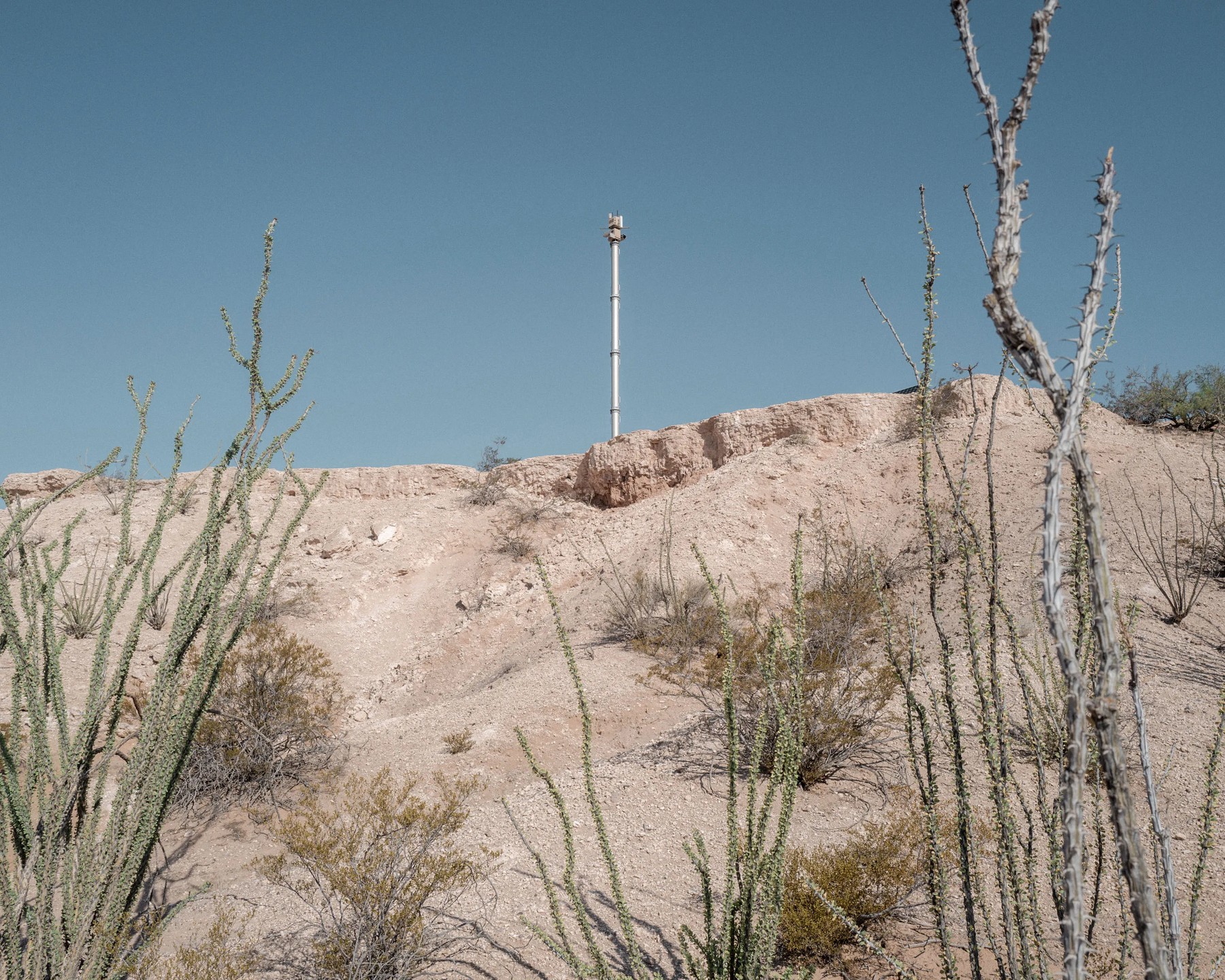
An autonomous surveillance tower stands along the US-Mexico border. With billions in new funding, CBP plans to deploy thousands more surveillance towers in the coming years.
Source: technologyreview.com
The information problem remained. One agent described a case in San Diego in which cameras recorded 30 people crossing the border and entering a van, but the employee watching the screens did not notice. At one New Mexico station, roughly five of 30 cameras were out of service at any given time. Others could look in only one direction or operate only during daylight.
In 2024, members of the House Committee on Homeland Security said more than 66% of first-generation Border Patrol towers were unusable, despite annual budgets of $50 million to $100 million. In January 2026, one congressional staffer said 30% remained broken. The total cost of the RVSS program was estimated at $3.7 billion in 2020.
Source: technologyreview.com
The geographic record is not better. In a 13-square-mile area near El Cenizo, Texas, surrounded by seven RVSS systems, the investigation identified 19 deaths. Records obtained through public-information requests showed that agents learned about the deaths only after bodies were found or people called 911. The cameras were not the source of the information.
Near Del Rio, three cameras had a direct view of the location where a Brazilian family entered and exited the Rio Grande in 2022. The father, Daniel Lenda, fell into the river while carrying his two-year-old daughter, Eloa. His wife, Thais Nathaly Montenegro Lenda, was within 100 feet of one camera and one-third of a mile from two others. An agent noticed her only after she signaled from the bridge. The child died, and Daniel’s body was found days later.
The Val Verde County sheriff requested the camera recordings but did not receive them.
AI reduced some work, not the uncertainty
The next generation was supposed to solve the operator problem. Integrated Fixed Towers, or IFTs, used radar to detect movement and automatically direct cameras toward it. Elbit began installing them in 2015 under an initial $145 million contract. Each could see more than five miles, and 55 towers eventually watched more than 7,000 square miles in Arizona.
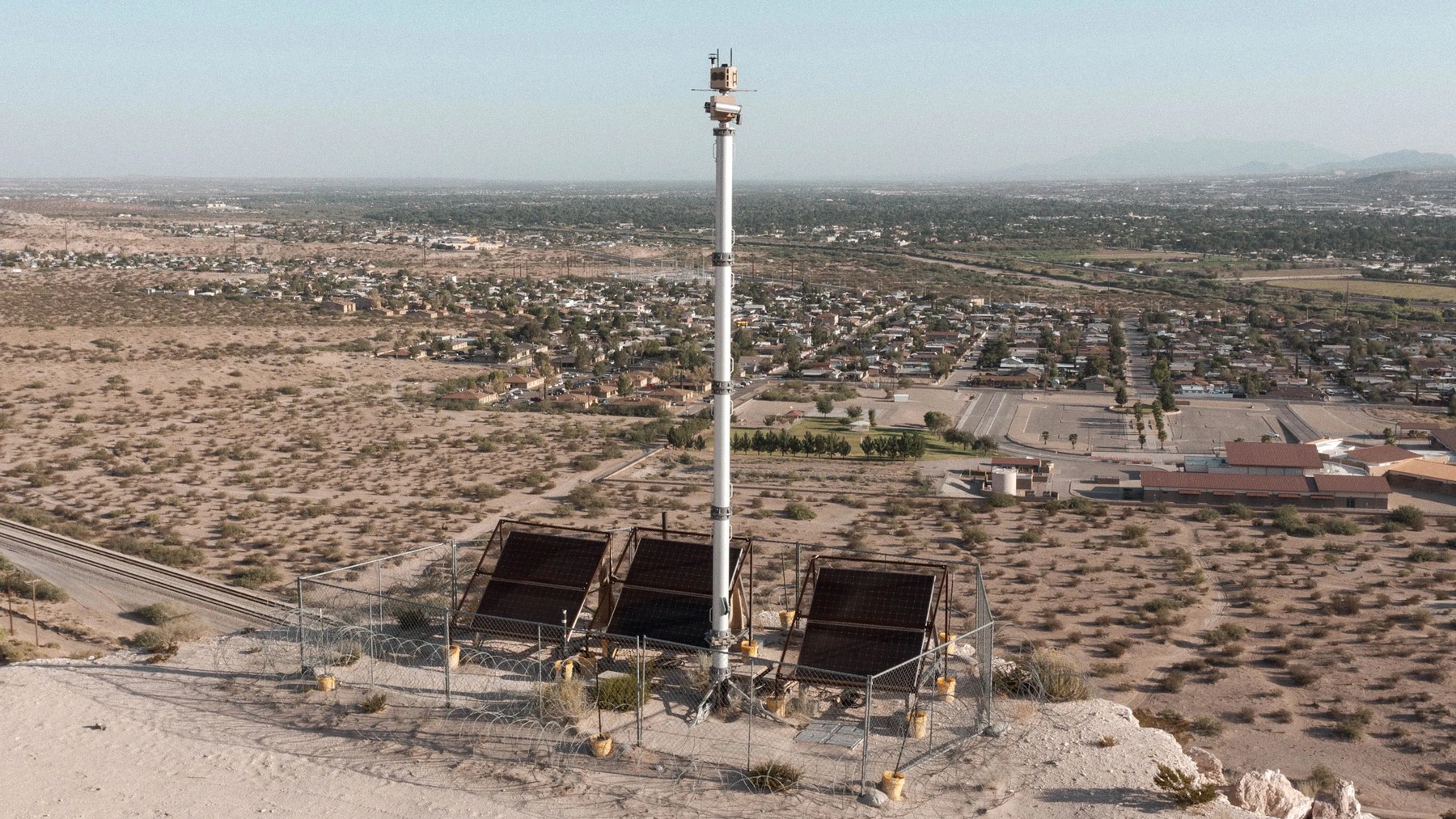
An autonomous surveillance tower along the southern US border in Sunland Park, New Mexico.
Source: technologyreview.com
The investigation found about 350 deaths within the stated coverage areas of Elbit towers since 2015. Of 53 IFTs analyzed, 52 had at least one death within range. At one tower on the Tohono O’odham reservation, the model estimated that more than 80% of the surrounding terrain was visible. Since 2021, 27 people aged 19 to 64 died within its coverage area; in 25 cases, the analysis found a direct view of the death location.
Anduril offered a different answer: computer vision. Its Sentry towers used cameras, radar and software to classify objects, track them and generate alerts. A standard model could see about 1.75 miles, less than the more-than-five-mile range of many Elbit and General Dynamics systems. Anduril argued that automated identification and tracking would give agents enough time to respond. Newer 80-foot towers are claimed to detect and track objects of interest up to 7.5 miles away.
The technology entered the government program quickly. Anduril’s towers moved from pilot projects to an official CBP program in 2020. By June 2021, CBP had spent more than $98 million on them.
In practice, the system still depended on human attention and human trust. Agents described:
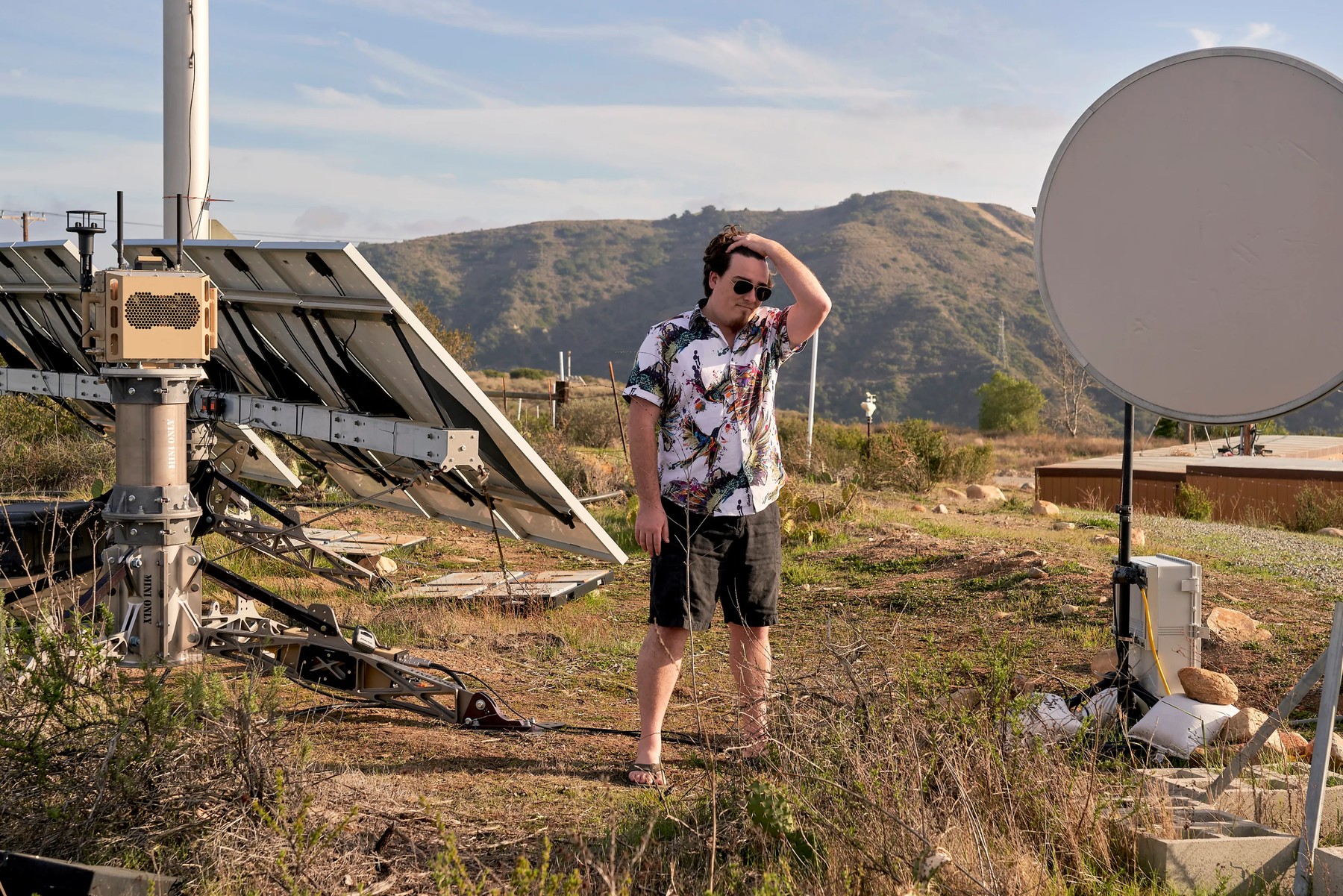
Palmer Luckey, a founder of Anduril, surveys the equipment at his company’s testing range near Camp Pendleton in Southern California on February 3, 2021.
Source: technologyreview.com
At one point, smugglers put as many as 12 people on a rubber raft, covered them with a tarp and moved them across the Rio Grande. The system detected motion but classified it as an “unidentified object,” so it produced no audible alert. Agents later found evidence of the crossing and sent video to Anduril for algorithm training. The problem had not improved by the time one agent transferred sectors around 2022.
The more interesting failure is not that the algorithms made mistakes. It is that the system was sold as a way to remove the bottleneck created by human attention, while its performance continued to depend on the same bottleneck.
In New Mexico’s El Paso sector, terrain analysis suggested that the towers could see roughly 80% to 90% of the relevant area. In the hilly Otey Mesa area east of San Diego, the estimated visibility was only 15% to 25% of the claimed coverage.
Two women in their 20s died near Anduril towers in one week in August 2021. Sarai Hernandez Alfonso’s body was found 1.3 miles from two towers, one of which should have had a direct view. The previous day, the body of 25-year-old Karina Lopez Antonio was found near a third tower. Her nephew had gone to look for a Border Patrol agent after she became ill; by the time agents returned, she was dead.
In October, agents found the body of 31-year-old Cesar Perea Itzincaga 1.5 miles from an autonomous tower. Terrain analysis indicated that the camera should have been able to see him.
There is no way to know what the cameras recorded. Anduril tower footage and data are automatically overwritten every 30 days unless tied to an active investigation. A former CBP employee said an investigation began only when someone died in custody.
My read is that this makes the system less like a wall than a chain of conditional handoffs: radar to algorithm, algorithm to alert, alert to operator, operator to patrol, patrol to medical help. A failure at any link can leave the public with the appearance of surveillance but none of its promised protection.
The missing measurement
The investigation’s quietest finding may be the most consequential: nobody has built a reliable feedback loop from death to system improvement.
CBP already collects many of the ingredients. Agents enter GPS coordinates for arrests and for signs of crossings where no person is found. The agency has data on tower installation dates, alerts and responses. A complete audit could compare technologies and determine whether newer towers miss fewer people.
Instead, the agency relies partly on “gotaways,” a category that includes signs that someone avoided arrest, such as tracks, camera sightings or reports from people who were detained. The measure allows too much interpretation to show whether a tower detected a person, whether an agent responded, or whether either happened quickly enough to matter.
No local or federal procedure requires officials to investigate deaths near towers as a group. Former CBP staff said the agency never mapped migrant deaths to determine whether towers missed people or agents failed to respond after detection.
The government also does not preserve enough evidence to answer the question later. Without recordings, families cannot reliably reconstruct a person’s final hours, and investigators cannot determine whether an alert was generated, ignored or never produced.
What I would want to know is not simply how many arrests a tower helps produce. It is how often the system detects a person in distress, how quickly someone reaches them, and what happens when the answer is no. Those are the measures that match the humanitarian claims made for the technology. They are also the measures the government has not supplied.
The political and financial momentum continues anyway. CBP plans to spend $1 billion on nearly 1,500 new towers by 2034, and federal law now requires AI on all such systems. General Dynamics has begun offering its own AI towers and received a CBP order worth up to $115 million. In October 2025, Homeland Security dissolved the office that oversaw major spending programs.
The border is quieter than it was at the peak of 2022. From January through August 2026, the government recorded 128,009 “encounters,” compared with more than 2.4 million during the same period in 2024. But encounters count interactions, not unique people, and fewer crossings do not make a missed rescue less important.
On September 14, 2025, 30-year-old Graciela Gomez Hernandez died just over 350 yards from the physical wall separating Southern California from Tijuana and less than a mile from an RVSS tower. Her remains were found nearly three weeks later. A Border Patrol helicopter circled a humanitarian group that had placed a memorial cross nearby, with the surveillance tower visible behind it.
That contrast captures the unresolved problem. The state can watch volunteers closely while remaining unable—or unwilling—to establish whether its own systems saw people dying. A technology advertised as a safer wall may ultimately be judged not by how much border it covers, but by whether anyone is accountable when the cameras are looking.
Daily AI news
Every day we pick what actually matters in AI and explain it plainly — no hype, no filler. Subscribe if you want to follow where the industry is going.
Only what matters — every day
Follow on X