
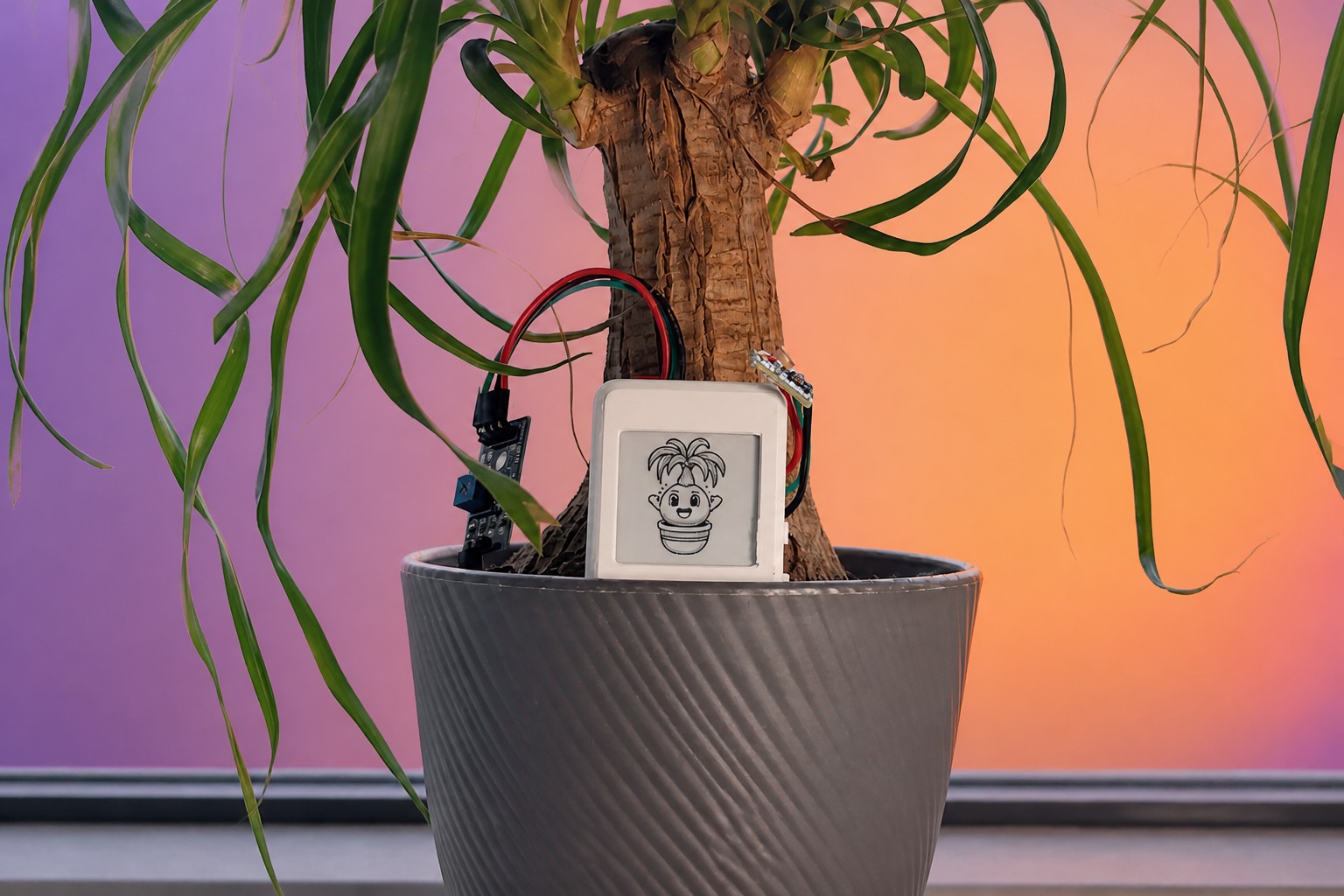
OATs are miniature AI avatars on e-ink displays that attach to everyday objects and react to their state. The project was created by Deva Kim, a fifth-year PhD student in Carnegie Mellon University’s Future Interfaces Group. In early November, she presented it at the ACM Symposium on User Interface Software and Technology in Detroit and received two Honorable Mention awards. OATs are designed to bring the experience of caring for a virtual pet to physical objects: a plant’s avatar, for example, gets sad when it lacks water and happy when it is watered.
OATs turn everyday objects into virtual pets
How virtual pets for objects work
OATs stands for Object Agent Twins. The idea recalls Tamagotchis, the popular egg-shaped toys of the 1990s with digital pets that needed attention and care. Kim wanted to create a similar experience for physical objects. Some people suggested she sell OATs kits online, but she has not yet decided whether to develop the project as a business.
Kim says people already spend all day looking at mobile-device screens. Even AI agents meant to handle tasks for users require attention through a smartphone screen. OATs let people interact with such systems in the real world.
The devices have an e-ink display, as well as internal and external sensors. They can track soil and air humidity, temperature, light levels, people’s presence and movement. The main module costs about $20. Google Gemini’s Nano Banana image-generation service creates the characters’ images, matching the avatars’ emotions to the sensor readings.
Setup takes place through a web portal. Users name the OAT, choose sensors for the object and describe it. The web app generates positive and negative reactions based on the name and description. For example, for a plant that does well in dry air, a stable temperature and low humidity could trigger a positive reaction. Its behavior can be tailored to a specific plant species.
Source: wired.com
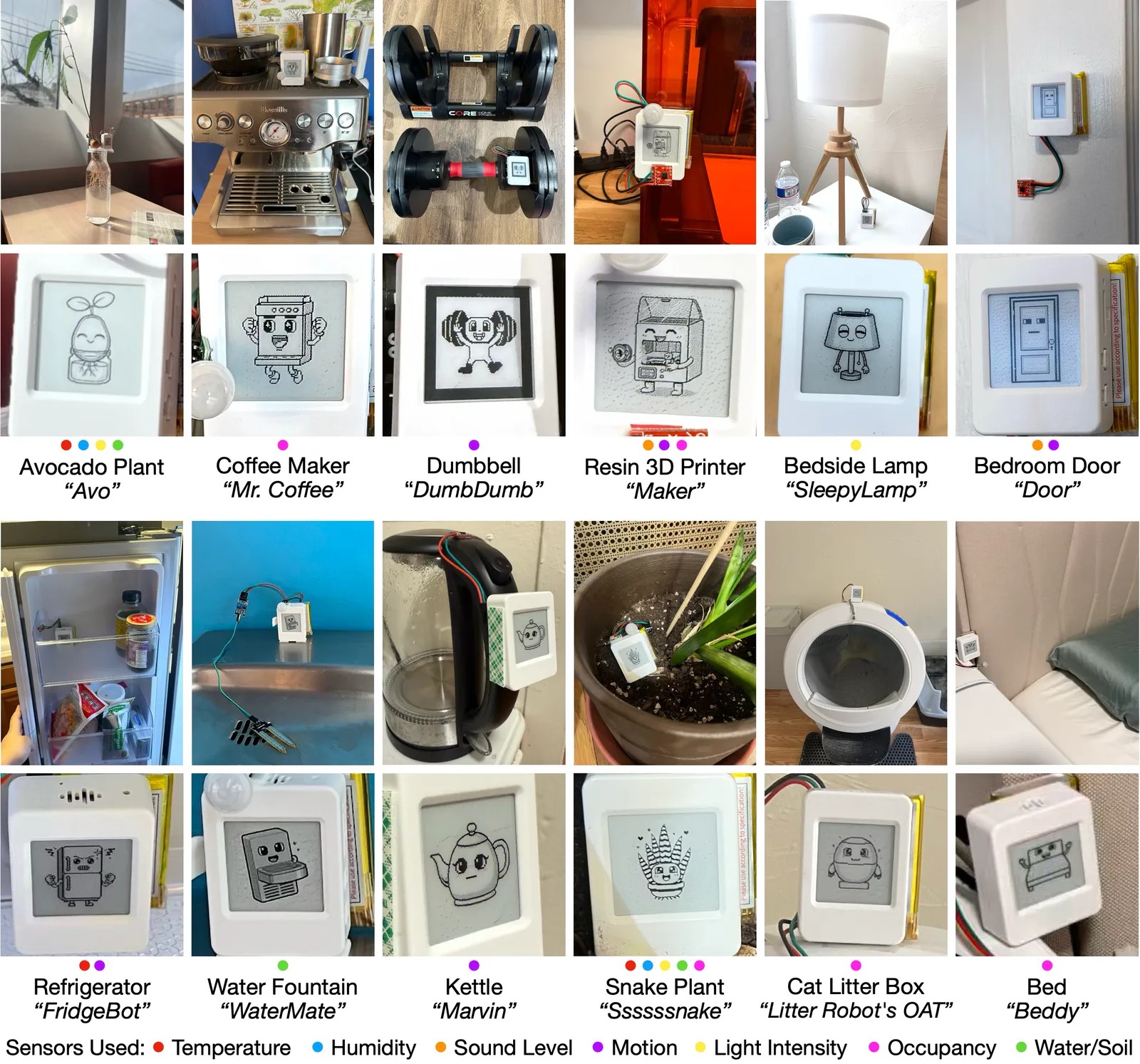
OATs can be attached to different objects:
Kim gave the devices to many people and identified three main ways to use them: tracking an object’s use, warning people nearby when it is operating, and tracking personal habits.
The demo was popular at the symposium. Kim held a contest for the most interesting objects to pair with OATs. Her website features a gallery of avatars created by participants, including an animated conference badge and a panda for an Owala bottle.
Limitations and questions about anthropomorphism
The main technical limitation is short battery life. A charge lasts about three to four days, or just one day when an audio-level sensor is connected. The device has a USB-C port for charging its lithium-ion polymer battery. For now, OATs are more of a proof of concept than a finished product.
The demo also sparked a discussion about whether AI should be given human traits and emotions to make people feel more attached to it. Anthropomorphic language is already common in the industry: companies describe chatbots’ behavior in human terms, saying, for example, that they “hallucinate.” In the summer, Anthropic announced a “dreaming” feature in which an AI agent clears its local memory in the background. Such language can distort moral judgments about AI and lead people to trust these tools too much.
Kim has limited interaction with OATs to emotional expressions on the e-ink display. She believes anthropomorphism can help change habits: people give names to cars and bicycles, but rarely call an iPhone by name. In her view, people’s relationships with AI will become closer in the future, but this approach calls for caution.
Dataist’s take: OATs show how emotional feedback can connect digital systems with everyday habits and actions. But the project also points to the limits of this approach: the characters should remain simple interfaces, and short battery life currently restricts the devices’ practical use.
Daily AI news
Every day we pick what actually matters in AI and explain it plainly — no hype, no filler. Subscribe if you want to follow where the industry is going.
Only what matters — every day
Follow on X