
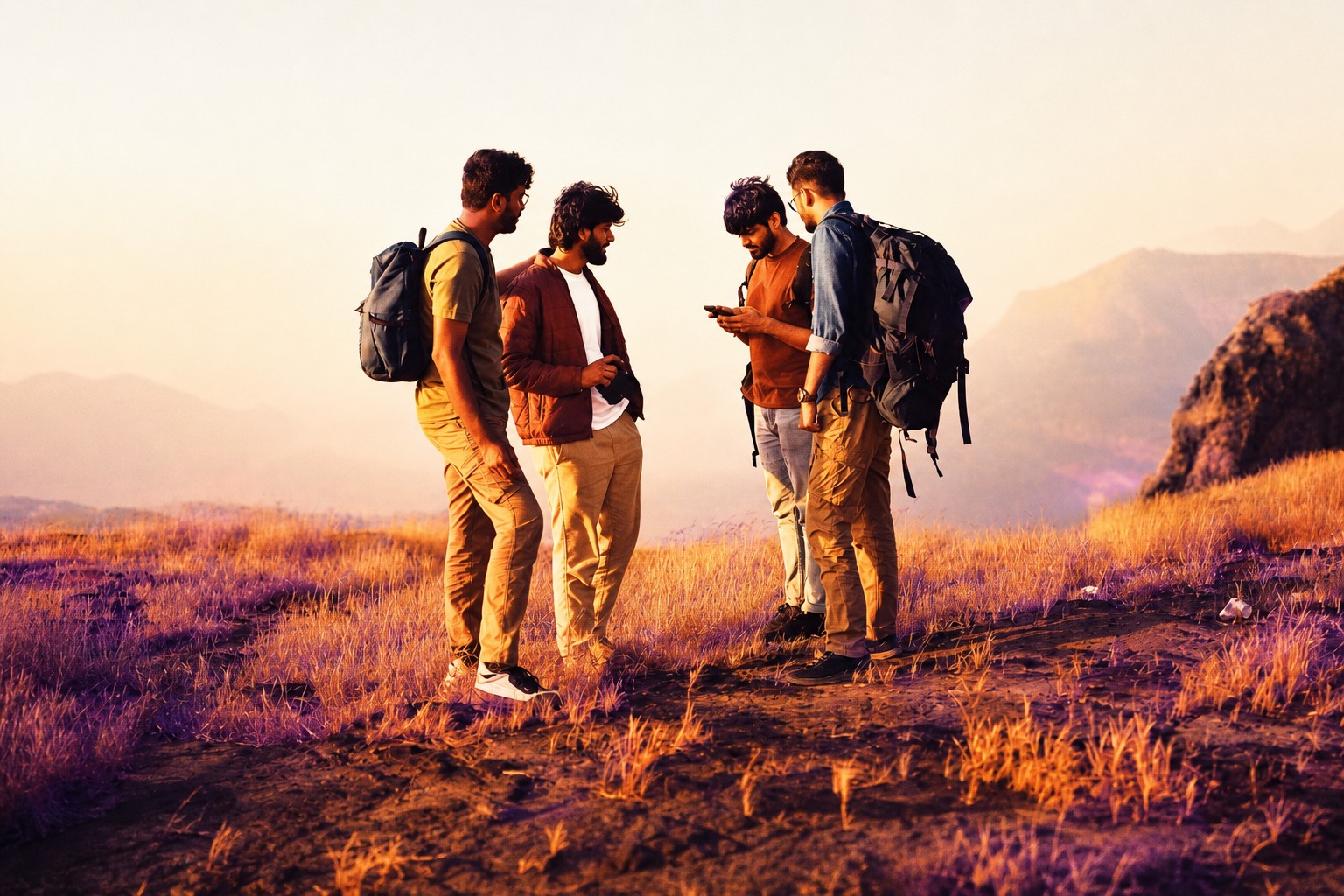
Three men were escorted off Mount Shasta by local search-and-rescue volunteers and US Forest Service staff, the morning after a planned eight-hour summit climb turned into a multi-day ordeal. According to the Siskiyou County Sheriff's Office, Google's Gemini had advised the group to carry far less food and water than the route required. They kept climbing into the late night, came down steep terrain in the dark, called the sheriff's office for directions, then chose to leave the route anyway and ended up in an adjacent canyon, where they spent the night. One of them had an injured knee. The summit stands at 14,179 feet.
The standing local guidance for that route is to not set out after midday, and, if you already have, to turn around immediately. The group was still climbing after dark. The Chicago Tribune reported the rescue the following morning.
What makes this worth more than a cautionary anecdote is the kind of failure it is.
The chatbot-sends-hiker-into-danger genre usually turns on invention. Last year two travelers went looking for the "Sacred Canyon of Umantay" in the Andes, a place that does not exist. A local guide happened to overhear them discussing it and warned them away from the dangerous spot they were heading for. In October, guide Miguel Angel Gongora Meza told the BBC that a program like ChatGPT can combine images and names into a fictional destination, and that someone acting on it can end up at 4,000 meters without oxygen or phone service. He said planning has to account for altitude, changes in climate, and whether a route is accessible at all.
Shasta is not that. The mountain is real, the route is real, and an eight-hour climb is a plausible shape for the day. What the sheriff's office says went wrong is the provisioning: the right mountain, the wrong quantities.
The closer precedent is Vancouver. Last year a party attempting a mountain near the city had to call for rescue after walking into snow in sneakers. They had consulted ChatGPT and had not accounted for snow still lying in that area in early May. Nothing was invented there either. Something was left out.
That distinction is the part I would press on. Invented canyons get written up because they are legible: you can point at a place that is not on any map and the error is self-evident. The failure that actually strands people is the quiet one. A model asked to plan a hike returns a list that looks exactly like every other hiking list, and nothing in the output marks which items were reasoned about for this mountain, this month and this party, and which are generic filler carried over from the shape of the question. A confident, well-formatted packing list is precisely the artifact a person stops checking. There is no hallucination to catch, because nothing false was said.
Notably absent from the public account is what the group actually asked. The only source for what Gemini told them is the sheriff's office, relaying what three exhausted men said after a night in a canyon, and no prompt or reply has been published. That gap matters, because "the model gave bad advice" and "the model gave generic advice to an under-specified question" are different problems with different fixes, and every account of these incidents so far has skipped past the difference. No response from Google appears in the account.
The sheriff's office recommended calling the US Forest Service ranger station on Mount Shasta ahead of time for the most accurate route information, and not planning a hike on AI alone. That is the right advice and it is losing. Reaching a ranger station takes a phone call, business hours, and knowing that ranger stations exist. Asking Gemini takes eight seconds and works at midnight. The institutions that hold accurate mountain conditions have no distribution, and the systems with the distribution do not hold the conditions.