
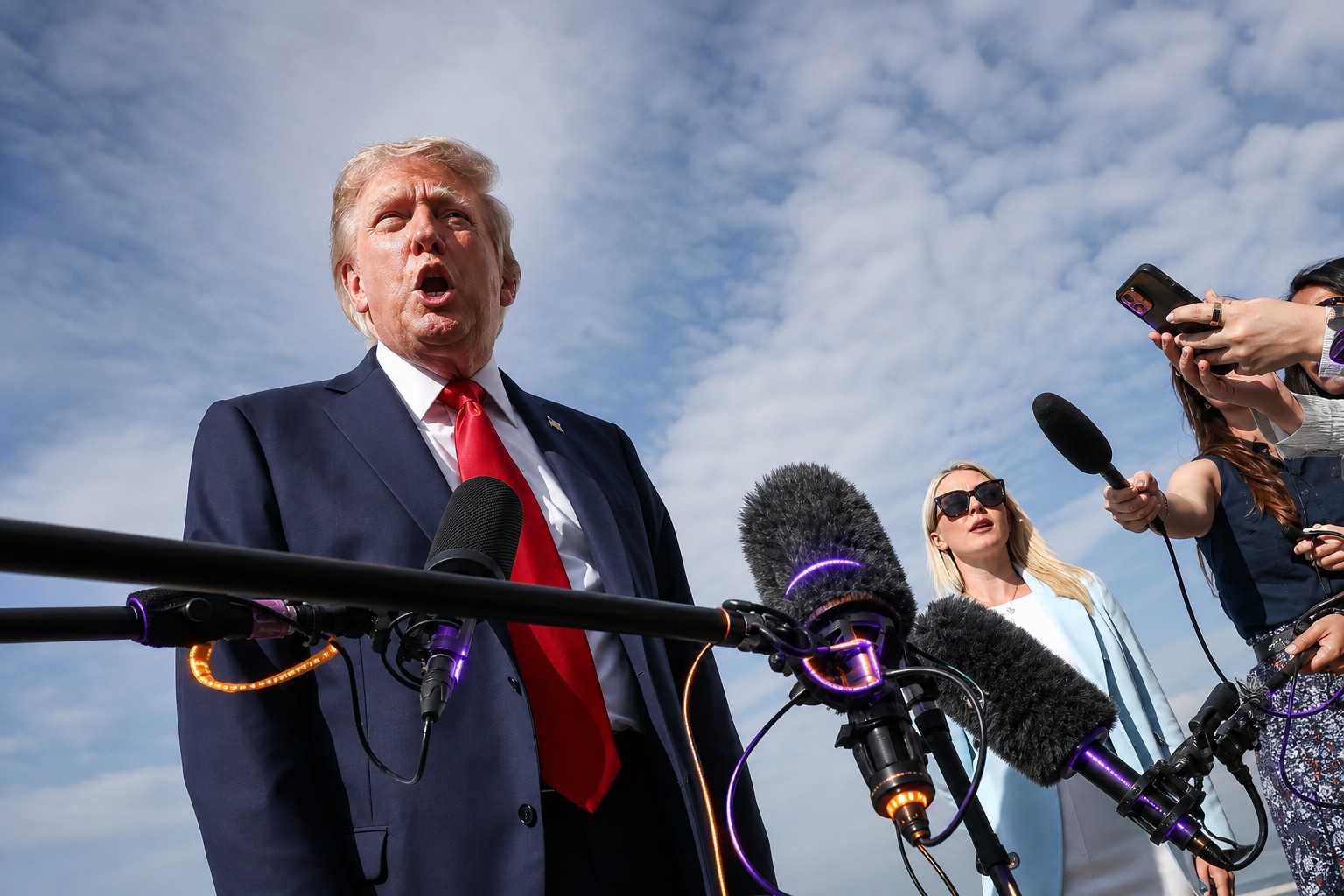
President Trump wrote on Truth Social on Monday that a community can reject a data center only if it wants to stay "backward and poor", and that successful, wealthy regions will get lower taxes and plenty of jobs out of the projects. There are more than enough places willing to take them, he added, and if the cancellations continue Americans will have nobody to blame but themselves. The post arrives against a count from the research group Data Center Watch: in the first three months of 2026, local campaigns blocked or delayed at least 75 data centers with a combined value of roughly $130 billion.
The resistance he is arguing with is not a fringe. Opposition to data center expansion has grown across the country and draws support from both parties, and it is sharpest in exactly the states the industry favors: large open tracts, cheap electricity, generous business tax breaks. Residents cite environmental damage, rising utility bills and noise. The polling is not close either — 75% oppose a data center near their home, and more than six in ten are firmly against construction.
Trump also argued that China cannot be anything but pleased by the anti-data-center movement in the United States.
Vice President JD Vance spent the same Monday making a very different argument. He called data centers an important part of the AI economy and said companies should be building power plants alongside them. Roughly 99% of the discontent, by his account, comes from places where a data center arrives and residents' utility bills and electricity prices go up. He urged companies to make use of federal moves to loosen regulation, and said data centers should be returning electricity to the grid rather than drawing it out — do that, and the facilities would draw far fewer objections. The trouble starts, he said, when the bills visibly rise.
The people replying under Trump's post raised something else. One asked the president to think about farmland and water supplies, arguing that wealth means nothing if people cannot get water and food. Conservation groups have made the same case at scale: last year a coalition of more than 230 organizations asked members of Congress to halt new data center construction, citing the climate crisis, deepening drought in water-scarce regions and rising electricity bills.
The wins the movement can point to are local and unglamorous. Monterey Park, a small city east of Los Angeles. Prince William County in Virginia. Wake County in North Carolina. These are zoning fights, not national campaigns, which is precisely why they work.
Read together, Trump and Vance answered two different oppositions on the same day, and only one of them answered the actual complaint. Vance conceded the premise: he put the grievance at 99% electricity prices, and his proposed fix — data centers should put power back into the grid instead of taking it — is an admission that the ones being built now do the opposite. Trump's offer of lower taxes sits awkwardly beside the conditions that attract these projects in the first place, since the generous tax breaks are the inducement, and abated property is not how a county funds the roads and schools that the jobs argument assumes. When the local arithmetic gets difficult, the China line is what remains.
Neither man addressed water or farmland. That is the omission worth marking, because it is the one grievance with no technical remedy and no federal lever. A utility rate case can be fought over, a power plant can be built, a bill can be capped. An aquifer in a drought state cannot be topped up by deregulation, and Vance's 99% framing quietly reclassifies the entire dispute as a billing problem, which is the version of it that has a solution.
Federal policy can shorten permits and soften rules for the companies. It cannot carry a county zoning hearing. The veto that stopped $130 billion of construction in a single quarter sits at the one level of government the White House does not run, and a president telling those voters they have chosen to stay poor is unlikely to change how they vote at the next hearing.