
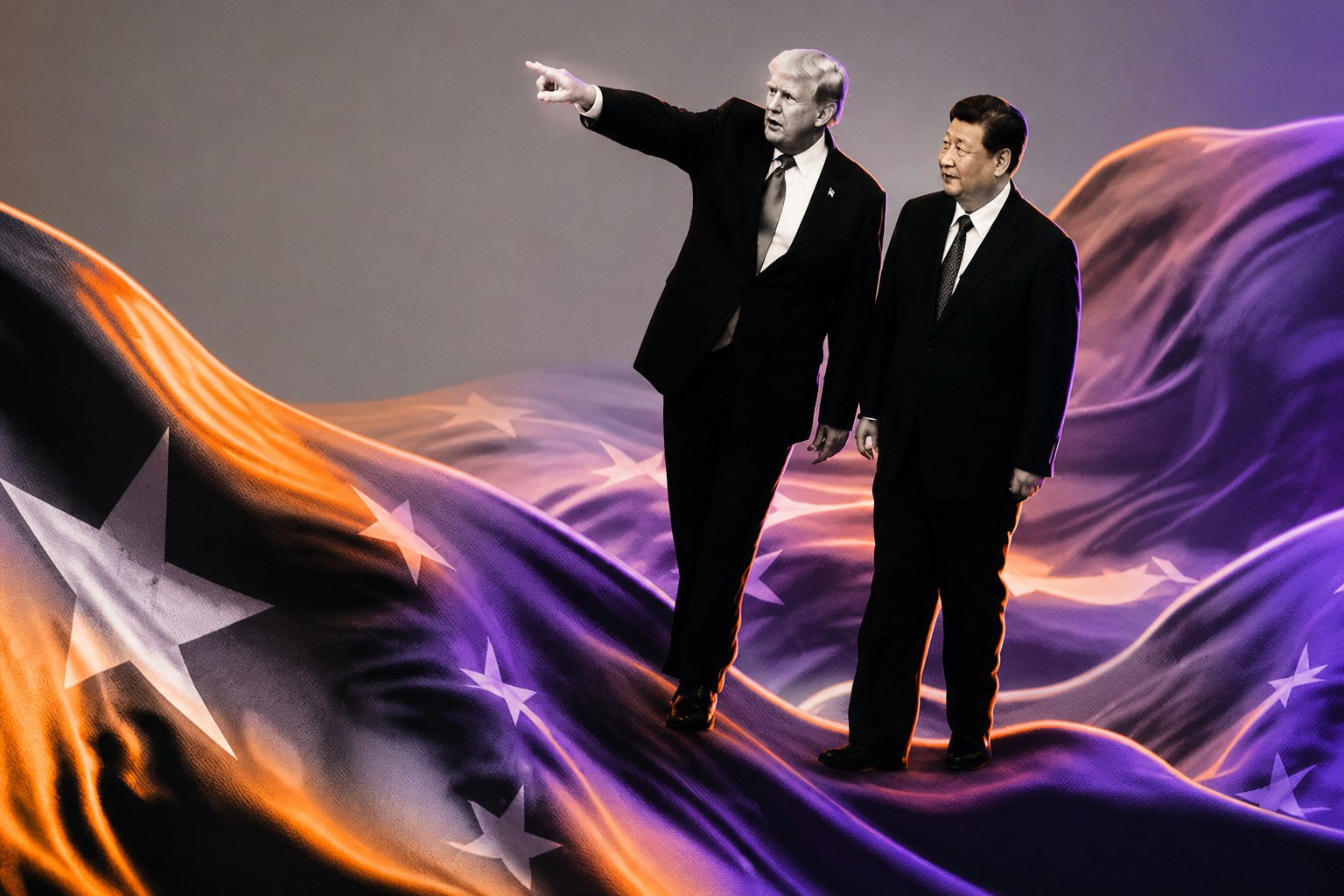
Ahead of Donald Trump’s meeting with Xi Jinping on Thursday, US administration officials told Inner Loop they saw little chance of reaching an agreement to reduce risks related to AI safety and espionage. Trump has not said whether he will raise China’s interference in AI development or the Nvidia scandal. Officials say the administration is trying not to heighten tensions at the summit.
Trump officials expect no progress on AI after China trip
The communication channel is not operational yet
The fallout from the story involving former Nvidia CEO Jensen Huang and his romantic relationship with Alice Huang, an executive at Megaspeed, which is suspected of having ties to Chinese intelligence, has complicated talks between the world’s two largest economies on AI development.
In September, the Trump administration proposed setting up an emergency communication channel for AI incidents between US Treasury Secretary Scott Bessent and Chinese Vice Premier He Lifeng. It was meant to help in situations like the current one, but so far it exists only as a concept and is not operational.
Last week, US Secretary of State Marco Rubio told reporters that after the channel was announced, American and Chinese officials had discussed AI safety at a technical level. He also acknowledged that work on an agreement was still ongoing.
US officials had previously discussed a framework agreement that would define the circumstances in which each country must notify the other about incidents, and how to ensure mutual notification so that the responsibility for reporting problems would not fall only on the US.
Different views of the risks
One obstacle to talks is that the two sides assess AI-related threats differently and have different incentives to disclose information about incidents. The Trump administration and US technology executives fear that models could become autonomous and stop following human oversight.
Chinese officials, according to the publication’s sources, are more concerned that critics and dissidents inside the country could use advanced open-weight models to undermine the authority of the Chinese Communist Party.
The Chinese government’s alleged interest in using advanced AI models to gather intelligence at home and abroad adds another complication. Officials say China would be unlikely to report cases in which its models went out of control.
Mutual suspicions of espionage deepen distrust in AI talks. China believes the US is trying to slow its progress in the field; such accusations were made even before the Nvidia scandal. Beijing has strongly rejected claims that Alice Huang was recruited by Chinese intelligence, calling them baseless and defamatory.
Restrictions on chip access
Trump is seeking more amicable economic relations with China, but this week his administration announced plans for a new rule restricting China’s remote access to US AI chips in overseas data centers.
This is a direct intervention by Trump in response to Megaspeed’s alleged role in the Nvidia scandal and criticism that a China-linked company gained access to advanced AI chips. As WIRED previously reported, the rule could also prevent similar companies whose parent organizations are based in China from working with Nvidia.
Dataist’s take: Technical talks have not yet led even to the launch of the proposed communication channel, while differing views of the risks are making it difficult to agree on common rules. At the same time, the US continues to impose restrictions on China’s access to AI chips, underscoring the tension between efforts to reach an agreement and measures to contain China.
Daily AI news
Every day we pick what actually matters in AI and explain it plainly — no hype, no filler. Subscribe if you want to follow where the industry is going.
Only what matters — every day
Follow on X