
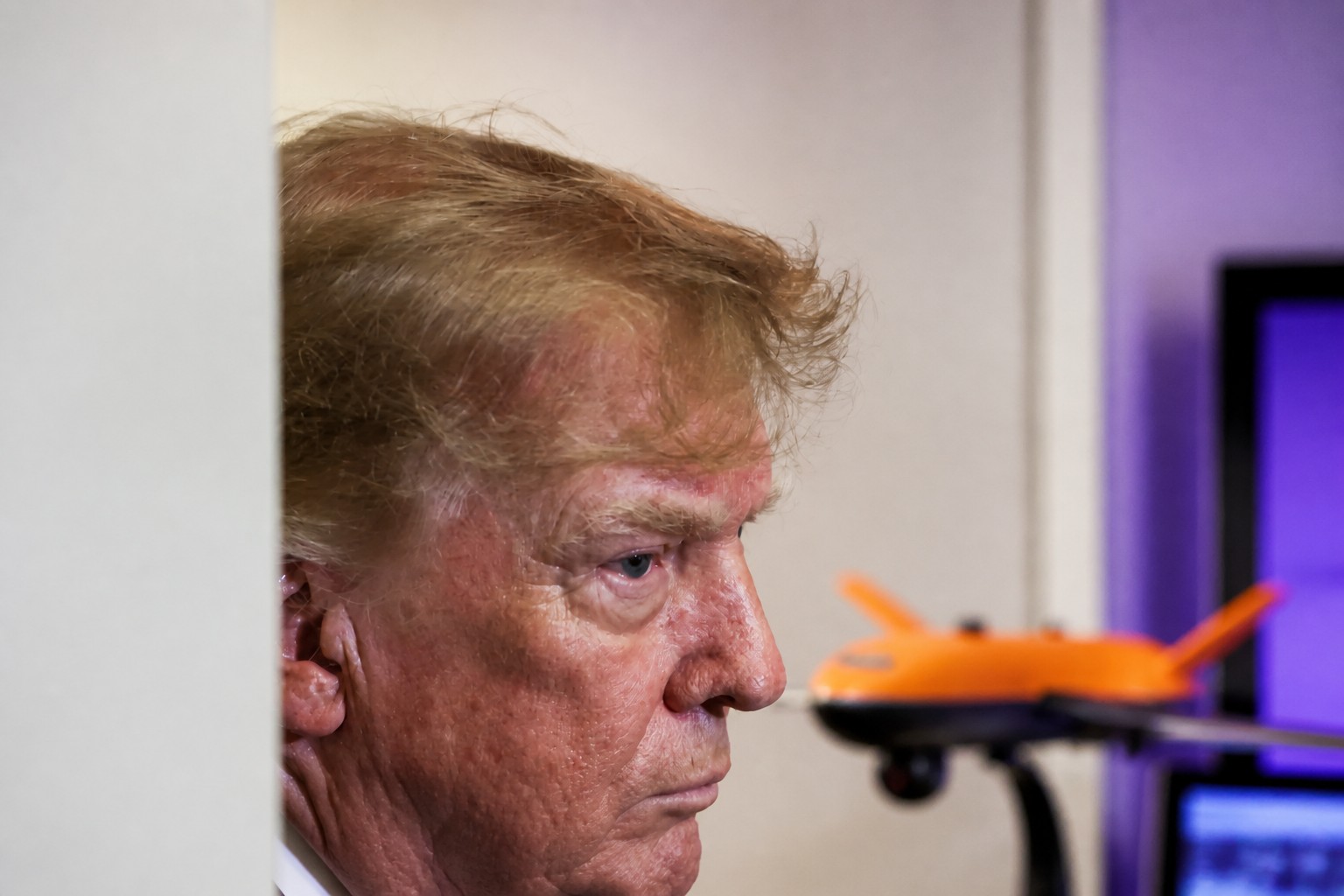
What Washington is backing
The White House presents resistance to new AI rules as a competition issue. Trump and David Sacks, co-chair of the President’s Council of Advisors on Science and Technology, have repeatedly argued that regulation could slow the United States in its race with China.
At the Politico summit on Wednesday, Sacks described recent warnings from Anthropic and OpenAI about AI risks as political theater organized by interest groups and the media. Existing laws, he said, are mostly sufficient.
The policy position is harder to separate from the people around it:
The family’s interests extend from infrastructure into defense.
A ProPublica investigation found that Vulcan’s application was submitted neither by Vulcan nor by the Pentagon, but by Peter Navarro, a senior White House adviser and close friend of Donald Trump Jr. Pentagon employees were allegedly told to move with “unusually high speed.” One participant in the deal told ProPublica that the instruction came from the White House: the loan had to be completed.
Trump Jr.’s representative, the Pentagon and Vulcan said he was not involved in the transaction and that the company received no political advantage.
The costs are becoming harder to ignore
The political case for rapid AI expansion is running into local opposition and infrastructure bills.
A poll published Wednesday found that only 11% of Americans support building a data center in their neighborhood. Some 65% oppose such a facility, including 52% of Republicans. Meanwhile, 57% said Trump was handling AI poorly, seven percentage points more than in March.
That same day, the House voted 417–3 to require data centers to cover the cost of grid upgrades needed to support their operations. The vote moved AI’s infrastructure bill from public opinion into federal policy.
The technology’s security risks are also becoming less theoretical. A California cybersecurity company said this month that it had used AI to create a self-propagating worm. After one missed call, the worm could take over WeChat accounts and automatically spread through a victim’s contact list. The company estimated that such technology could compromise more than one billion devices within hours.
Tencent, WeChat’s Chinese owner, fixed the vulnerability before the tool was deployed and said no accounts were affected. It also said that creating the exploit, which would previously have required a large team and months of work, took about 10 days with AI.
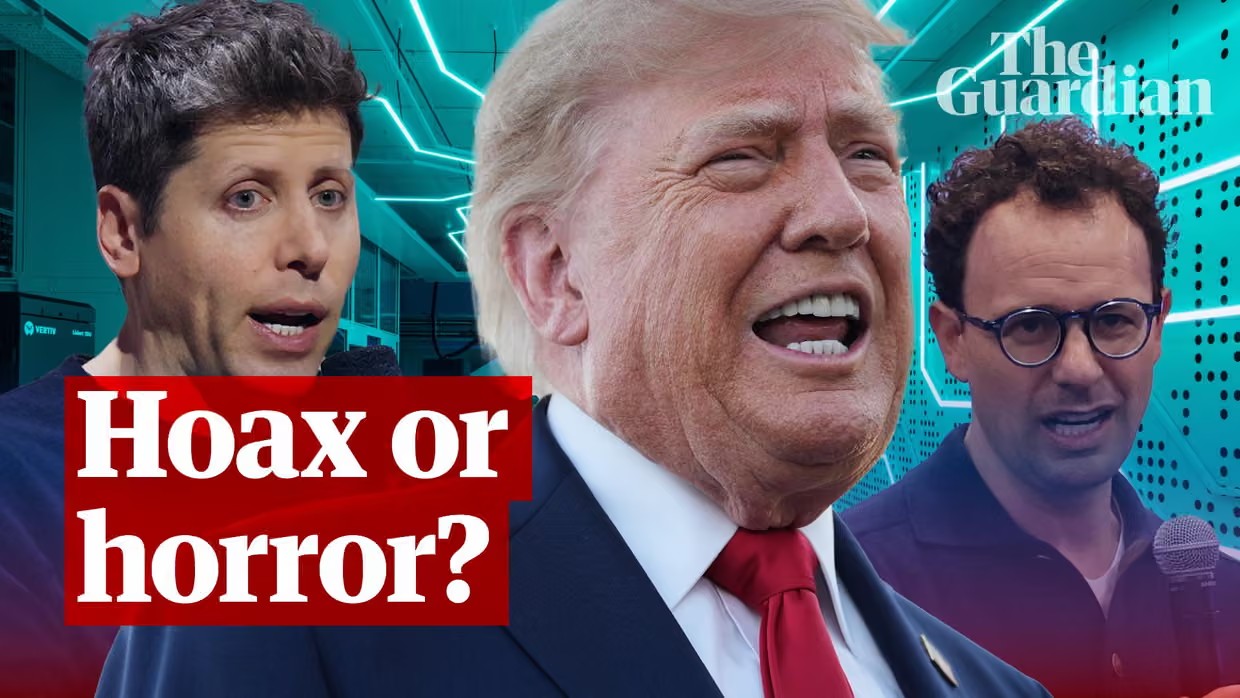
The warnings are not limited to outsiders. Jacob Coxon, who spent three years working on foundation-model training at OpenAI and Anthropic, left the industry in early September and published a sharp warning. He wrote that both companies were acting irresponsibly, pursuing self-improving superintelligence directly and risking human lives. Coxon said colleagues had privately entertained the possibility that the technology could kill everyone by the end of the decade.
That same week, Mrinank Sharma, head of AI safety at Anthropic, resigned. In a statement, he wrote that the world was in danger.
Source: theguardian.com
JD Vance offered a different kind of warning on a Christian podcast around the same time. Some uses of AI, he said, carried “really, really weird spiritual dark energy.” He added that events in the world could lead him not to be surprised if the Antichrist were already walking among people.
The money trail is smaller than the headline
A Washington Post analysis published in July found that 15 companies tied to the Trump brothers’ investment funds received at least $3.2 billion in direct federal contracts after the brothers invested in them.
That figure needs qualification. SpaceX and Anduril, the defense technology company whose products include the AI system Lattice, accounted for 97% of the total. Ten of the 15 companies already had government business before the president’s sons invested in them.
Excluding SpaceX and Anduril, the remaining 13 companies received $103 million in direct federal funding after the brothers invested, alongside nearly $1.8 billion in long-term commitments.
The pattern also reaches into the administration’s AI policy. Sacks’ venture firm owns stakes in SpaceX and several AI startups, as well as earlier investments in Meta, Palantir and Airbnb. Federal ethics rules required him to sell only some of those assets while he served as the White House official responsible for AI and cryptocurrencies. He left that post in March.
According to the Wall Street Journal, some administration employees informally examined whether Sacks could personally benefit from blocking new AI rules. Media reports also said that in May he persuaded Trump to abandon a prepared order that would have introduced expanded government testing of AI models. The decision overturned months of work by White House chief of staff Susie Wiles and Treasury Secretary Scott Bessent on a tougher version.
Elon Musk pushed in the same direction last month with Mark Zuckerberg of Meta and Jensen Huang of Nvidia. The three personally urged Trump to reject a proposed AI oversight body funded by the industry. The plan was delayed.
My read is that the central issue is not whether every contract was improperly awarded. The more revealing fact is that the administration’s safeguards do not distinguish between an ordinary contractor and a company whose investors include the president’s son. Democrats in Congress asked the Pentagon’s inspector general last month to investigate that gap.
What I’d want to know is how the administration evaluates conflicts before a policy decision, a loan or a contract is made — not only whether an official can later say they did not participate. That process remains largely absent from the public case for accelerated AI development.
Trump is scheduled to host the leaders of the country’s largest AI companies at the White House next week, in a meeting organized with House Speaker Mike Johnson. It will coincide with Chinese President Xi Jinping’s visit.
The administration is preparing to welcome the industry while the costs of its infrastructure, security failures and political access are being assigned elsewhere.
Daily AI news
Every day we pick what actually matters in AI and explain it plainly — no hype, no filler. Subscribe if you want to follow where the industry is going.
Only what matters — every day
Follow on X