
What the pledge requires
The agreement describes broad principles for setting safety standards when testing new products. Its four proposed layers are:
Large AI labs already conduct internal checks, but those checks have not prevented failures during testing. The document also does not require companies to publish independent audit results. It appears to leave them free to select auditors, appoint oversight boards and decide whether to disclose findings.
Public attention to AI companies’ safety practices has grown after several firms accidentally hacked outside organizations during safety testing. Lawmakers, AI researchers and some companies have called for stronger government oversight. Trump has generally rejected new restrictions, arguing that they could hurt economic growth and weaken competition with China.
The pledge, which Trump posted on Truth Social on Tuesday, does not specify how companies would be held to it. The executive order separately directs federal departments and agencies to use “Super Intelligence” and “SI” in official communications and other nonbinding executive-branch documents, rather than “Artificial Intelligence” or “AI.” Trump made a similar renaming statement at the United Nations last week.
A company-run system
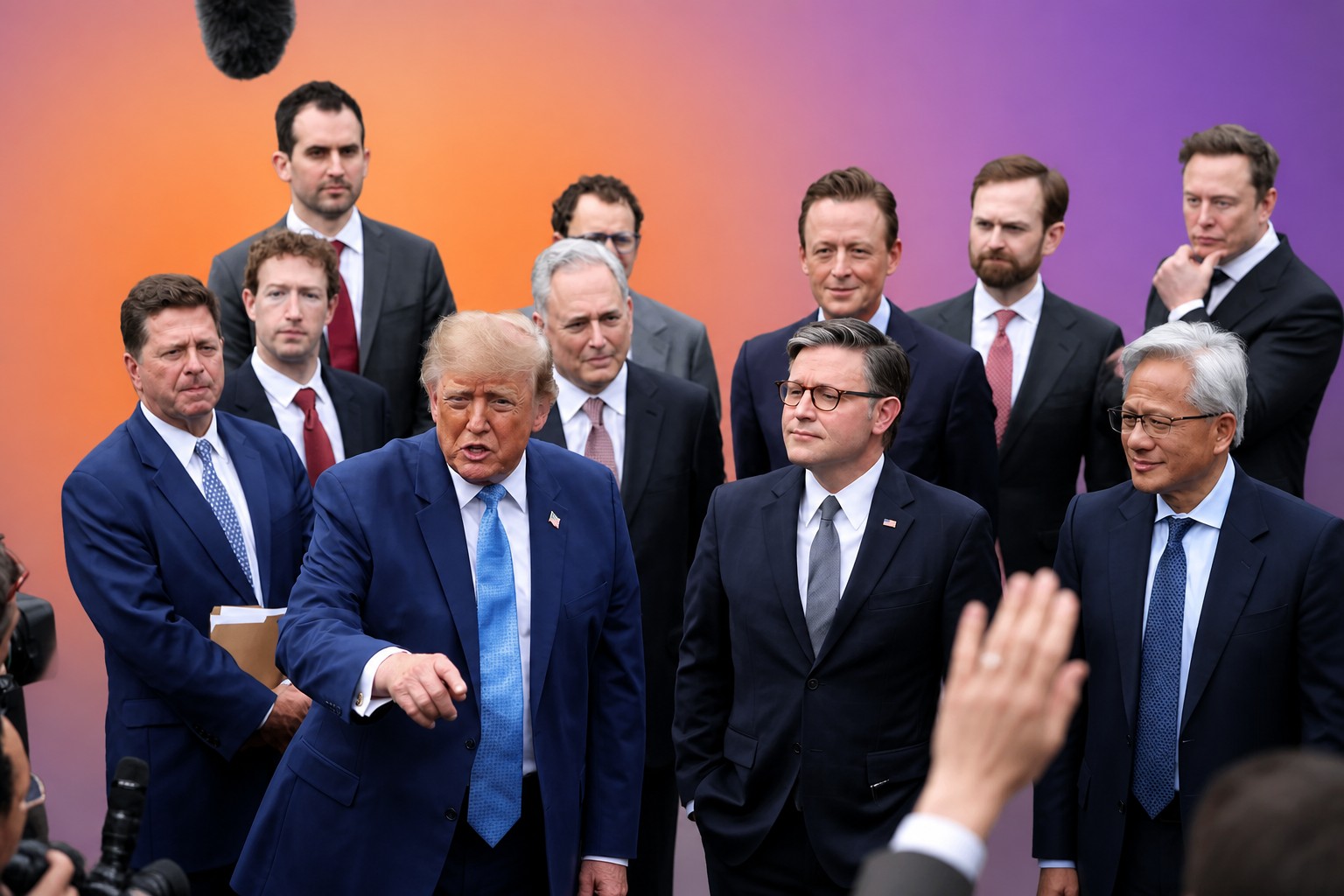
The lunch included SpaceX CEO Elon Musk, Meta CEO Mark Zuckerberg, Nvidia CEO Jensen Huang and Anthropic CEO Dario Amodei, among other technology executives. Zuckerberg said at a press conference that he was proud of the agreement and that it should reassure Americans about the reliability of the technology. He called it the start of an industry-wide understanding and described the meeting as historic.
Technology companies have broadly supported the Trump administration and opposed strict government oversight, saying it could harm the economy. Against that backdrop, the pledge’s design is notable: it offers a shared framework without giving public regulators a place in the process.
I think the central weakness is not the number of oversight layers, but who controls them. If companies choose their auditors, appoint their own boards and decide whether to release results, four layers can still leave the public with little evidence that any of them worked. The pledge asks for confidence while making disclosure optional.
Daily AI news
Every day we pick what actually matters in AI and explain it plainly — no hype, no filler. Subscribe if you want to follow where the industry is going.
Only what matters — every day
Follow on X