
Source: theguardian.com
An archive with a boundary
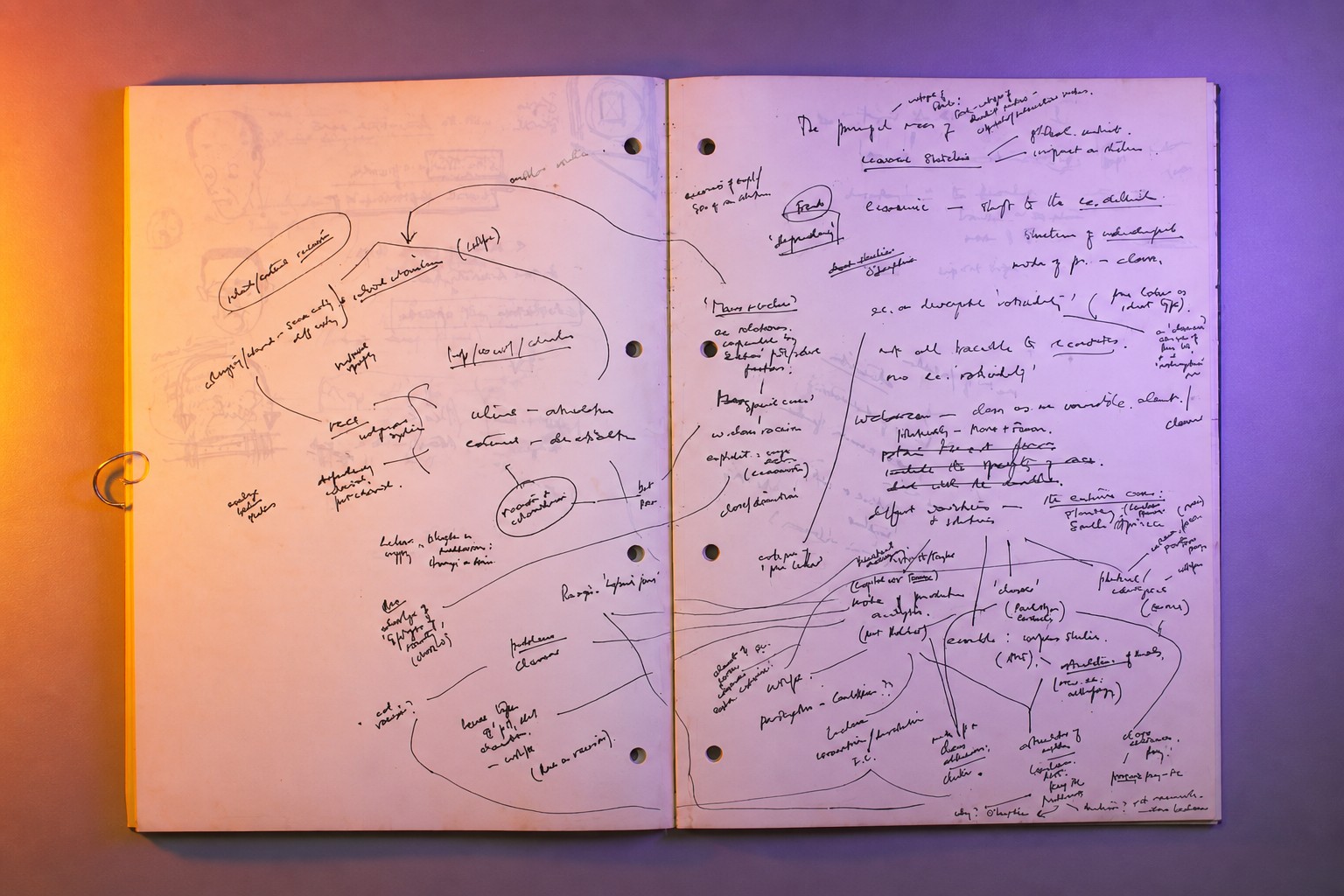
Hall founded the university’s Centre for Contemporary Cultural Studies. After his death in 2014, aged 82, his widow, historian Catherine Hall, donated the materials now collected in an interactive database.
The archive brings together records of how cultural studies developed, including:
Staff at the Cadbury Research Library catalogued the original documents. The digital archive was processed with software that “poisons data” for bots.
Project lead Dr Rebecca Roach, who worked with Helen Fisher and Dr Catherine Parsons, said the platform was not built to let AI gather the material and turn it into a commercial product. The team wanted technology to avoid reproducing the exploitation of people of colour and their cultural heritage, she said—a pattern she argued technology had helped sustain before.
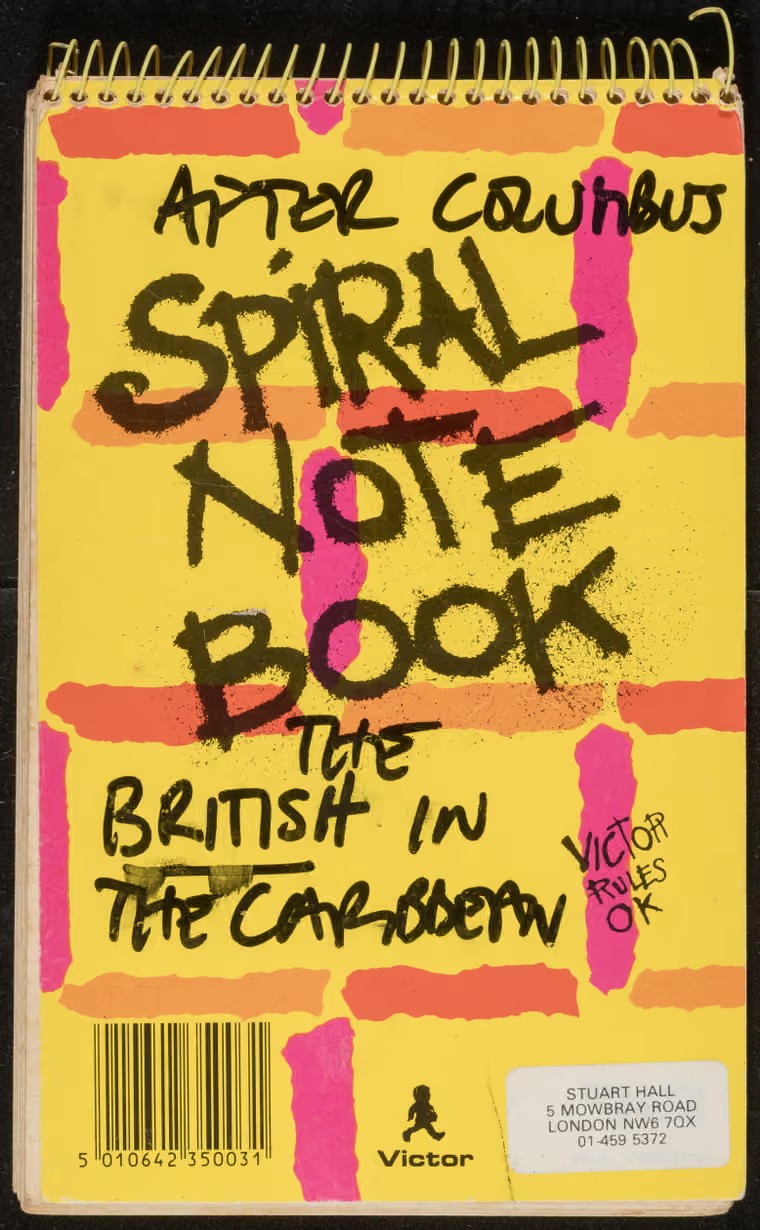
Notebook with handwritten title ‘After Columbus’. Photograph: University of Birmingham
Source: theguardian.com
Hall’s ideas meet machine learning
Hall died before the AI era arrived in full force, but his work offers a way to examine its tensions. His theory of representation explores how media create meaning through language, symbols and cultural codes, questions that remain relevant amid concerns about algorithmic bias.
In Doing Cultural Studies, co-written by Hall, the Walkman serves as an example of how a technology can express social, cultural and economic life. That choice feels especially apt for an archive now negotiating the relationship between cultural work and machine learning.
The project has also extended beyond the database. Roach prepared learning materials for primary-school pupils, while the creative collective Vivid Projects published the zine Dear Stuart. University of Birmingham students created Walking with Hall, a virtual tour of notable campus locations that asks what it meant for Hall to move through a university overshadowed by Joseph Chamberlain, an imperialist who founded it.
Hall arrived in Britain from Jamaica in 1951 on a Rhodes Scholarship and studied at Oxford. He became the first editor of New Left Review, later founded the Centre for Contemporary Cultural Studies, and introduced the term “Thatcherism.” In 1985, he warned of the dangers of “authoritarian populism.”
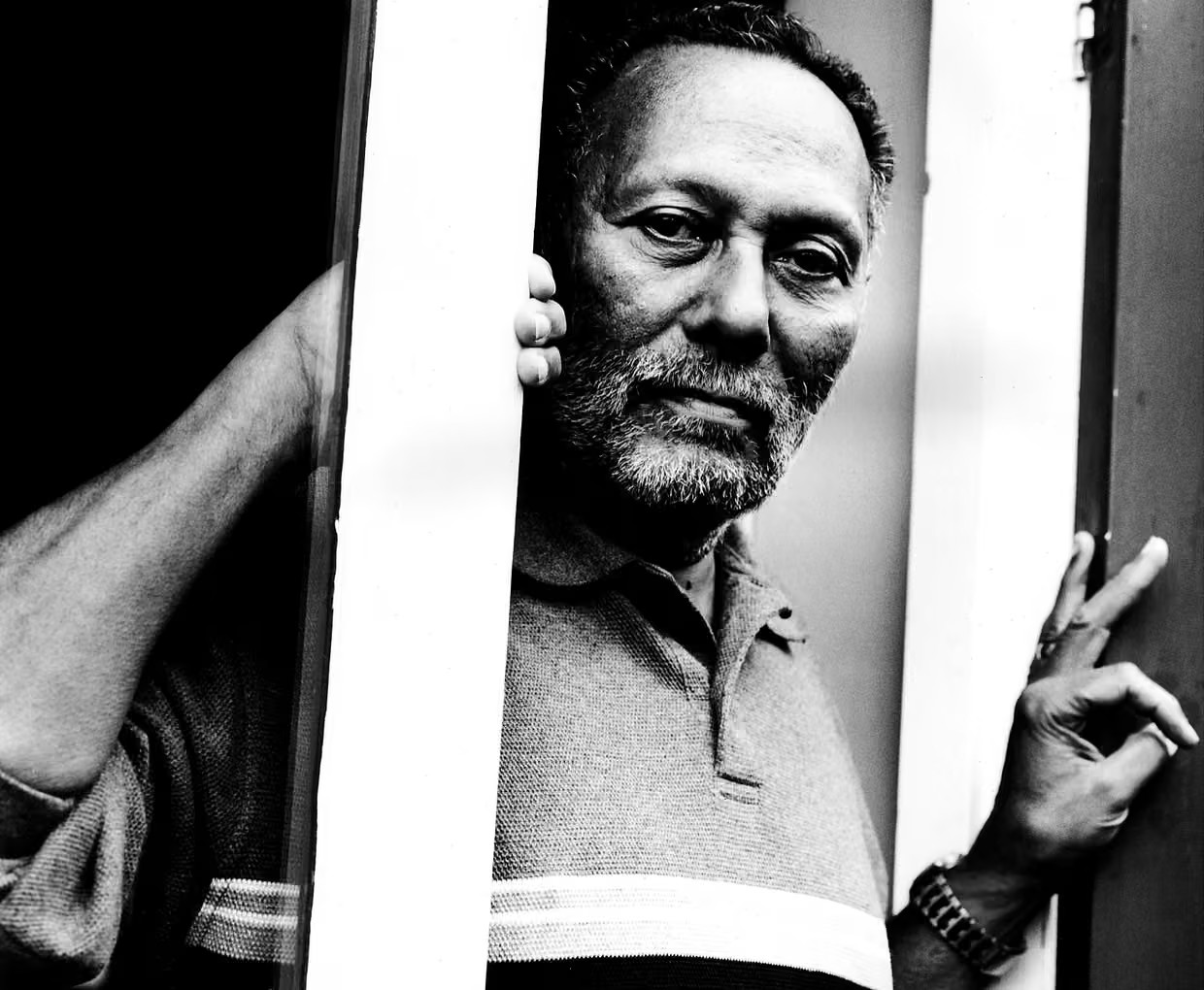
Hall is considered a seminal figure in postwar Black British history. Photograph: Eamonn McCabe/The Guardian
Source: theguardian.com
What the archive declines to give AI
Hall’s archive presents a pointed choice: make cultural scholarship more accessible to people while blocking automated access by AI bots. I think that boundary is the project’s sharpest argument. It treats digitisation not as automatic permission to reuse material, but as a decision about who gets access and on what terms.
The announcement is quiet about how the bot-blocking works in practice, and how the archive will handle future uses of its materials. That leaves an unresolved tension at the centre of the project: Hall’s ideas are being brought into debates about machine learning, while the documents that carry those ideas are kept out of bots’ reach.
Daily AI news
Every day we pick what actually matters in AI and explain it plainly — no hype, no filler. Subscribe if you want to follow where the industry is going.
Only what matters — every day
Follow on X