
The University of Sydney has required all students in its one-year honours programs to defend their theses in conversations with faculty. The university is trying to assess what students know at a time when written research has become harder to treat as a reliable form of assessment because of AI. The format and weight of the oral component vary by faculty: for historian Aidan Elwig Pollock, the conversation was a pass-or-fail test with no marks, while engineering student Isabel’s oral assessment made up half her final grade. Other Australian universities are also introducing oral exams, but Sydney is the first known university to make them compulsory across all honours programs.
University of Sydney students defend theses orally as AI changes assessment
How oral assessment works
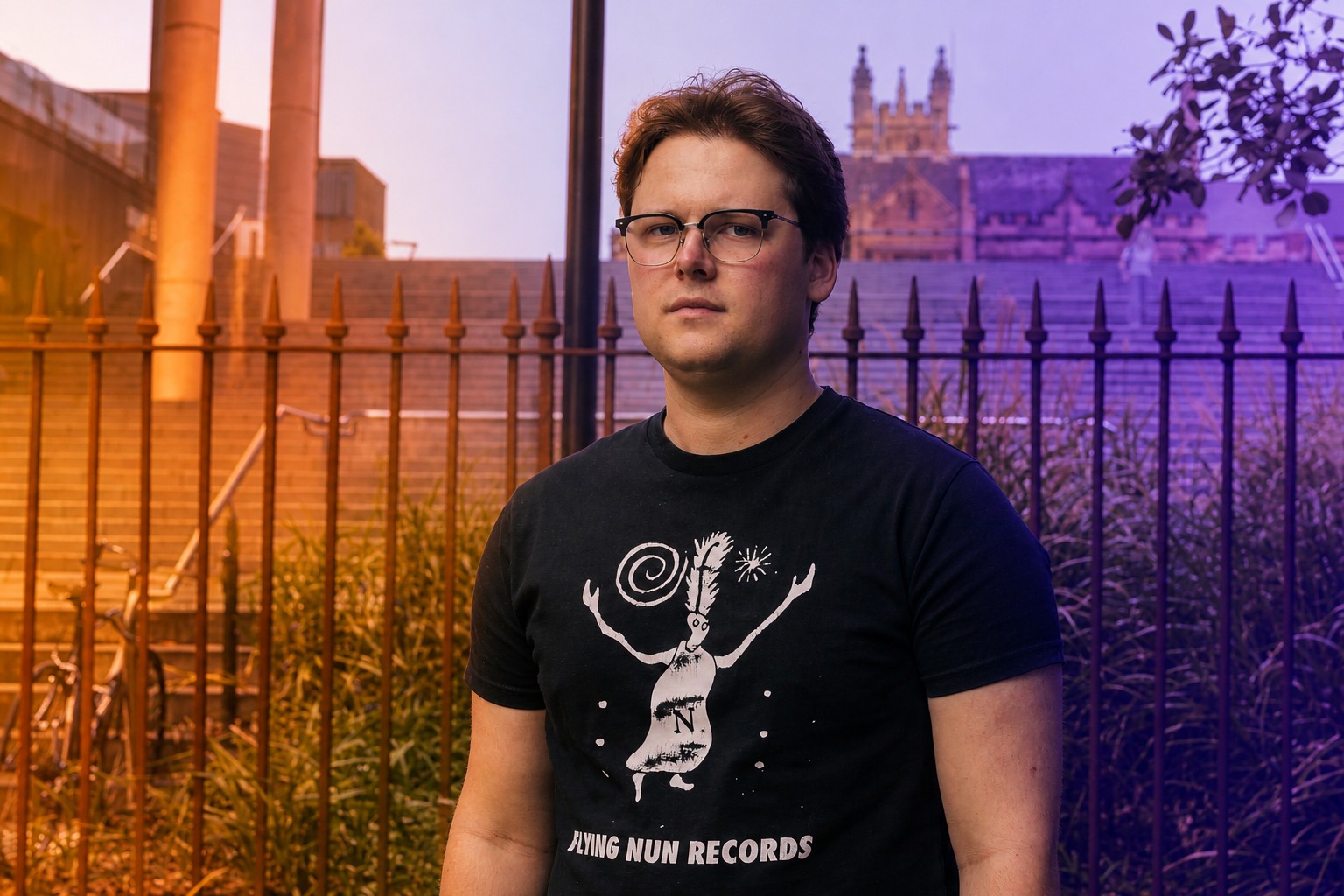
Aidan Elwig Pollock enrolled in an honours program at the University of Sydney without expecting an oral component to be added to his 20,000-word thesis. The history student is researching how the commemoration of Captain Cook has changed over time. He says he did not use AI at all and considers the new requirement insulting to students and their supervisors.
Pollock’s reasoning is that if a student used AI to write a thesis and their supervisor failed to notice during regular meetings, it is unclear what would stop the student from talking successfully about the work in a 15-minute conversation.
Since 2024, undergraduate programs at the University of Sydney have included different forms of assessment: some are easier to fake with AI, while others are more resistant to such interference. This year, the university extended the approach to honours programs. Each faculty chooses the assessment format independently.
On Wednesday, Pollock took a short oral test graded on a pass-or-fail basis, but not counted toward his final mark. Most of his marks come from his thesis, but he will not receive his degree if he fails the conversation.
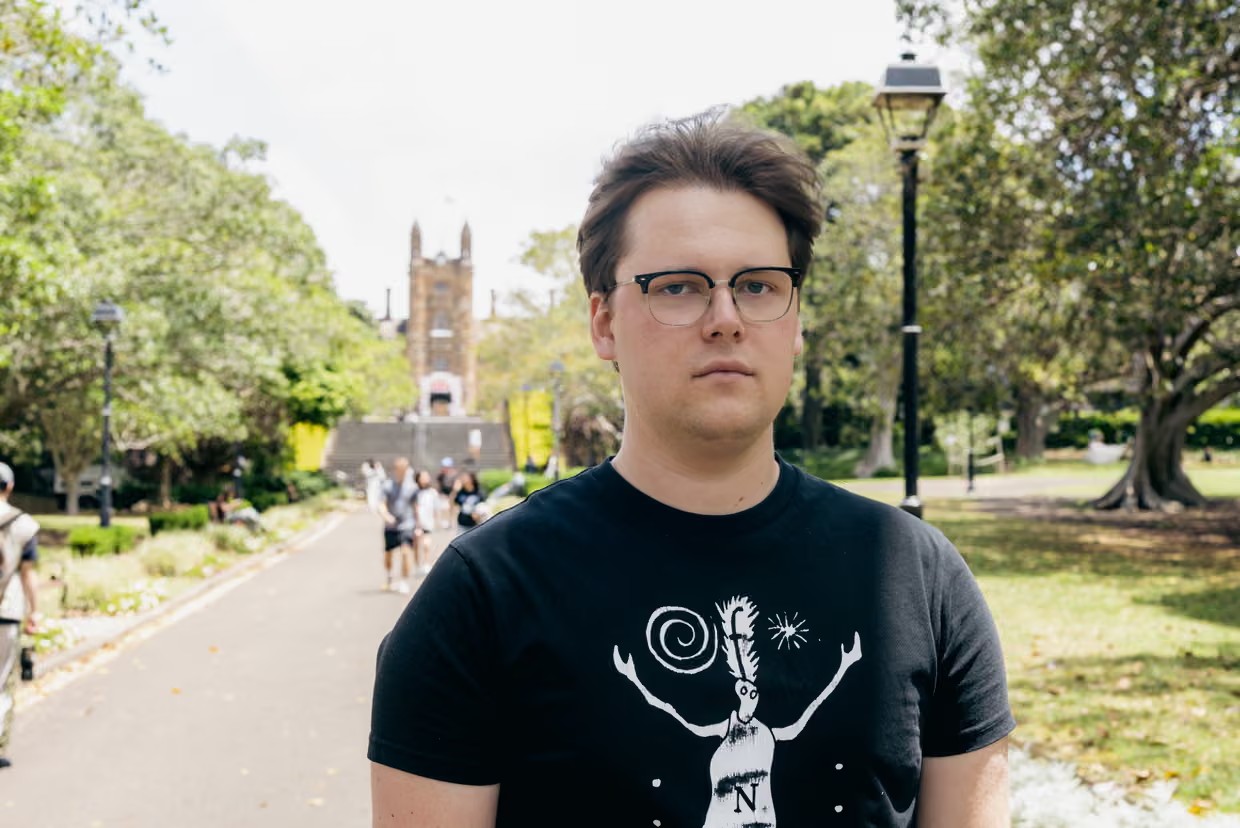
Elwig Pollock sat for a short pass or fail conversation, but it is worth 0% of his grade as most marks come from his thesis. Photograph: Blake Sharp-Wiggins/The Guardian
Source: theguardian.com
For an engineering student identified by the pseudonym Isabel, the experience was different. Last week, she spent an hour being interviewed by faculty in a room with five classmates. The university had to assess 250 students in two days. The oral component made up 50% of her grade, while her 20,000-word thesis counted for just 20%.
Isabel said people entered and left the room during the assessment, making it hard to concentrate. She had to move to the other side of the room so the faculty member could hear her. The student asked to use a pseudonym because she feared consequences for her grade.
The change worries students who find it difficult to speak in front of an audience, do not consider English their native language, or need an honours degree to obtain a professional qualification. Isabel believes that in engineering, where students’ writing skills are weak, oral assessment may be only a temporary solution.
How universities are changing exams
In the four years since ChatGPT was released, universities have increasingly held exams on paper or as interviews, responding to concerns about AI-assisted plagiarism. Some faculty members are bringing back the discussion-based classes traditionally found at Oxford and Cambridge colleges, or oral exams of the kind used to defend doctoral theses.
Honours programs are changing more slowly. Usually, they involve a year of intensive research after an undergraduate degree, focused on a single project that accounts for most of the final grade.
Adam Bridgeman, the University of Sydney’s acting deputy vice-chancellor for education, said the way these programs are assessed needs to change: the university cannot reliably prohibit the use of AI in preparing theses. He said staff and students had received guidance and opportunities to practise, so the oral format would not inadvertently favour those who speak English more fluently or are better public speakers. The university understands that some students may feel anxious, particularly if this is their first experience of this kind, and plans to take feedback into account when planning assessment for 2027.
The University of Sydney is currently the only major Australian university to have made interviews compulsory across all honours programs. Individual departments at the University of Melbourne, Monash University and Australian Catholic University are also introducing these assessments.
The University of Adelaide, one of the first Australian universities to bring back oral exams, uses interactive oral assessments. In them, students and faculty act out scenarios resembling real professional tasks.
Assessing knowledge and faculty workload
There have been no public reports of students in Australian honours programs cheating with AI. Kurt Iveson, coordinator of these programs at the University of Sydney’s School of Geosciences, believes changes are still necessary because AI is playing a growing role in education.
Iveson said he would not personally worry that students might ask Claude to write their theses. However, university leaders need to show the public and external accreditation bodies that student work is being assessed reliably.
Interviews increase faculty workloads, but no additional temporary staff were hired to conduct them. Staff and students who spoke to Guardian Australia said the new rules had forced supervisors to rush and work beyond their usual workloads.
Iveson nevertheless believes conversations help students learn and better understand the significance of their research. He added that if a student really wrote the work and knows what it contains, they should be able to discuss it calmly.
Dataist's take: Oral defences give universities a way to check whether students understand their own work, but the format and weight of the assessment vary considerably even within a single university. Isabel’s experience also shows the downside: interviews can add to faculty workloads and make assessment harder for students who struggle with speaking aloud.
Daily AI news
Every day we pick what actually matters in AI and explain it plainly — no hype, no filler. Subscribe if you want to follow where the industry is going.
Only what matters — every day
Follow on X