
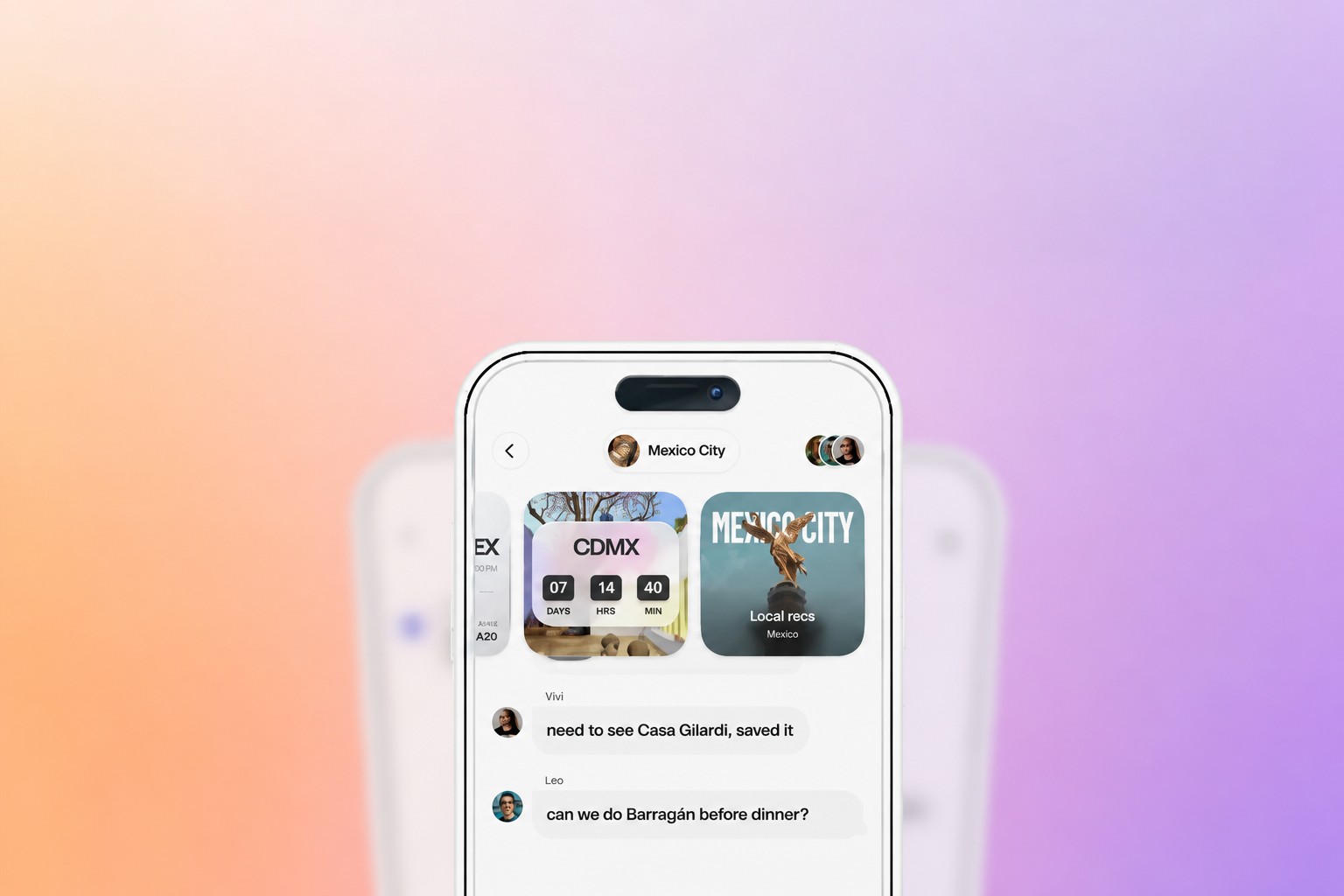
From prompts to shared work
Wabi’s premise is not entirely new: its first version also aimed to make software from user requests. What changes in 2.0 is where that capability sits. Rather than competing directly with other prompt-based app builders, Wabi is pitching a messenger in which an agent can help people act on a conversation.
The idea arrives as companies explore how apps might work inside general-purpose chatbots. At DevDay, OpenAI announced an update to ChatGPT plugins that will let apps offer interactive features within ChatGPT, with their names more visible in the sidebar. Wabi is pursuing a related idea through a dedicated messenger.
A user can ask the agent to make an interface for a task. In a health conversation, for example, that could mean a calorie counter, a weightlifting log and a weight tracker. In a family thread, people could create a calendar for children’s activities, a language-learning app or a service for finding local events for kids.
The case against one endless chat
In a post on X, Wabi’s Kуйда argued that chat alone becomes a worse way to use an agent over time: history and ongoing tasks get buried in an endless feed. People want to type, but also to click, scroll and browse. The most capable agent, she said, would combine the abilities of agents with the familiar qualities of software.
That diagnosis points to a real design tension. Chat is a flexible place to ask for help, but a poor place to keep returning to the same task. Wabi’s bet is that a generated interface can give a conversation some structure without forcing users to leave it.
I think the more important question is what happens when a tool is meant for a group, not just one person. Wabi says it wants to bring the agent, apps and close contacts together around important parts of life. But the announcement does not explain how those shared tools will work, or what keeps them useful once the conversation moves on.
Wabi 2.0 is currently available by invitation code, distributed on X. For now, the ambition is larger than the evidence: Wabi is proposing a new home for personal software, but has yet to show how well a messenger can hold onto the tasks that chat tends to lose.
Daily AI news
Every day we pick what actually matters in AI and explain it plainly — no hype, no filler. Subscribe if you want to follow where the industry is going.
Only what matters — every day
Follow on X