
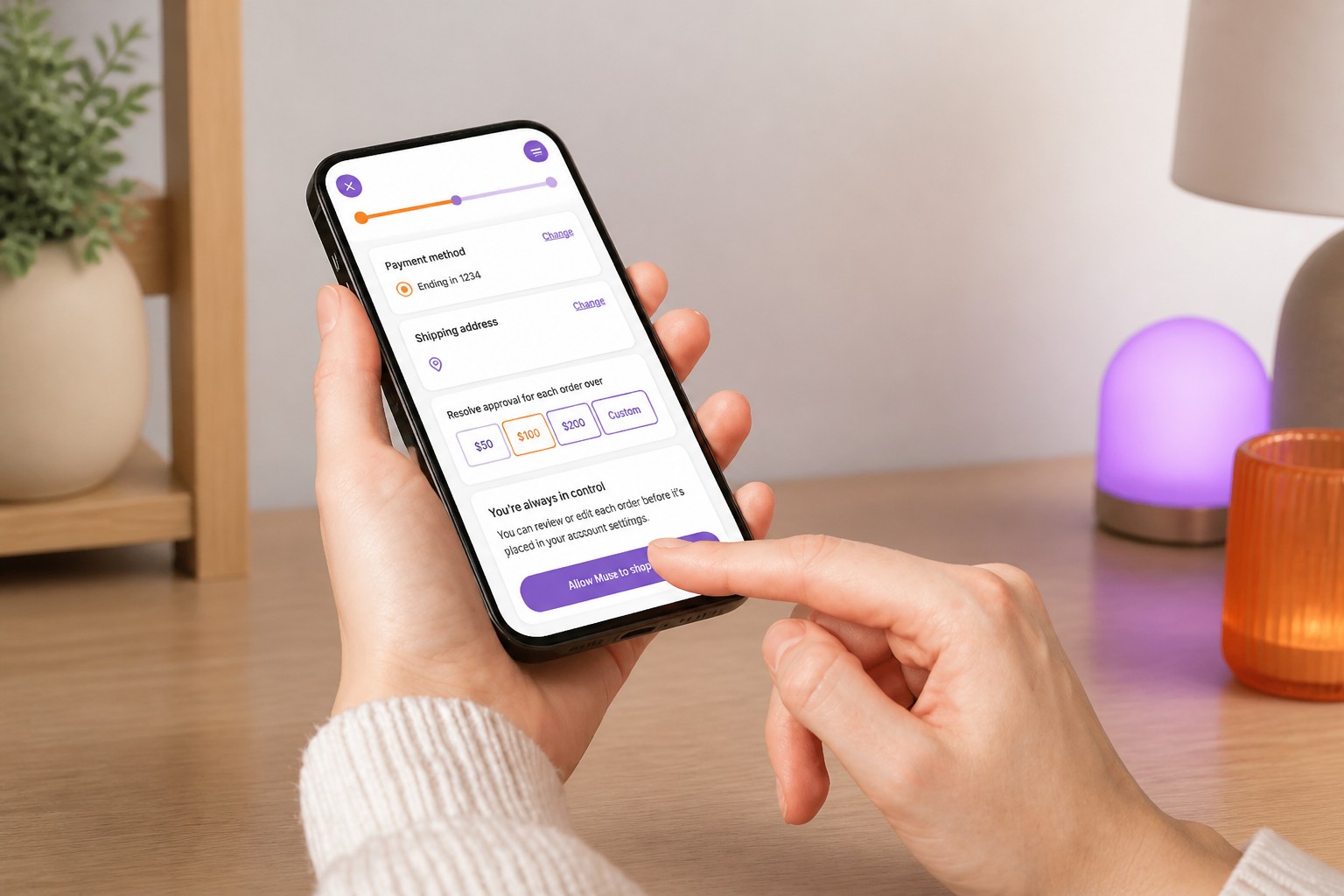
How shopping works
To get started, users open the Muse app, sign in to their Walmart account and return to the assistant. They can ask it to find a specific product, compare options or look for discounts. Muse sends the request to Walmart, which returns matching products and helps put together a cart.
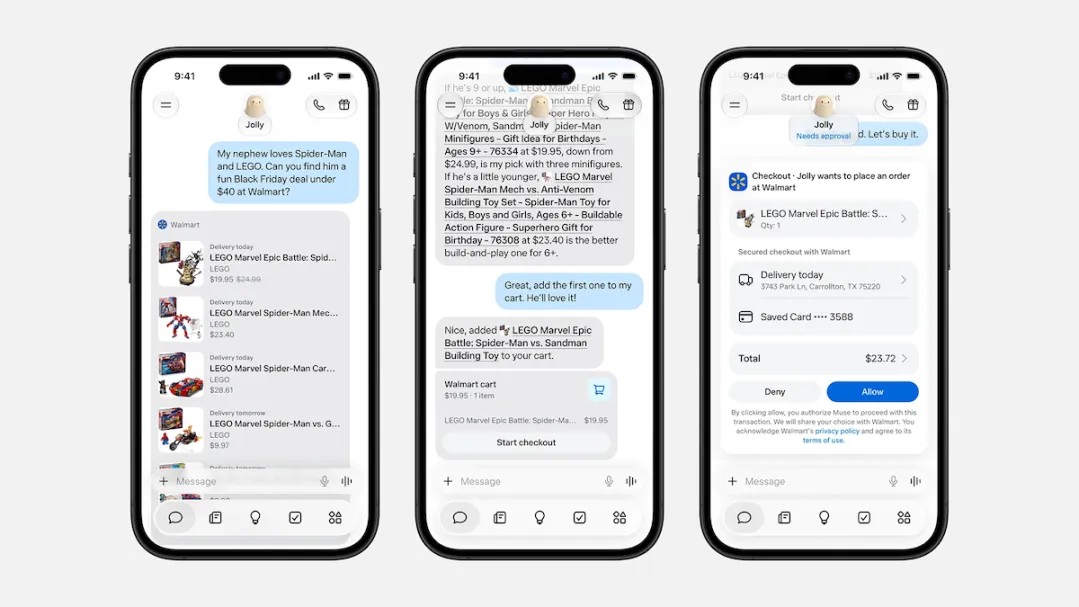
Walmart says Muse does not have access to customers’ purchase histories or other personal data. Users can set a spending limit, require confirmation before a purchase and review orders placed by the agent. They can also delete the agent’s profile.
Shopping through Muse runs on Agent Gateway, Walmart’s system for connecting external AI assistants directly to its online store. The system launched in October. Walmart plans to make it available to more developers and AI platforms, so Muse could eventually be one of several assistants able to shop at the company’s store.
Instacart also works with Meta and Muse; the company recently joined the project as well.
New Sparky features
Walmart has added AI features to its own assistant, Sparky. It can now turn handwritten shopping lists into carts, search for products using photos and voice commands, and help shoppers navigate a local store.
Shoppers can find a product and see on a store map which aisle it is in. The “Flash Price Tag” button makes the price tag for the selected product light up on the shelf.
Dataist’s take: Walmart is testing two ways to bring AI into shopping at once: through external assistants and its own Sparky. Muse accesses Walmart’s product catalogue through Agent Gateway, while purchases are constrained by customer settings — a spending limit and order confirmation.
Daily AI news
Every day we pick what actually matters in AI and explain it plainly — no hype, no filler. Subscribe if you want to follow where the industry is going.
Only what matters — every day
Follow on X