

Why Skydio made the F10 asymmetrical
A camera on the wingtip
Asymmetrical aircraft are not a new idea. In the 1990s, aircraft designer Burt Rutan and his company Scaled Composites built several unusual planes, including the Model 202 Boomerang. One of the best-known examples is the World War II reconnaissance aircraft Blohm & Voss BV 141: its engine was in the center, while the crew cabin was offset to the right, toward the wing. That layout improved visibility during reconnaissance flights: in a conventional single-engine aircraft, the engine in front of the cabin obstructs the forward view.
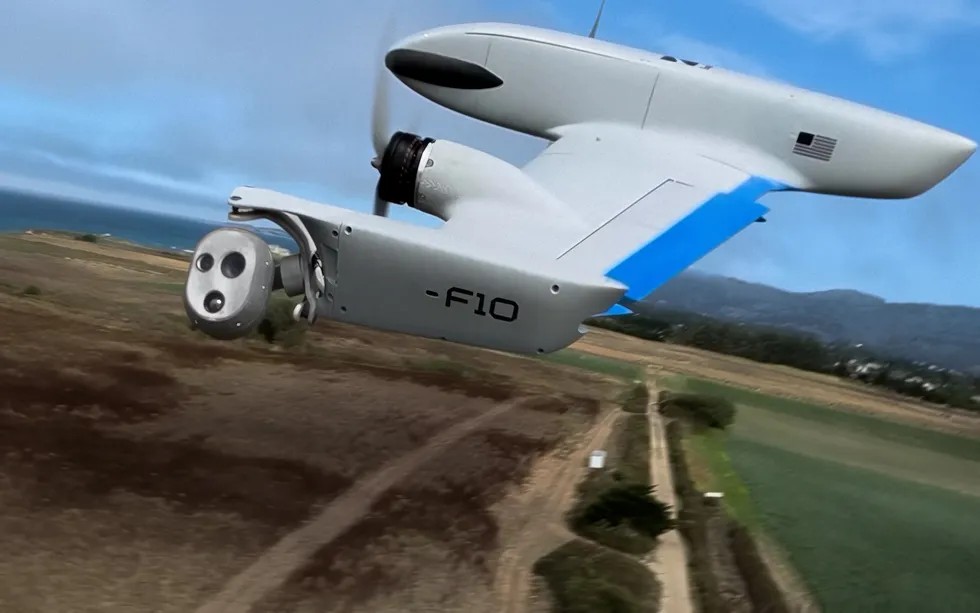
The F10 applies a similar approach to drone reconnaissance. These aircraft often track a target by circling it, but at low altitude the camera can be blocked by a wing or tail. Andrew Gessling, Skydio’s director of engineering, said the idea of mounting the camera on the wingtip came up while discussing scenarios like these. If the drone turns only to the left, many visibility problems disappear.
Mounting the camera on the wing, however, throws off the aircraft’s balance. The camera makes up a significant share of its weight and adds aerodynamic drag. Adding weight—such as a battery—to the opposite wing to balance the drone would, Gessling estimates, nearly halve its flight time.
Source: spectrum.ieee.org
Skydio therefore changed other parts of the design as well. The engineers accounted for weight distribution, motor thrust, and the effects of wing shape and position on aerodynamics. The F10 needed a wingtip-mounted camera, two motors for controlled hovering during takeoff and landing, high top speed and long flight time. Modeling and optimization led to a longer wing on the camera side to generate more lift, and an asymmetrical motor layout to offset the camera’s additional drag.
As Gessling explained, an asymmetrical layout does not in itself make an aircraft worse: it just makes the engineers’ work more difficult—or more interesting. They had to find the right design and teach the aircraft to control itself.
From hovering to flight
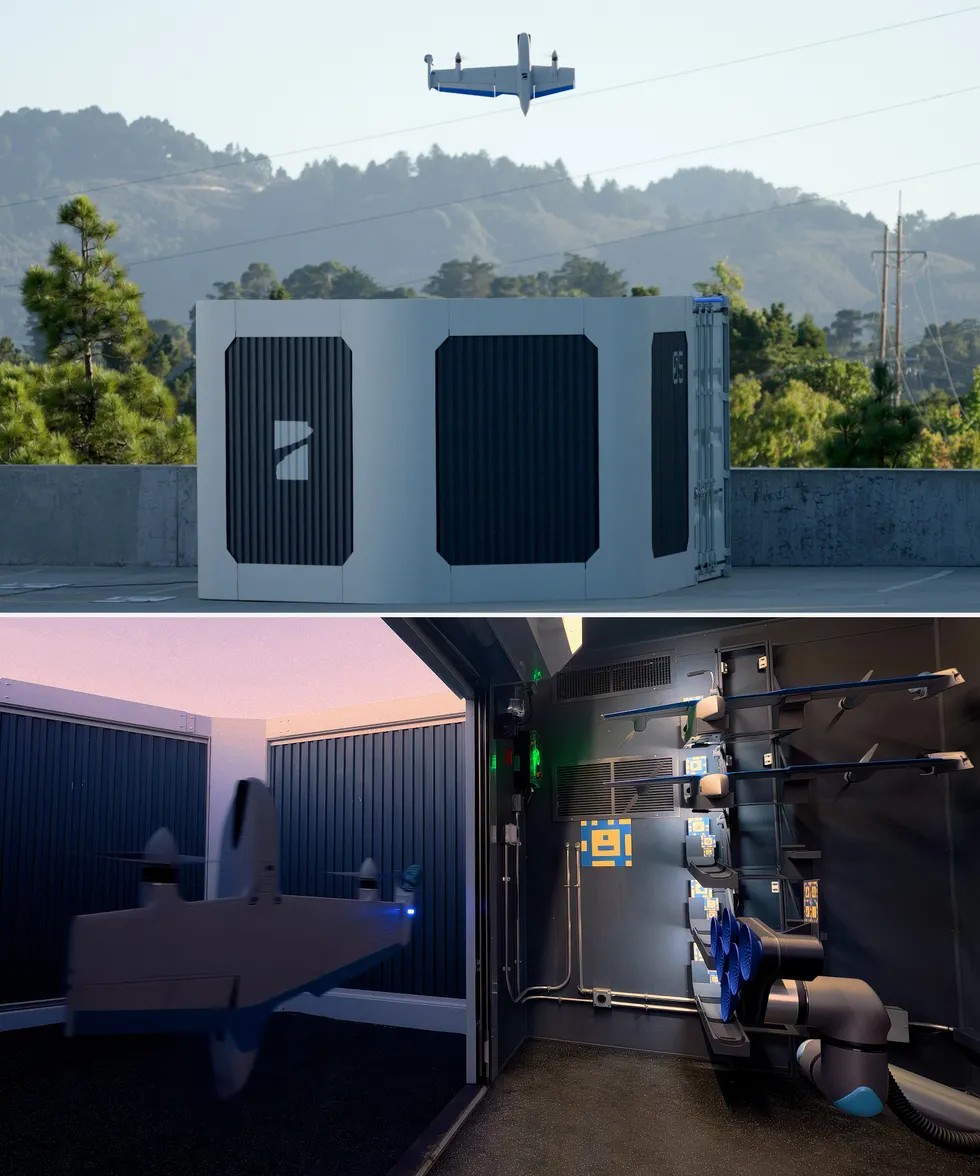
The F10 is designed to work with MegaDock, a storage, charging and launch system. A robotic arm catches the drone in midair, so it must transition from hovering to level flight and then back again. This is especially difficult for a flying wing without tail control surfaces—the movable parts that help steer an aircraft.
For autonomous control, Skydio uses model predictive control, an algorithm based on a detailed physical model of the aircraft. A single control policy works across the full flight envelope, from a stationary hover to a top speed of 100 miles per hour. There are no separate “hover” and “flight” modes: the planner sets a destination, and the drone chooses how to get there.
Source: spectrum.ieee.org
One MegaDock can service up to five F10s. This supports continuous flights by three drones while the other two charge. The system operates autonomously; a person only needs to monitor it remotely. Two 5G cellular modems provide the connection to the F10.
Maximum flight time is two hours. For obstacle detection and avoidance, the F10 has the same camera system as Skydio’s quadcopters. If a serious malfunction occurs, a built-in parachute in the tail deploys, bringing the aircraft down gently enough for it to fly safely over people.
Gessling acknowledges that the F10 looks unusual and that some Skydio employees who do not work on technical matters objected to the design. The team would have chosen a simpler solution if one existed, he said, but it has data and a rationale for every decision.
Dataist’s take: The F10’s asymmetrical design addresses a specific surveillance problem by reducing the risk of a wing blocking the camera as the drone circles a target. The aircraft is designed to work with MegaDock and requires complex control that combines hovering and high-speed flight in a single mode.
Daily AI news
Every day we pick what actually matters in AI and explain it plainly — no hype, no filler. Subscribe if you want to follow where the industry is going.
Only what matters — every day
Follow on X