
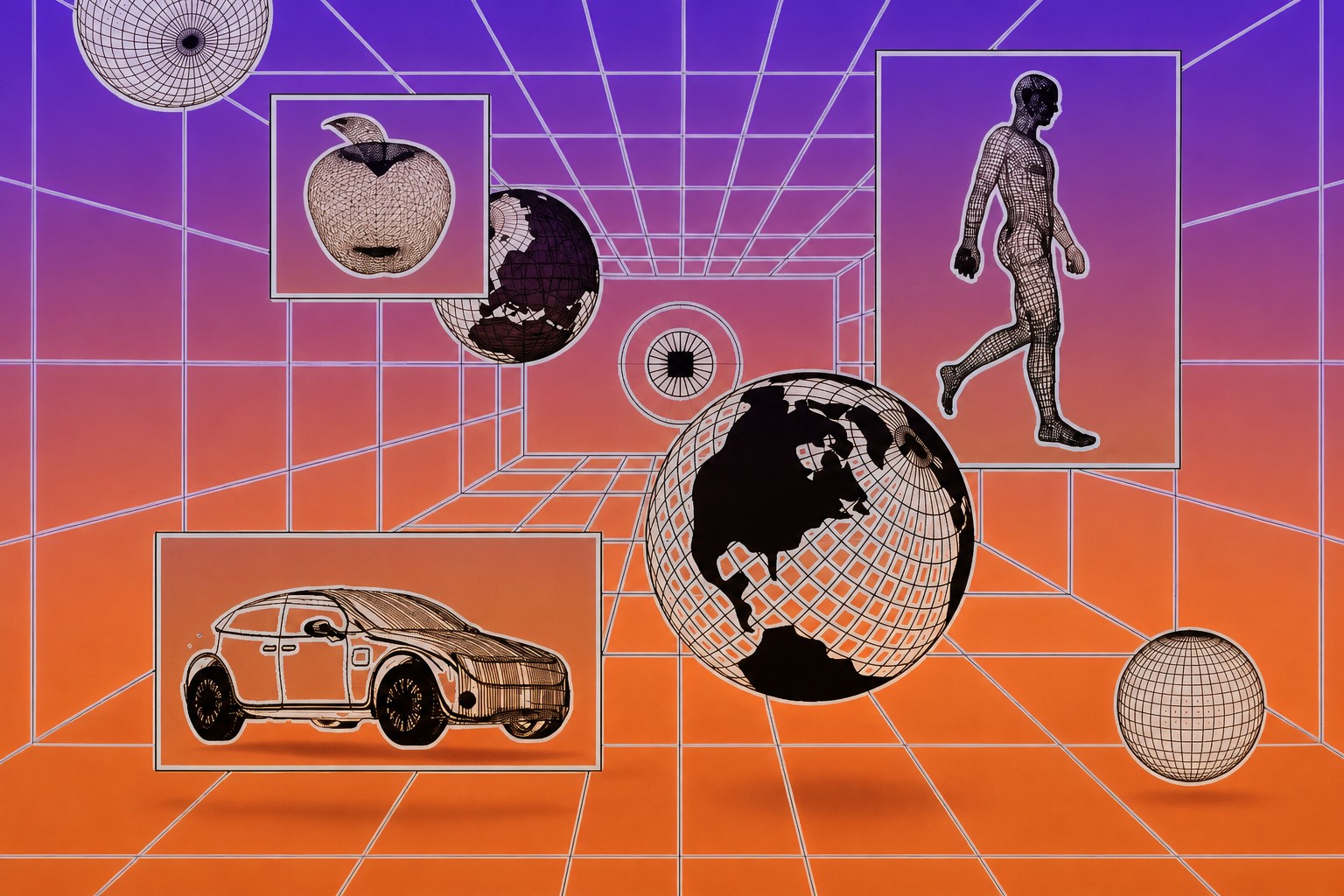
How world models predict what happens
Large language models work with text: as Oliver Cameron, CEO of the Odyssey lab, puts it, a model receives a sentence and predicts the next word. A world model takes an image of an environment’s current state and predicts what it will look like next. The resulting 3D environments serve as digital training grounds: they imitate reality and look plausible.
Brian McClendon, CTO of Niantic Spatial, believes these models will help robots train without physically moving or being present in a working environment. A location where a robot is meant to operate can be photographed, recreated as a 3D copy, and used to run “millions of simulations” that train the system to account for the space’s features.
For self-driving cars, software needs to react instantly. Wayve Chief Scientist Jamie Shotton says world models for vehicles must respond to actions in their environment and account for physics, cause and effect, and how other objects and people change their behavior in response to the car’s actions.
Wayve’s generative world model, for example, uses footage from car dashcams. The company uses it to recreate dangerous roads and conditions that would be impractical to test in the real world.
Where else world models are being used
Game developers are also exploring the technology: physics and 3D graphics are fundamental to video games, and Tencent is investing in its own world models.
Major AI companies, including Google, continue to report improvements in these models. Investors are also backing new companies. Yann LeCun, former Chief AI Scientist at Meta, recently raised more than $1 billion for his company, Advanced Machines Intelligence. AMD acquired World Labs, founded in 2024 by Stanford computer scientist Fei-Fei Li, this year for more than $8 billion.
People are collecting the data
The development of world models is already affecting the labor market: labs need footage of real life to create digital copies of physical environments. The author of the original story says that early this year, they strapped an iPhone to their forehead and spent several hours filming household chores—folding laundry, washing dishes, and pouring Diet Coke. They sold the video through an app for a small sum. As companies improve their world models, demand for this kind of work could grow.
From hunting virtual Pokémon to filming household chores, data is increasingly turning everyday life into training material for AI systems. Dataist’s take: the use of world models will depend not only on the capabilities of simulation, but also on how much real-world footage developers can collect.
Daily AI news
Every day we pick what actually matters in AI and explain it plainly — no hype, no filler. Subscribe if you want to follow where the industry is going.
Only what matters — every day
Follow on X