What shipped
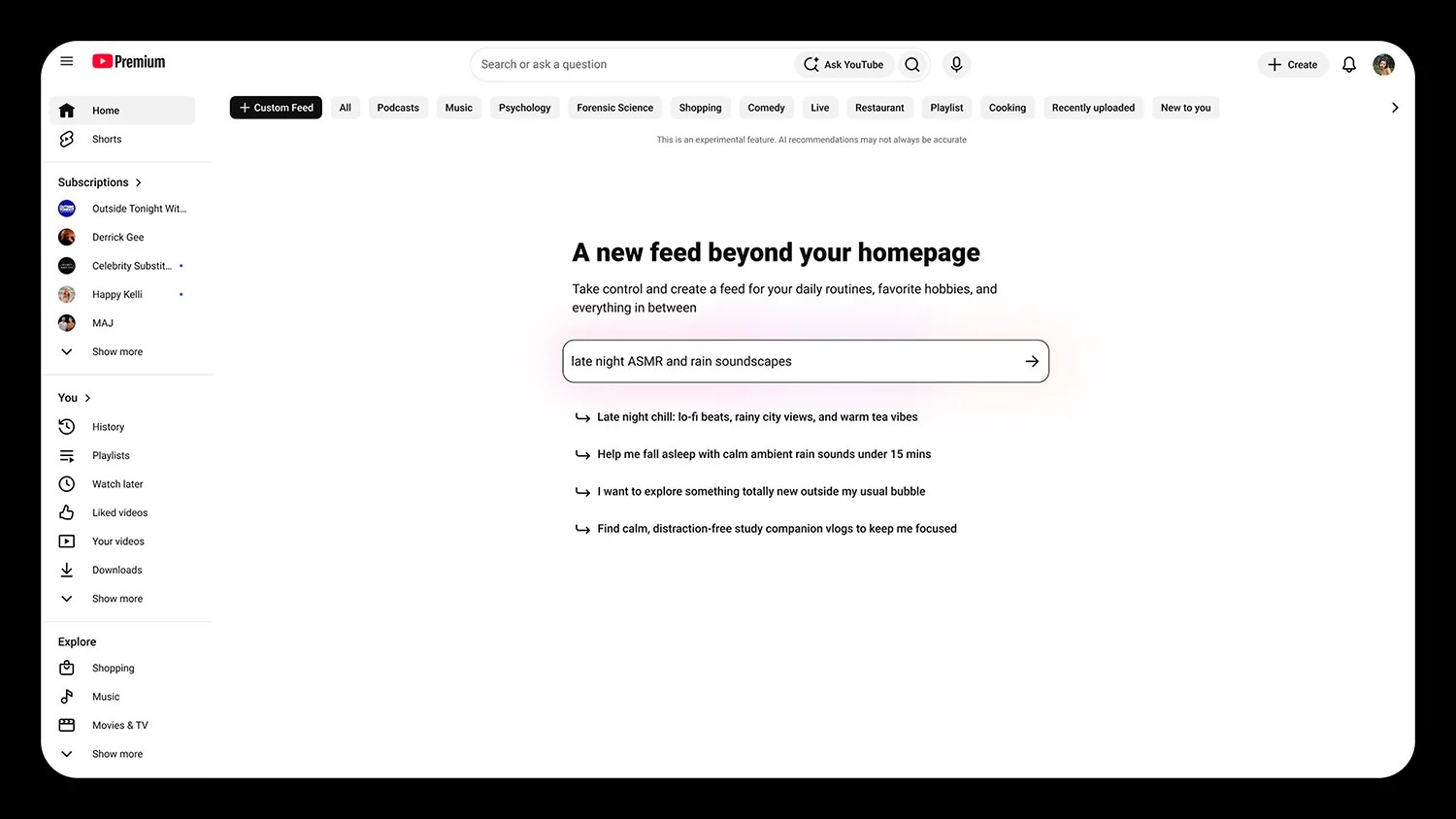
Users will be able to describe a feed in a dedicated field. YouTube suggests requests such as video podcasts for a 30-minute train ride or “relaxing commentary to unwind.”
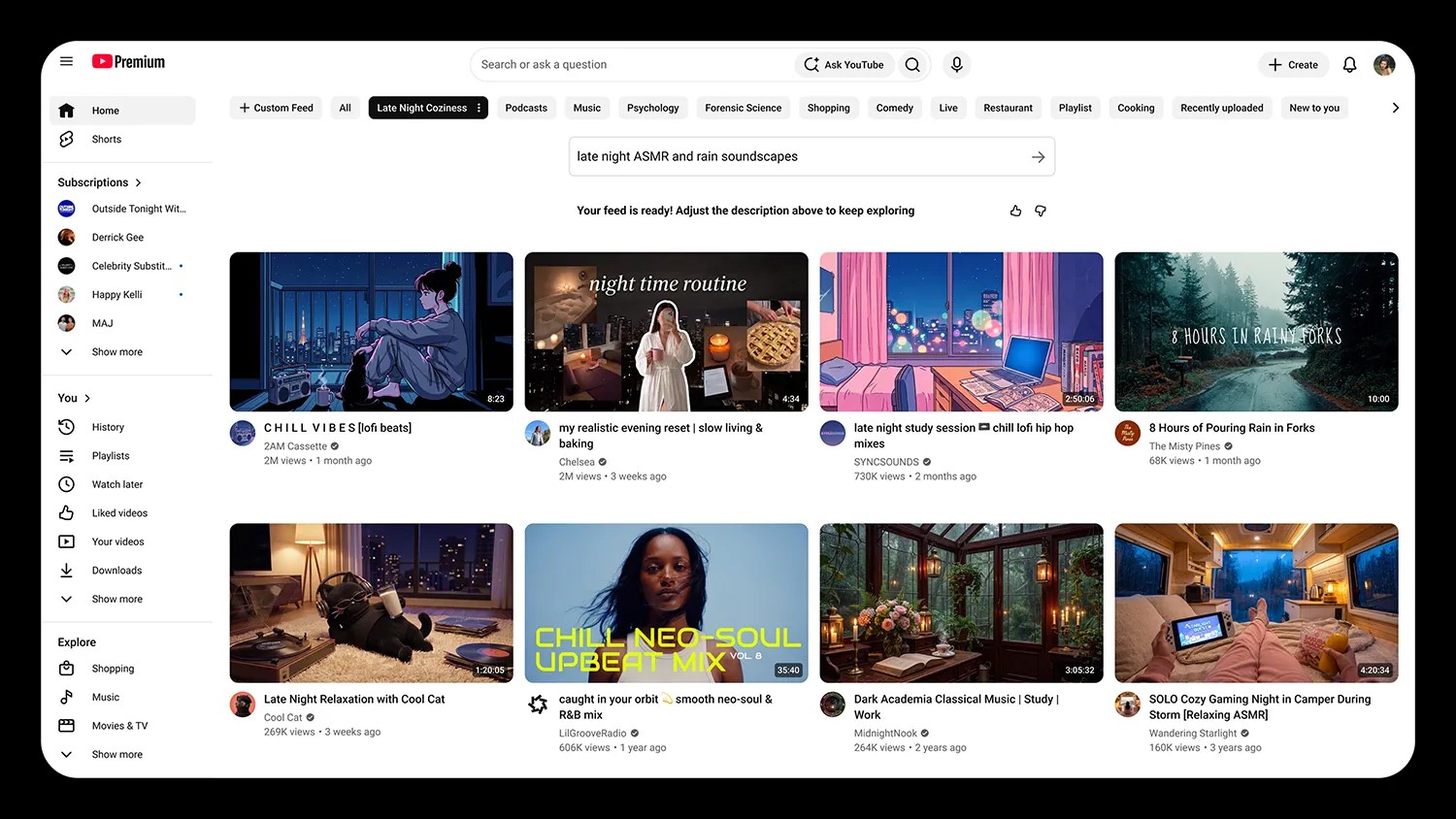
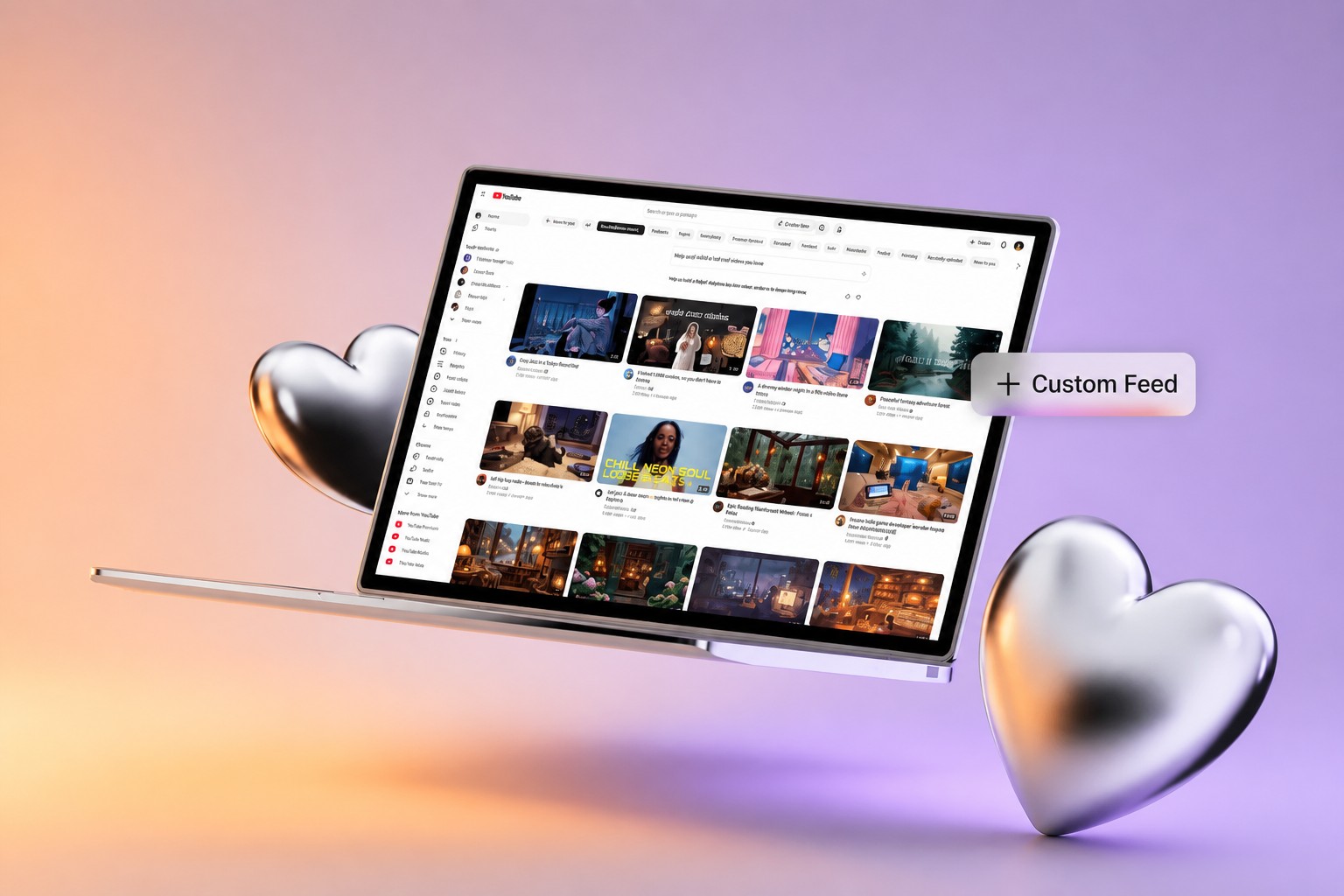
Gemini will assemble the feed from the prompt and place it in a separate tab at the top of YouTube’s homepage. Users can specify how material should be selected, what to include or exclude, which topics should receive priority and other conditions.
The feature will support multiple custom feeds on YouTube’s web version and mobile apps starting next month. It will sit beside, rather than replace, the main feed and its existing recommendations.
YouTube joins the personal-algorithm race
The basic idea is no longer unusual across social platforms:
YouTube’s case for the feature is scale. At a briefing for journalists before the Made On YouTube event, Emily Moxley, vice president of product management for Viewer AI, said that one of YouTube’s distinctive features is access to the whole world through the service. The catalog contains more than 20 billion videos, she said, leaving users only one search away from an enormous range of topics.
That scale is also the problem. A prompt-based feed could make YouTube more useful when the viewer has a concrete situation in mind, but it does not make the underlying catalog smaller or easier to evaluate. It creates a new route through the same abundance.
The control YouTube is not giving up
I think this is less a replacement for recommendation algorithms than a new interface on top of them. YouTube keeps the default homepage intact while allowing viewers to open a more deliberate, temporary-feeling stream when the standard feed does not match the moment.
What I’d want to know is how much control survives the prompt. The announcement describes detailed instructions for inclusion, exclusion and priority, but says nothing about how users will inspect or correct the rules Gemini uses to assemble a feed. That gap matters: a user-described algorithm is only meaningfully theirs if its results can be understood and adjusted.
YouTube is handing viewers a way to state the destination, while keeping the machinery that decides what gets them there.
Daily AI news
Every day we pick what actually matters in AI and explain it plainly — no hype, no filler. Subscribe if you want to follow where the industry is going.
Only what matters — every day
Follow on X