
What Ask Music adds
Ask Music is built directly into the YouTube Music app. Instead of naming a song or artist, users can describe what they want in ordinary language and receive a tailored listening queue.
The feature works across YouTube Music’s catalog of more than 300 million tracks, including:
Users can also ask about an artist’s influences, explore music history, or find out who played bass on a particular recording and how it was made.
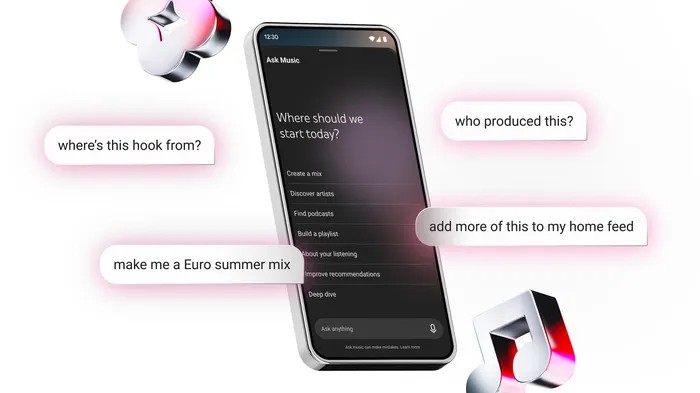
YouTube suggests phrasing requests as if speaking to a friend. For example, a listener could ask Ask Music to build a mix from the songs that inspired a specific track. The feature can handle both open-ended discovery and focused questions about individual recordings.
That distinction matters. Traditional music search assumes the listener already knows what to type. Ask Music is aimed at the less precise moments: when someone remembers a mood, a connection or a sound, but not a title.
A weekly filter for podcasts
Your Podcast Lineup takes a different approach. Rather than waiting for users to search through an expanding catalog, the AI-generated audio guide will appear on the podcasts page in YouTube Music.
Once a week, it will play a short spoken overview of recommended shows and explain why they might interest the listener. Users can then move directly to the suggested episodes.
The product targets a familiar discovery problem:
Spotify recently introduced a similar feature. Its personalized podcasts use AI to create episodes based on users’ interests and prompts. YouTube Music’s approach, as described here, is less about generating a new show and more about selecting and explaining existing listening options.
The broader bet
YouTube Music tested AI-generated hosts last year. Those hosts told stories, shared little-known facts about fans and commented on the music a user was listening to. Ask Music and Your Podcast Lineup extend that experiment from presentation into discovery.
My read is that YouTube is treating conversational AI as a new layer over an enormous catalog. The catalog itself is already large; the harder problem is helping a listener navigate it without knowing exactly what to ask for.
The announcement is quieter about the part that will determine whether these features become useful: why a recommendation was chosen, how reliable the explanations will be, and how much control listeners get over the results. A natural-language interface can make discovery feel easier, but it can also hide the decisions being made underneath. YouTube is putting that judgment directly between its users and the next thing they hear.
Daily AI news
Every day we pick what actually matters in AI and explain it plainly — no hype, no filler. Subscribe if you want to follow where the industry is going.
Only what matters — every day
Follow on X