
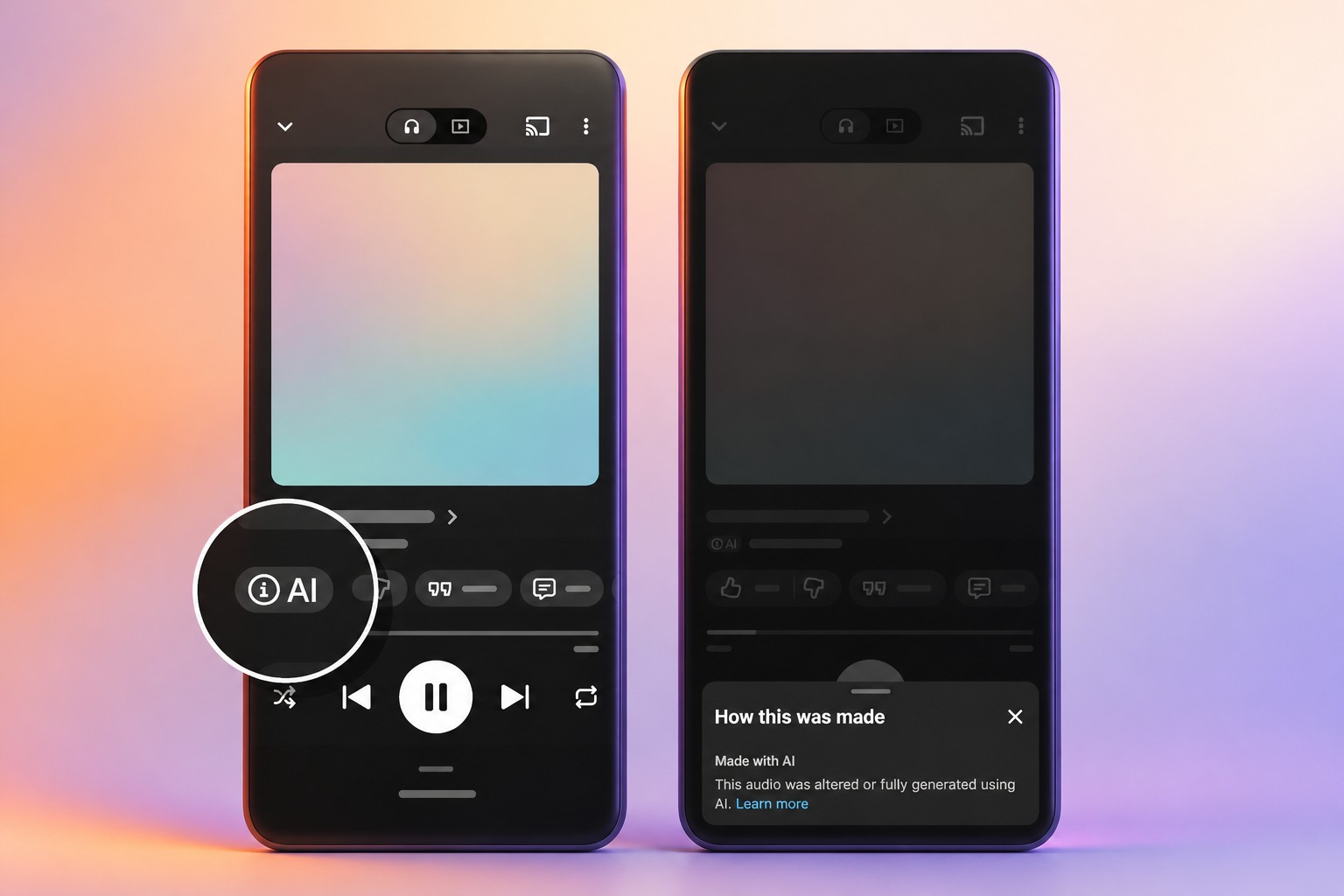
Three levels of AI involvement
Partners can assign one of three labels:
The labels make a distinction that a simple AI-or-not tag would miss: using pitch correction does not make a recording AI-generated, while an artist’s performance can coexist with AI-made elements.
Platforms are choosing different rules
YouTube’s approach is part of a broader response to the rapid growth of AI-generated music, but services are not treating it the same way.
Disclosure is YouTube’s bet
YouTube is not making AI use itself a bar to monetization. It is betting that listeners should be told how a track was made, while other services are also limiting where some AI-generated music appears or whether it earns royalties.
YouTube is also experimenting with AI music creation. Its Dream Track tool lets some creators make soundtracks using AI versions of participating artists’ voices.
I think the labels’ usefulness will depend on how reliably partners and YouTube can distinguish the three categories. The announcement explains what each label means, but not how often YouTube’s detection tools will identify music partners have not labeled. That gap matters: disclosure works only if listeners can trust what is disclosed.
Source: techcrunch.com
Daily AI news
Every day we pick what actually matters in AI and explain it plainly — no hype, no filler. Subscribe if you want to follow where the industry is going.
Only what matters — every day
Follow on X