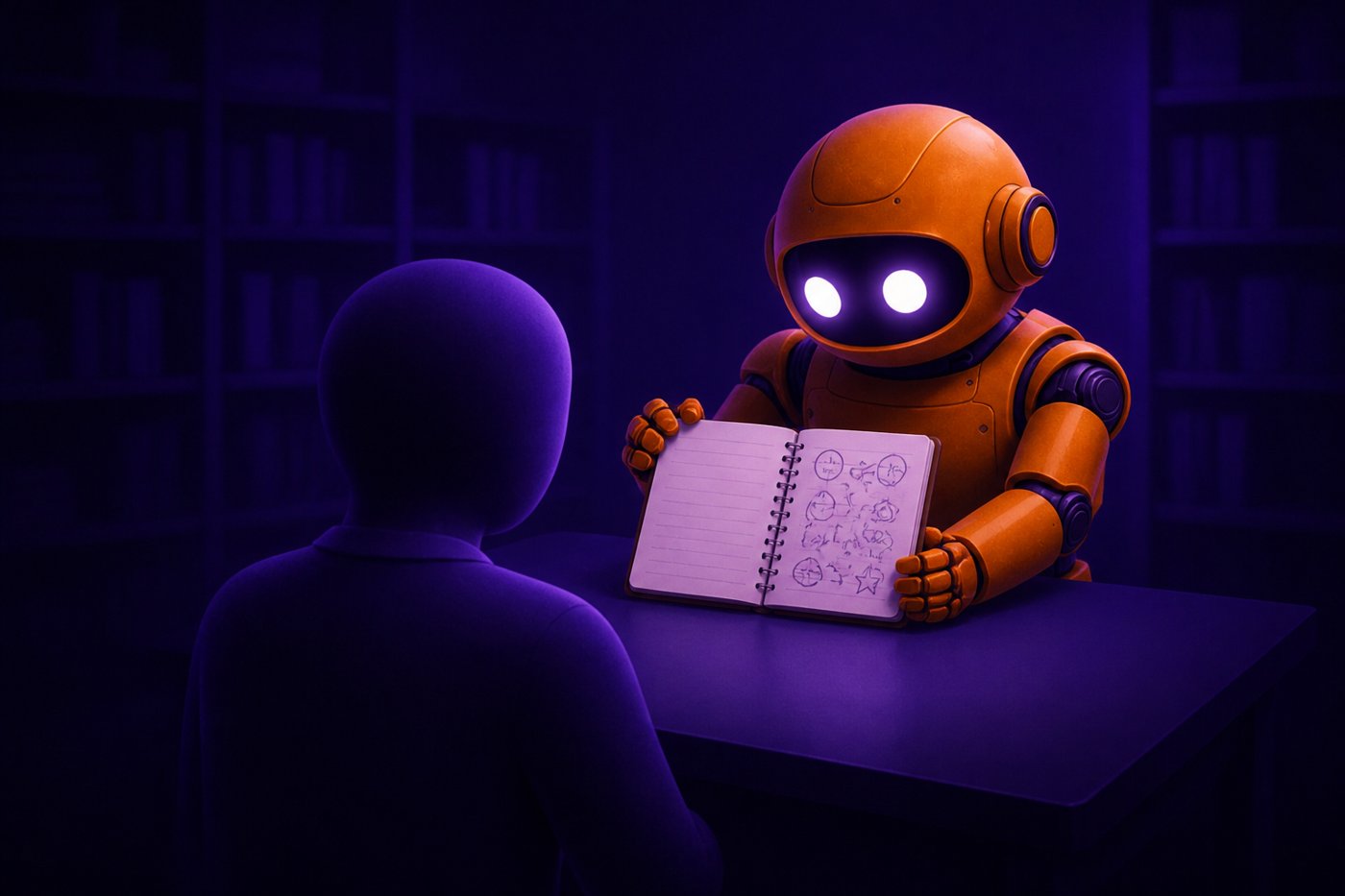
AI That Thinks Alongside Us
Smart systems can already write code, find information, and carry out long chains of tasks. But in everyday life, people still forget important things, miss details in conversations, and struggle to recall why they made a particular decision. AI may know the answer, but it often doesn’t know what a particular person needs—or when to help.
In his paper “From Autonomous Agents to Cognitive Symbionts,” researcher Hao Fei proposes a different way to think about AI’s progress: measure not only what a system can do on its own, but also how much it helps a specific person. To describe this idea, he introduces the cognitive symbiont: a personal AI that stays with someone over time, remembers their history, understands the situation, and steps in only when it’s appropriate.
This isn’t a finished product or a blueprint for a new algorithm. The paper lays out a research agenda: how such an assistant might work, what it would take to build one, and what risks would need to be addressed.
From a Smarter Machine to a More Capable Person
AI progress is usually measured by what the system itself can do: Can it write a program, prepare a document, or complete a multistep task? The author calls this one half of AI’s future: the pursuit of artificial general intelligence, or increasingly capable machines.
The other half is AI-augmented human intelligence. The question here isn’t “How well did the AI do on its own?” but “What can a person do now with the AI’s help?”
The difference is easy to see. A conventional assistant looks up information when you ask. A personal agent might book a trip based on your preferences. A symbiont should go further: it would know you have an important meeting on Monday, remember that you dislike overnight flights, and find a suitable one in advance. During a conversation, it might discreetly remind you of a figure you included in your presentation.
The central challenge is the cognitive gap: the difference between everything a person knows and has experienced and what they can recall or keep in mind at a given moment. You may have the information you need but be unable to retrieve it in time. The symbiont’s job, in the author’s vision, is to narrow that gap by bringing the right part of a person’s own history to mind at the right moment.
How a Symbiont Should Work
A symbiont is more than a chatbot with a good memory. It should stay with a person over time, understand what’s happening around them, and communicate without requiring them to open an app and explain the situation all over again.
The author identifies six qualities such a system should have:
🟣 It should remember a person over the course of years and carry context from one situation to another.
🟣 It should be part of everyday life, rather than waiting for a prompt in a chat window.
🟣 It should respond at the right time, while its help can still be useful.
🟣 It should protect personal data and deliver suggestions through a private channel.
🟣 It should help with as little effort from the person as possible.
🟣 It should be able to offer help on its own—and know when to stay quiet.
That last point matters especially. A symbiont shouldn’t comment on every pause or turn life into a stream of notifications. Silence is a valid response, just like a question, a brief reminder, or completing a task.
The system would draw context from many sources: calendars, messages, documents, video from smart glasses, notes, and the person’s own words. It wouldn’t be enough to simply dump this information into storage; it would need to be organized by time. Some details matter for only a few seconds, such as what’s being said in the current conversation. Others may matter for weeks, such as an ongoing project or an unresolved question. Still others could remain relevant for years: relationships, habits, goals, and the reasons behind past decisions.
The system would then build a model of the individual. Here, the author proposes distinguishing between two kinds of information: what a person has said about themselves, and what the AI has inferred from their behavior. If someone says they’re upset, that shouldn’t be overridden by a model’s interpretation of their voice or heart rate. And if the system gets something wrong, the person should be able to correct not just its current response, but also the mistaken assumptions behind it.

Иллюстрация 1
Helping Without Interrupting the Conversation
Talking to an assistant doesn’t always require a separate device. The author envisions a whole set of connected devices: glasses with a camera and small display, headphones for private prompts, a wristband that tracks sleep and heart rate, a phone, and a computer. Each device would provide part of the picture, while the person might receive a brief prompt through an earpiece, a line of text in their glasses, or a vibration.
The paper calls this mode cognitive full duplex. A person talks with a colleague while the symbiont listens, finds a figure in their notes, and displays it on the glasses. The conversation continues uninterrupted. If the moment passes, the prompt disappears instead of lingering in view.
To make this work, the paper proposes splitting the system into fast and slow loops. The fast loop responds to what’s happening right now: it notices a question, finds a name or number, and delivers a brief prompt. The slow loop analyzes the situation, checks the person’s history, and prepares possible assistance in advance. The fast loop needs to operate with very low latency. The slow loop can take longer, but it should have an answer ready before the person asks for one.
There’s a practical challenge: the more a system listens and records, the greater the privacy risks and the more power it consumes. So the author recommends avoiding constant, resource-intensive processing. Most of the time, a device could run in a low-power mode, with more complex processing triggered by an important event—for example, the start of a meeting.
Not a Standalone App, but a Personal Environment
For all of this to work together, a symbiont would need its own software layer: a personal runtime environment. It would connect devices, manage permissions, store context, and decide which device should deliver a prompt—and when.
The underlying AI model could change over time. A new version might improve speech recognition or image analysis without erasing the person’s history with the system. Portability is central to the idea: if someone switches glasses, phones, or models, their personal records and the system’s knowledge about them should remain intact.
The paper describes assistance as a ladder. At the first level, the system carries out tasks: booking tickets, helping with email, or working with files. At the second, it helps people think: recalling past decisions, suggesting a missing option, or asking a question the person hadn’t thought to ask. At the third, it helps people communicate: reminding them what they discussed with someone last time or suggesting a more precise way to phrase something.
But the more deeply an assistant gets involved in a person’s thoughts and relationships, the more costly its mistakes can become. A personal assistant might misread someone’s feelings, confidently explain their own motives to them, or steer them toward decisions that benefit the company behind the system. In the author’s vision, the person must remain in charge of their goals and final decisions.
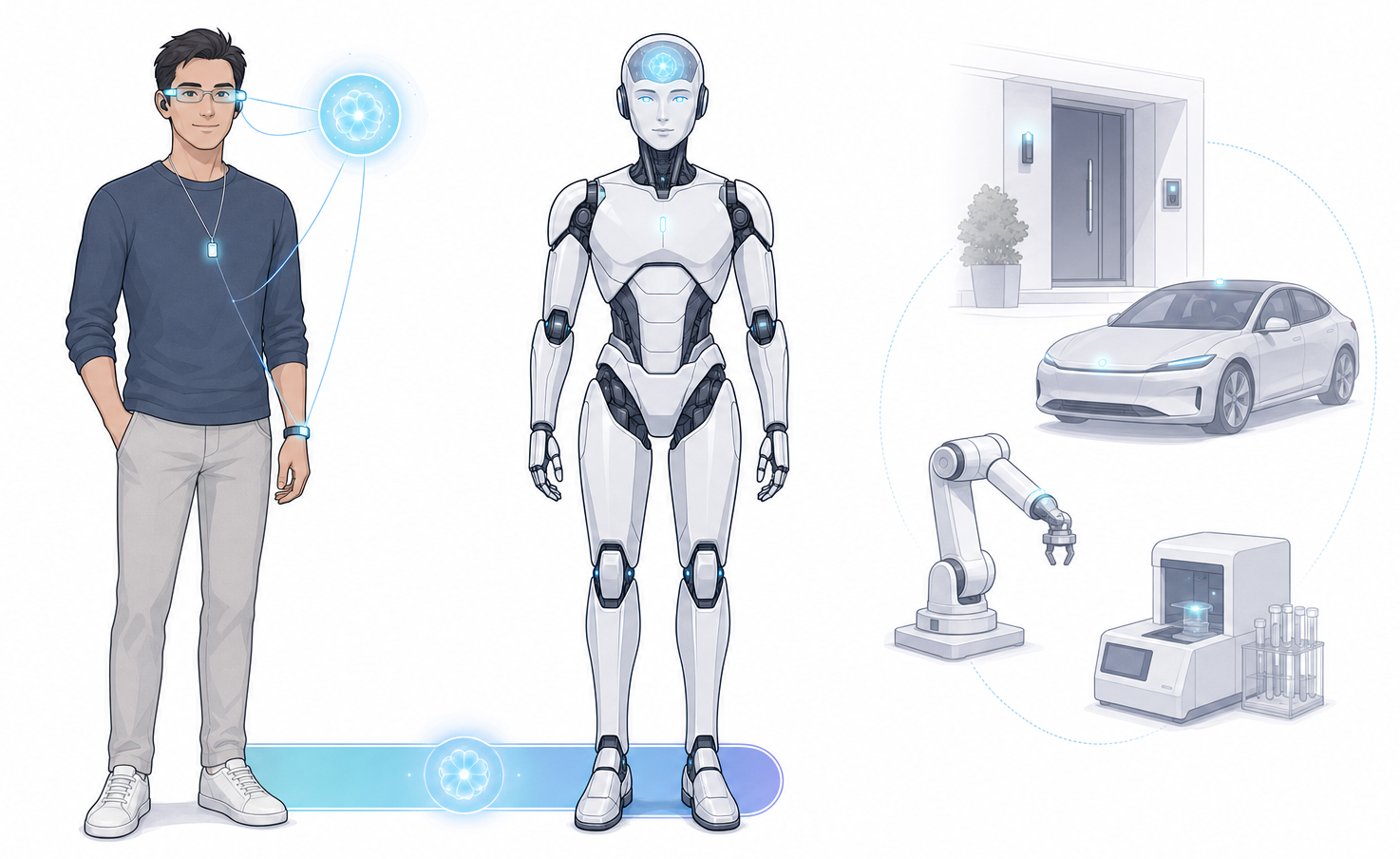
Иллюстрация 2
Privacy, Trust, and Rules
A symbiont would need access to sensitive data: messages, video recordings, health information, and possibly brain signals. The author recommends granting access gradually. The system should first prove useful with a limited set of data, such as a calendar and notes. A person should grant deeper access only after they’ve had a chance to decide whether the system can be trusted.
There’s also the question of people around the device’s owner. Smart glasses could record other people’s faces and conversations without their consent. The author suggests making it obvious when recording is taking place, keeping unprocessed data about bystanders only briefly, and avoiding detailed models of the people around the wearer. In some places, the law may prohibit recording a conversation without everyone’s consent; the system would need to respect those rules.
More complicated are situations where it matters whether someone is speaking unaided or receiving real-time help. A hint during an exam, a prepared phrase in a negotiation, and a reminder of your own figures during a work conversation aren’t the same thing. Rules should therefore depend on the setting and task. Help may be prohibited during an exam, while accessibility tools may be allowed. In a routine meeting, a reminder about your own data might be acceptable.
The proposed principle is this: the content of a person’s conversations with their symbiont stays private, but they can disclose that they’re receiving assistance when the rules require it. The system should also be able to verify that it switched to an assistance-free mode during an exam without revealing the owner’s personal data.
How to Tell Whether a Person Has Actually Become More Capable
The author argues that evaluation should go beyond the accuracy of the AI’s answers. Researchers need to measure whether the system helped the person, whether their own skills declined after long-term use, and whether personal context improved the results compared with a standard model.
This matters especially in education. If a symbiont simply gives a student the answer, the task gets done, but the student may not learn the material. In educational settings, the system should offer a hint more often than a complete solution. Similar concerns arise at work and in creative pursuits: if people hand all the difficult tasks to a machine, they may gradually lose the ability to tackle them on their own.
The paper calls for long-term studies involving specific people. Researchers could compare how the same person performs a task with a personal symbiont, with a conventional assistant, and without AI. They should also account for people who opt out and cases where assistance causes harm.
The author lists conditions that would mean the idea needs to be abandoned or revised. For example, personal information might fail to improve results; timely help might prove no better than answering a request; long-term use might systematically weaken people’s skills; or the cost of monitoring and computation might become too high.
Conclusion
The paper suggests judging AI’s progress by more than what machines can do. The focus could instead be the partnership between a particular person and an assistant—one that remembers what matters, understands the situation, and steps in at the right time.
Building such a system would require new ways to work with personal memory, wearable devices, fast data exchange, clear rules for access, and independent evaluation. But technical capability alone won’t answer the most important question: who does the system serve, and can a person safely choose not to use it?
A symbiont will be useful if it helps people act as they themselves wish—not simply makes them more convenient for employers, platforms, or the people around them. And we should judge it not by how many tasks it completes, but by what a person can do with it—and what they can still do without it.
Read next
 FrontierPhysics: Let’s see whether AI agents can make discoveries
 How AI Chooses the Right Model for Each Task
 CaPtain: How to control a robot using a small AI model
 WorkFactory: Hundreds of thousands of professional tasks helped train
 How AI Agents Learn General Skills Across Different Tasks
 How can you tell that an AI agent is doing the task incorrectly?
 How an AI agent can master a new skill through practice using the Socratic method
 How an AI agent improves interfaces on its own
 How AI Predicts Brain Activity
 An AI agent doesn’t need ready-made answers to get better.
 How an AI agent changes without retraining the model
 How Four AI Agents Defeated a Dragon in Minecraft
AI reviews in simple way
Every day we read fresh AI papers and retell the essentials in plain human language — no hype, no fluff. If you want to see where AI agents are heading before everyone else, subscribe.
New reviews — every day
Follow on X