Injecting world knowledge into tasks does not make a world model

World knowledge is not a world model
Over the past couple of years it has become fashionable to talk about world models: systems that do not merely continue text or fill in the next frames, but understand at least a little of how reality is put together and how it changes over time. The authors of Research on World Models Is Not Merely Injecting World Knowledge into Specific Tasks take a sober look at the question: most of this work is in fact solving local problems by slipping knowledge about physics, space or causality into them. That is useful, but it is not the same thing as building a world model.
To feel the difference, look at the wider picture the researchers draw: today "world model" too often means "we tuned the dataset and fine-tuned for a particular benchmark". What is needed instead are systems that can act in an environment, test hypotheses, remember consequences and keep what happens coherent over long stretches — in simulation and in the real world alike.
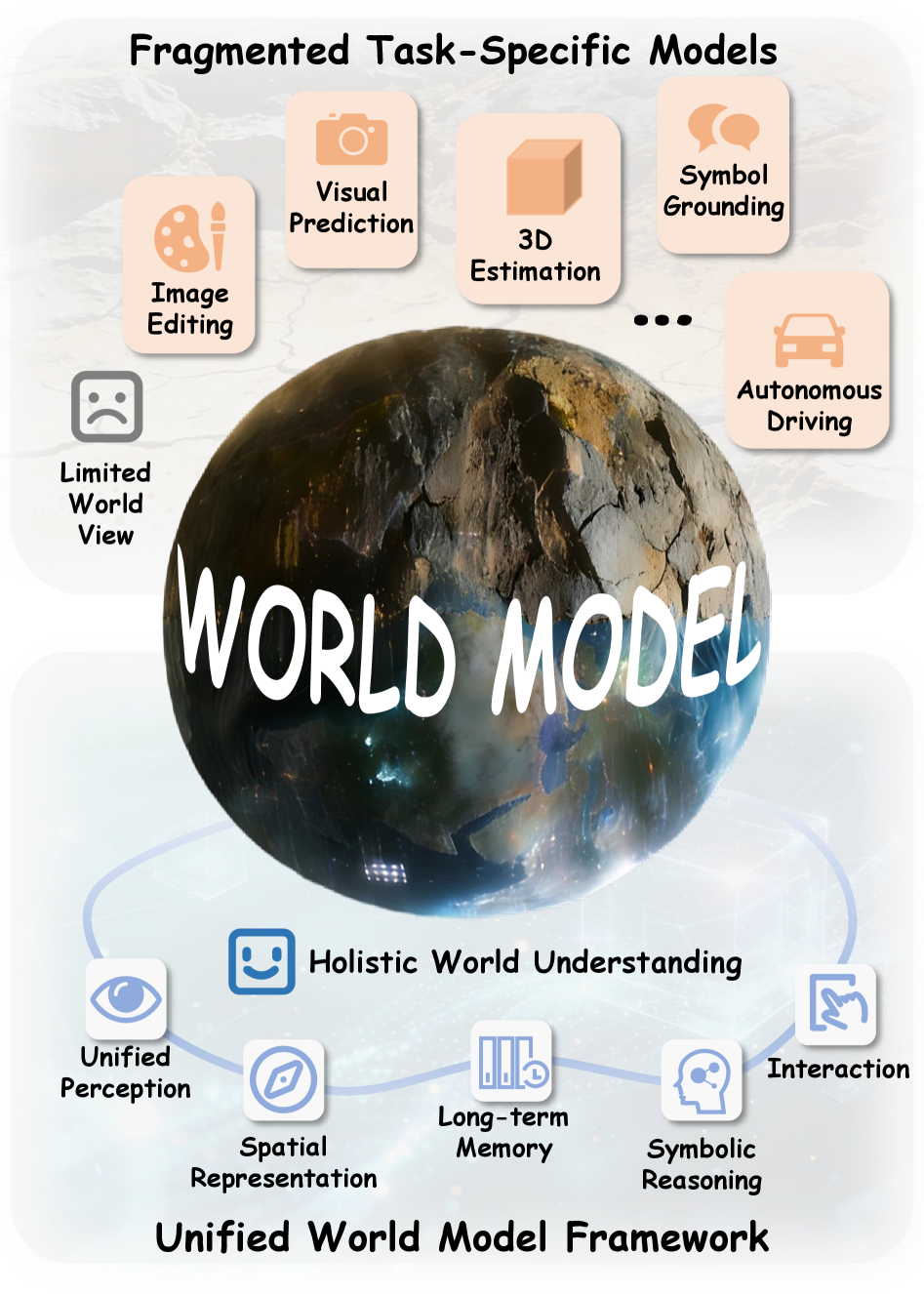
Why the current approaches do not work
The paper opens with a clear diagnosis. Large models (LLMs and multimodal ones) and diffusion models have grown markedly stronger, but their progress runs up against data quality. In domains where precision and physical honesty matter — medicine, chemistry, hard multimodal understanding, 3D and video — you cannot keep compensating for errors with ever more examples scraped from the internet. Hence the hope placed in world models: they are meant to learn not only to repeat patterns, but to hold on to the cause-and-effect structure of what is happening.
The trouble is that the research has scattered into fragments. One group improves spatial reasoning in LLMs, another adds physical plausibility to video generation, a third teaches a robot to manipulate objects more carefully. It all looks like one idea developing, but in the authors' view it mostly remains a "downstream-task paradigm": fit the method to a particular test, take the local win, move on.
How the authors would assemble a world model into a system
The paper's main contribution is not another training method but an attempt to standardize what a world model should be made of as an engineering and research object. The authors call it the Unified World Model Framework: not a monolithic network, but a set of required components and the interfaces between them.
The point is simple: if a system cannot interact with an environment, keeps no memory, cannot reason and cannot play out consequences (generation included), then it is a collection of skills rather than a world model.
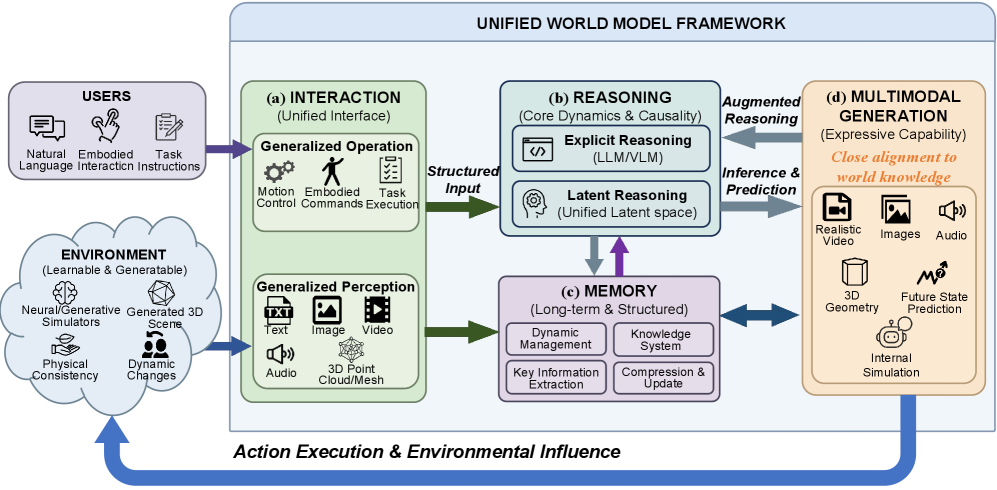
Two emphases matter most in this framework.
The first is interaction. A world model is valuable not because it "knows the right answer" but because it can obtain the missing information by acting: look from another angle, move closer, try something, check, rebuild the plan.
The second is memory over long horizons. If a model generates video but forgets what was there two seconds earlier, or if an agent in an environment cannot accumulate experience, there is no coherent picture of the world to speak of.
Where knowledge injection breaks down
The most convincing part of the paper is its catalogue of typical failures, which is exactly what marks the limits of narrow improvement.
LLMs and VLMs can reason impressively, yet they often go wrong where the answer has to be tied tightly to the observation. The authors give a telling example: the model sees an anomalous image — a hand with six fingers, say — and states confidently that there are five, because that is what the data has made familiar.
Diffusion approaches to image editing can follow the prompt and still wreck physical consistency: shadows, lighting, the small regularities of a scene. In video it is even more visible: the frames can be beautiful, but objects go missing, permanence breaks down, and causality is replaced by plausible texture.
3D tells a similar story: visual persuasiveness is not interactivity or physical meaning. And in embodied AI and autonomous driving, bolting on smart modules really does raise the metrics, but the systems behave badly in situations that fall even slightly outside the training scenarios.

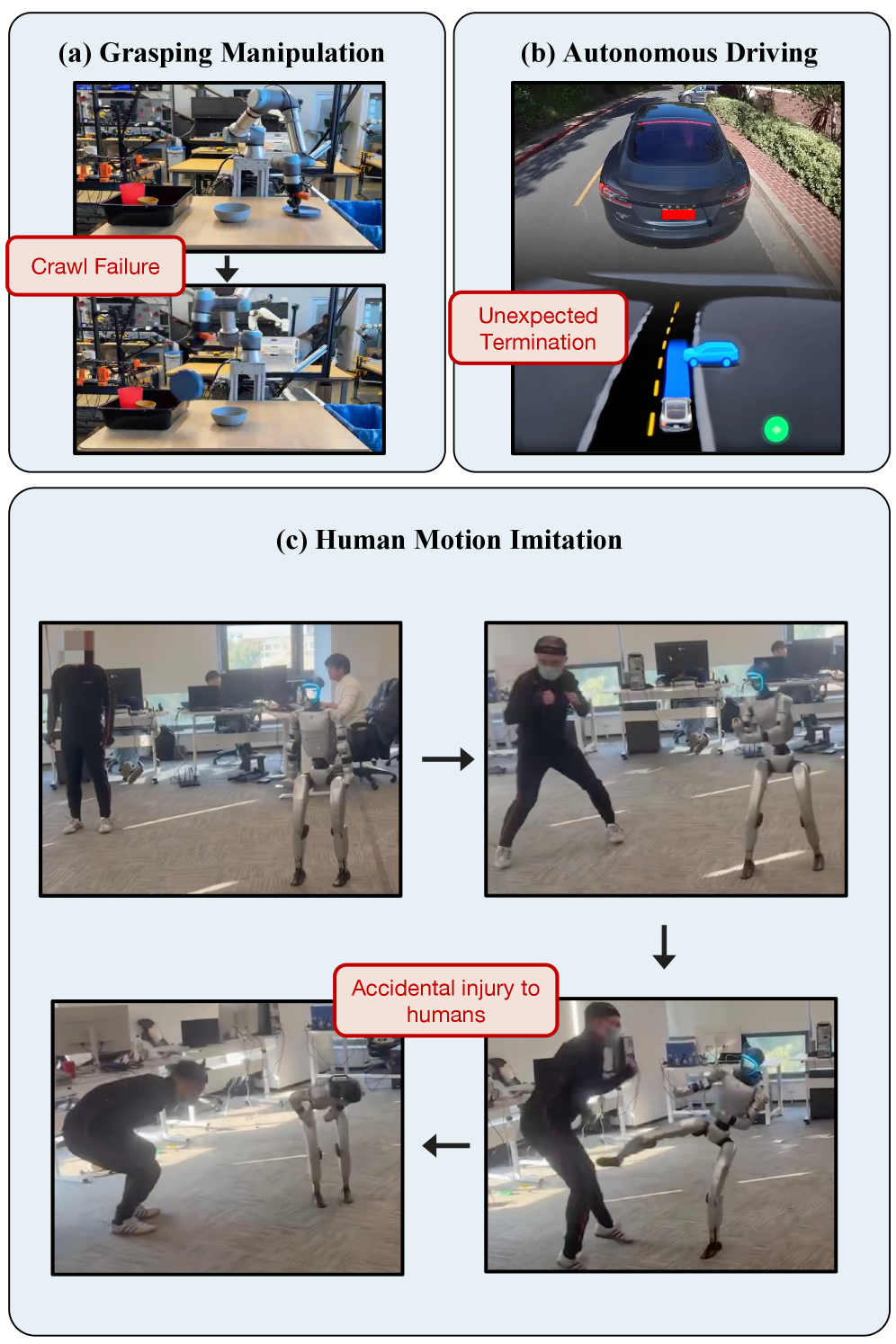
Where this leads: markers for what comes next
The authors do not dispute that narrow optimization is useful: it delivers fast improvements and legible KPIs. But if the goal is more general intelligence, progress needs a different logic — shared interfaces, reproducibility, comparable evaluation protocols and the ability to carry skills across tasks.
They single out three ideas as the directions where a breakthrough could come from.
First, physically grounded spatiotemporal representations: not only shape and texture, but properties such as mass, friction, elasticity and collisions.
Second, embodied interaction and control, where what matters is not just recognizing and planning but accounting for the constraints of real hardware and closing the sim-to-real gap.
Third, autonomous evolution: systems that can notice their own mistakes, deliberately gather new experience and update modules without retraining from scratch.
What stays with you
What the paper does well is give the term "world model" its meaning back, as a requirement on a whole system: interact, remember, reason, predict consequences and test yourself in an environment. Seen that way, it becomes clearer why the individual achievements are not yet adding up to a durable "brain", and what exactly has to be joined together to get closer to one.
AI paper breakdowns
Every day we read the new AI papers and retell what matters in plain language — no hype, no filler. If you want to see where AI agents are heading before everyone else, subscribe.
New breakdowns every day.
On Telegram