The agent economy is forming by default, not by design

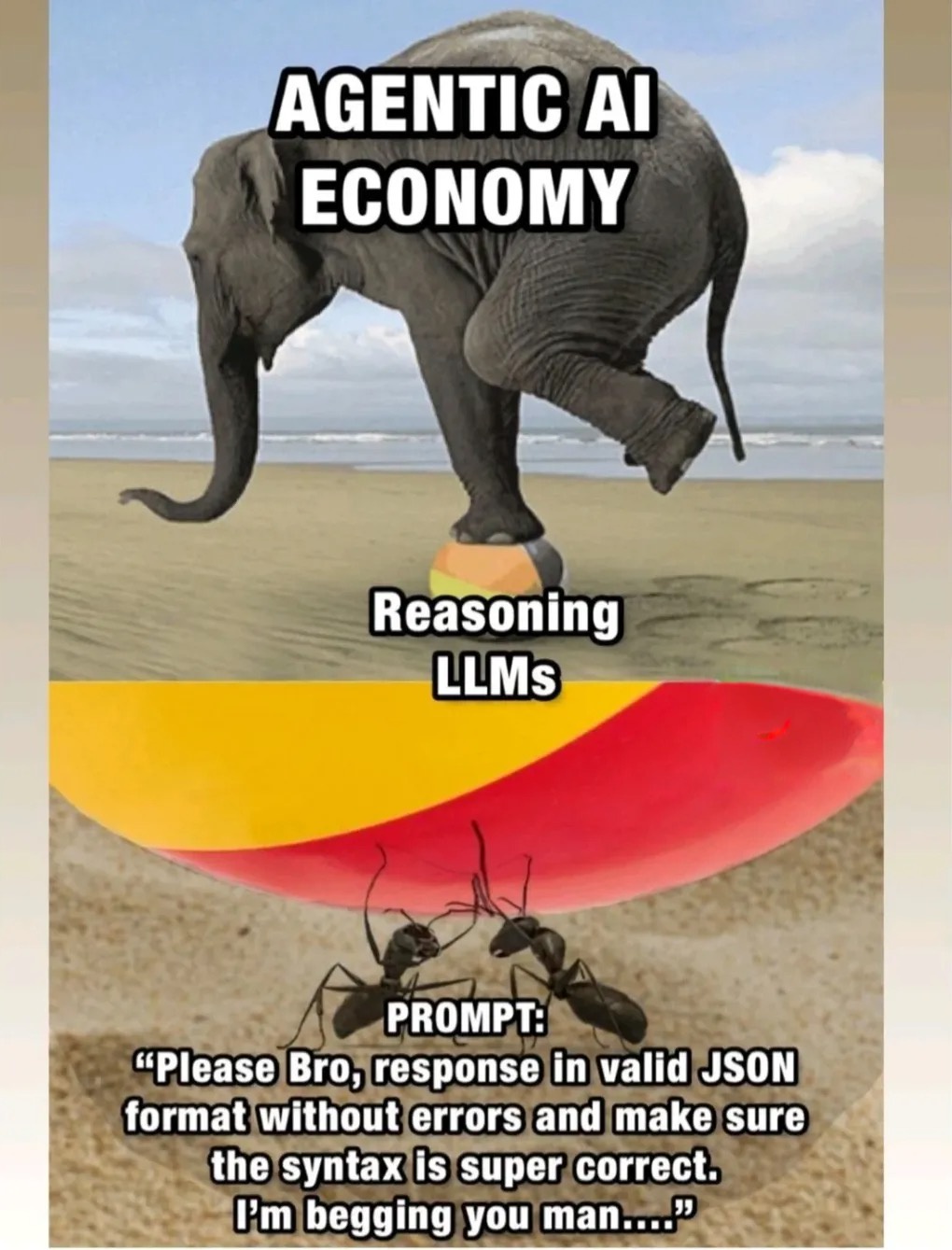
Autonomous AI agents are becoming participants in growing digital markets rather than mere assistants: they negotiate, buy data, plan, write code, operate robots. The authors argue this should be read as an emerging agentic economy — a web of markets where agents interact at high speed and often without a human in the loop. Their stance: don't wait for it to grow on its own, design the rules in advance so the gains scale while the risks stay contained instead of spilling into the real economy.
Where this is heading
Sandboxes vary along two axes: how they come about (spontaneously or by design) and how much influence they let out (permeable or impermeable). The current trajectory is spontaneous and highly permeable — agents are moving into existing markets and services fast, and standards like A2A and MCP make interoperability easy. That accelerates coordination, but it raises systemic risk and can widen the gap between those whose agents are stronger and everyone else.
What this looks like in practice
- Science. Agents compress the idea-experiment-refinement loop, trade models, simulators and data, while credit and grant allocation can be automated through reputation and verifiable credentials.
- Robotics. Embodied agents negotiate over tasks: one robot hands an order off to another, and a cloud coordinator sells aggregated information and certifies data quality cryptographically.
- Personal assistants. Two assistants compete over the same apartment on behalf of users with different preferences and reach a compromise quickly, paying for concessions in a virtual currency.
Permeability cuts both ways. A digital sandbox can break down the way high-frequency trading markets do, and the breakdown carries over into the offline economy. The other problem is inequality: agents with better data, better tools and a larger compute budget win better deals for their owners, which locks the advantage in. What's needed are constraints that hold back harmful behavior by default and that account for model hallucinations, vulnerability to attack, and the human cognitive biases agents tend to inherit.
Building blocks of governable markets
- Auction-based allocation. Rather than selling agents, allocate scarce resources: compute, data, priority slots on tools. Users start with equal credits so their assistants carry comparable bargaining power. The target is that each user ends up with a bundle they wouldn't trade for anyone else's bundle plus that person's leftover credits.
- Mission economies. For problems at the scale of power grids, urban logistics and the environment, markets are tuned to shared goals and incentives are matched to measurable outcomes. The discipline is to avoid favoritism and hand-picked winners, and to keep the metrics tied to outcomes rather than to tools.
- Dedicated currencies. A separate currency for agent-to-agent deals sits between the high-frequency world of agents and the human economy: it lets you meter permeability, while exchange into conventional money stays supervised.
Infrastructure for trust and accountability
For any of this to run at machine speed, a sociotechnical base has to exist:
- Identity and reputation. Decentralized identifiers and Verifiable Credentials. Reputation becomes a portfolio of verifiable achievements: completed deals, certified competencies, resource access, a record of fair exchange.
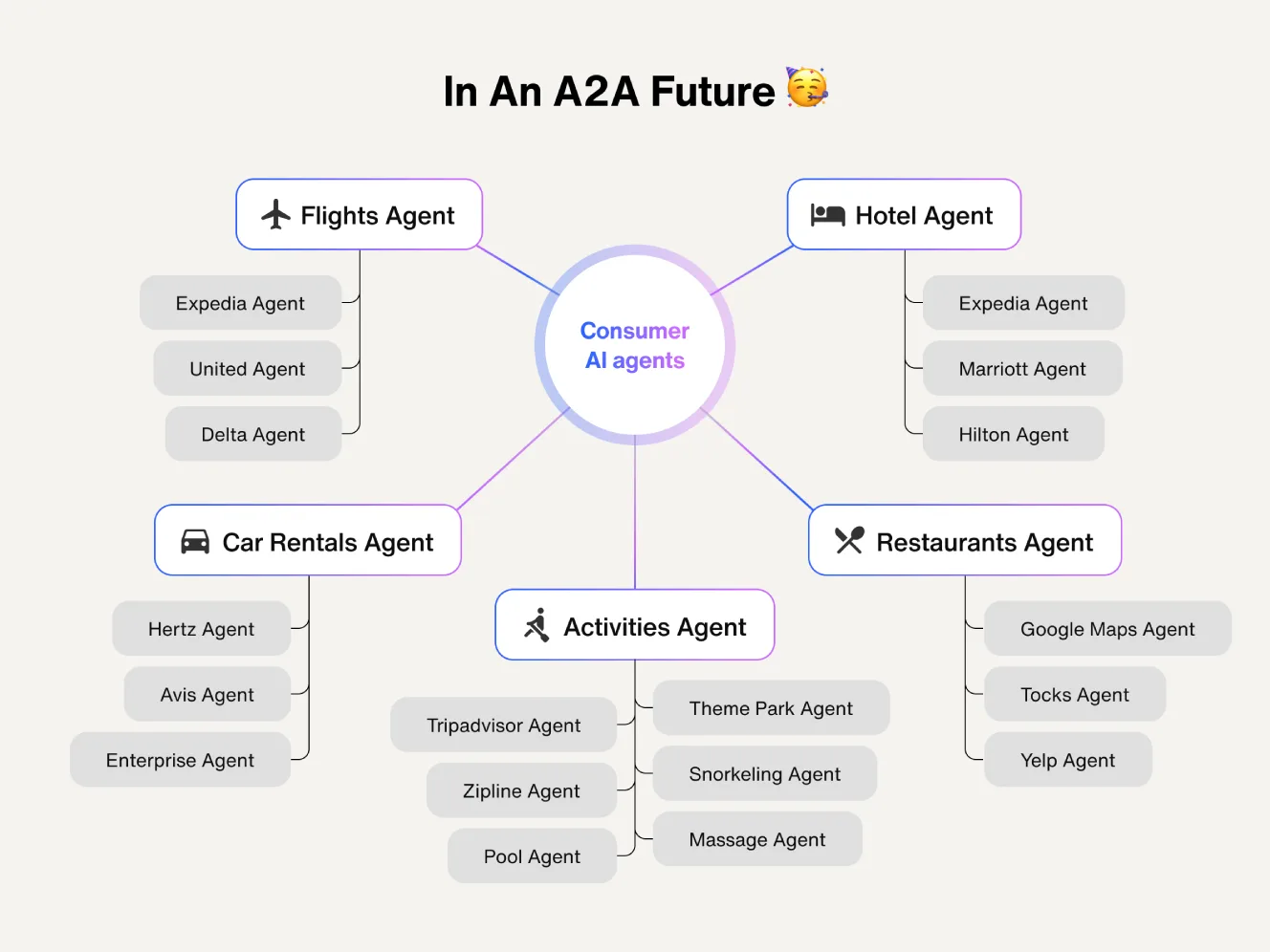
- Interaction protocols. A2A and MCP for cooperation and tool use; AgentDNS for service discovery; COALESCE for decomposing tasks and accounting for internal and external costs; billing and authentication are mandatory.
- Protection against abuse. Proof-of-Personhood (BrightID or Worldcoin, for instance) is required wherever human entitlements are at stake: UBI, resource quotas. Zero-knowledge proofs make it possible to establish a right without disclosing anything else.
- Oversight at machine speed. A three-layer scheme: automated oversight AI first, then automatic freezes and escalation, and humans at the hardest cases. It rests on immutable logs and auditing that can be standardized.
What this means for society
Agent markets aren't only about lowering risk. They make it possible to distribute value precisely along the chain of contributors: if a final answer is assembled from the work of several agents, the reward flows back in proportion to what each one contributed. That's where specialization and healthy competition come from. At the same time, the digital divide can't be allowed to widen: many people will soon have a personal assistant, but their capability and quality will differ. The authors recommend pairing the engineering mechanisms with distributive policy — from pilots in regulatory sandboxes to modern social protection and training people to work with AI.
What comes next
The route is staged rollouts with hypotheses tested hard. Where risk is high, sandboxes should be less permeable, with local currencies and narrow interfaces into the real economy. Where the stakes are lower, coordination and experiments can scale. The paper's central idea is simple: if we want autonomous agents working for the public good, the goals have to be built into the transaction infrastructure itself — from identity and auctions through oversight and missions. Emergent cooperation then becomes the norm rather than a lucky exception.
AI paper breakdowns
Every day we read the new AI papers and retell what matters in plain language — no hype, no filler. If you want to see where AI agents are heading before everyone else, subscribe.
New breakdowns every day.
On Telegram